

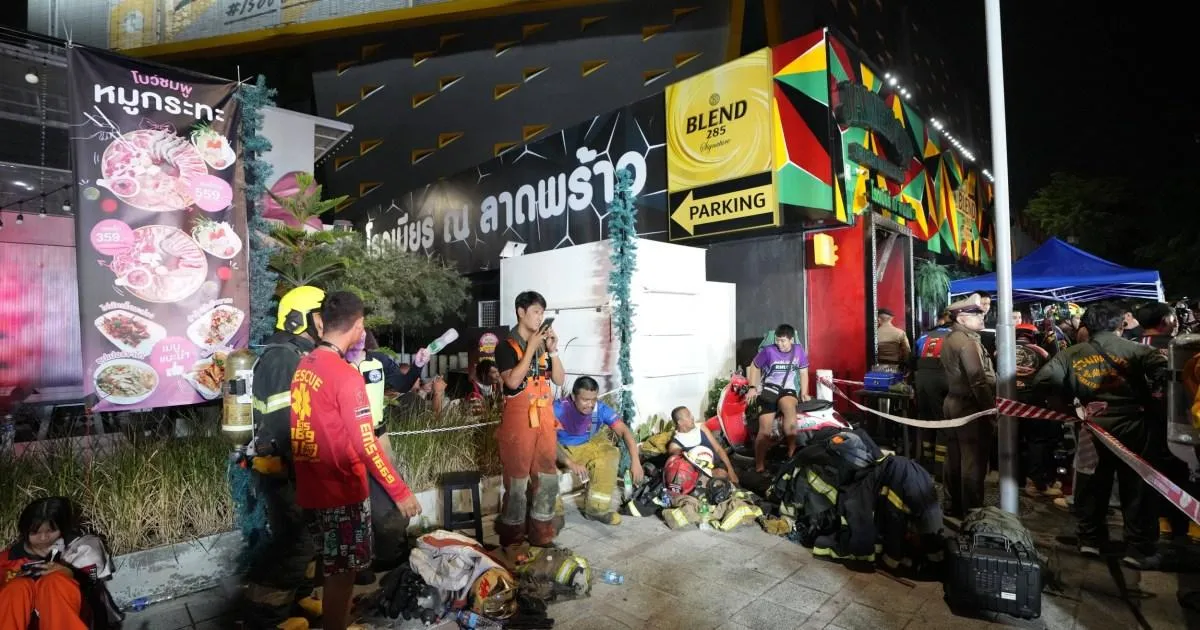
The quiet, humid air of a Bangkok midnight was shattered this week by a fast-moving, catastrophic fire that decimated the Na Ladprao pub. What began as a normal evening of music and socializing in the northern part of the Thai capital quickly descended into a scene of absolute chaos and heartbreak. As the flames took hold, the atmosphere shifted from one of celebration to sheer terror, leaving at least 27 people dead and several others injured. First responders, who arrived on the scene under the cover of night, were met with billowing clouds of thick, toxic black smoke that turned the pub into a perilous trap for those inside.
For the witnesses and the musicians performing that night, the transition from normalcy to tragedy was agonizingly swift. According to accounts provided to Prime Minister Anutin Charnvirakul, the initial sign of trouble was subtle—a wisp of smoke emanating from a circuit breaker positioned near the stage. Before the patrons could process the danger, the power flickered and died, followed almost immediately by a deafening explosion. In a matter of seconds, the cozy interior was engulfed in impenetrable smoke, creating a frantic scramble for the exits as the environment turned suffocating and disorienting.
The aftermath revealed the tragic path many of the victims took in their final moments as they desperately sought safety. Prime Minister Anutin noted that many of the casualties were discovered near the restrooms at the back of the building. It is a harrowing detail that speaks to the confusion and panic that unfolds when a space becomes a maze of darkness and smoke. While firefighters managed to subdue the blaze within thirty minutes, the intensity of the inferno had already gutted the interior, leaving behind a grim landscape of charred tables, melted furniture, and structural ruin.
This disaster has once again forced Thailand to confront a painful and recurring history regarding public safety. It is a haunting echo of a similar tragedy that occurred in 2022, when a music pub fire in the eastern part of the country claimed 14 lives. Each time these catastrophes occur, they trigger intense national grief and soul-searching, raising difficult questions about fire codes, emergency preparedness, and the enforcement of safety standards in nightlife venues. The loss of 27 lives is not just a statistical tragedy; it represents a deep void in the communities of those who went out for a night of music and never returned home.
As investigators comb through the scorched debris of the Na Ladprao pub, the city is left to mourn those taken in their prime. Beyond the official reports and the grim images of firefighters wiping soot from their brows, there is the human element: the families who are currently receiving the most devastating news imaginable, and the emergency workers who carry the psychological weight of witnessing such a desperate scene. The focus remains on determining exactly what caused the circuit board to ignite and whether the venue’s safety infrastructure was sufficient to handle such a rapid-fire event.
In the coming days, as the initial shock transitions into a period of formal mourning and rigorous investigation, the focus in Bangkok will be on accountability and prevention. While officials work to determine whether negligence or simple technical failure caused the spark that ignited the night, the country is left to grapple with the fragility of life. For now, the focus is on the healing of the injured and supporting the loved ones of the victims. This fire serves as a stark, tragic reminder of the importance of fire safety and the suddenness with which a mundane night out can turn into an indelible scar on the collective memory of a nation.