
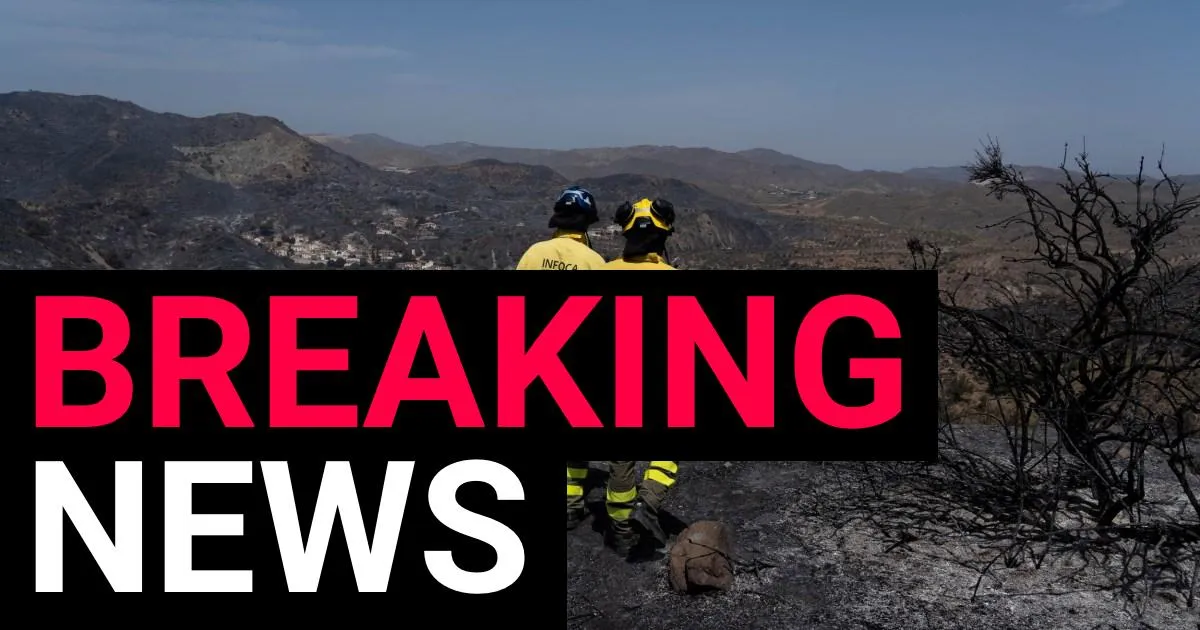
The southern region of Spain is currently mourning a tragedy of staggering proportions as the death toll from a series of catastrophic forest fires continues to climb. What began as a terrifying wall of flame in Almeria has transformed into a heartbreaking humanitarian crisis, with at least 13 confirmed deaths and fears that the number will grow. The heart of the devastation lies near Los Gallardos, where over 17,300 acres of land have been reduced to ash since the fires ignited last Friday. Among the latest victims to succumb to their injuries was a 93-year-old British woman, who passed away in the hospital after being admitted with burns covering 20% of her body. Her death serves as a somber reminder of the extreme vulnerability of those caught in the path of such unpredictable and fast-moving infernos.
The human cost of this disaster is deeply personal, affecting families across borders, particularly those from Britain and Belgium, as well as the local Spanish community. Authorities are currently engaged in the grueling and delicate task of official identification, using DNA samples provided by families desperate for closure regarding their missing loved ones. The landscape of the region, which has long been a sanctuary for tourists and expatriates alike, has been irrevocably scarred. Reports indicate that the remains of four individuals, believed to be British citizens, were discovered trapped inside a vehicle, painting a haunting picture of the sudden, suffocating danger that residents and visitors faced as the fire roared through the area.
Amidst the sorrow, there have been flickers of hope—moments of profound heroism that underscore the intensity of the rescue efforts. In one remarkable instance, the Spanish Civil Guard managed to save a British couple who had been trapped in a rugged ravine while out for a hike. The rescuers, exhausted and navigating treacherous, smoke-filled terrain, almost bypassed the location before a faint sound caught their attention. Sergeant Pedro Barr, reflecting on the near-miss, noted that instinct drove them to shout out one last time, initially fearing the cries were merely an echo against the cliffs. The couple, suffering from significant burns, remains in critical condition, but their survival stands as a testament to the tireless, life-saving efforts of the emergency responders working in hellish conditions.
The aftermath of the fire has also brought a wave of frustration and grief-stricken debate regarding how warnings were communicated to those in the direct line of fire. Families of the deceased, including Thomas-Wolf Verdonckt, whose 63-year-old father Stanislas perished in the blaze near Bedar, have publicly challenged the narrative presented by some authorities. While officials have suggested that certain victims may have ignored evacuation orders or directives to shelter in place, grieving relatives are pushing back, arguing that the chaotic reality on the ground was far more complex than a simple failure to follow instructions. These conflicting accounts highlight the confusion that often accompanies large-scale natural disasters and the desperate desire for accountability when lives are lost so abruptly.
As the smoke begins to clear over Almeria, the search for the missing continues with heavy hearts. At least 23 people remain unaccounted for, leaving families in a state of suspended agony as rescue crews comb through the scorched earth. The scale of the environmental and personal destruction has left the local community shaken, as they grapple with the sudden loss of life and the displacement of dozens of people, some of whom were evacuated to hospitals with serious injuries. The road to recovery for the region will be long, not only in terms of environmental restoration but in the healing of a community that has seen its peaceful landscape turn into a site of profound national grief.
Ultimately, these fires serve as a harrowing reminder of our fragility in the face of nature’s raw power. The tragedy in southern Spain is more than a news headline; it is a collection of individual stories of hikers, residents, and visitors whose lives were changed in an instant. From the 93-year-old woman lost to her wounds to the elderly couple rescued from the ravine, each person represents a life connected to others, now punctuated by this immense sorrow. As the region begins to look toward the future and investigate the circumstances surrounding the blaze, the focus remains firmly on the victims and their families, ensuring that behind the dry statistics of acreage burned and lives lost, the human reality of this tragedy is never forgotten.