


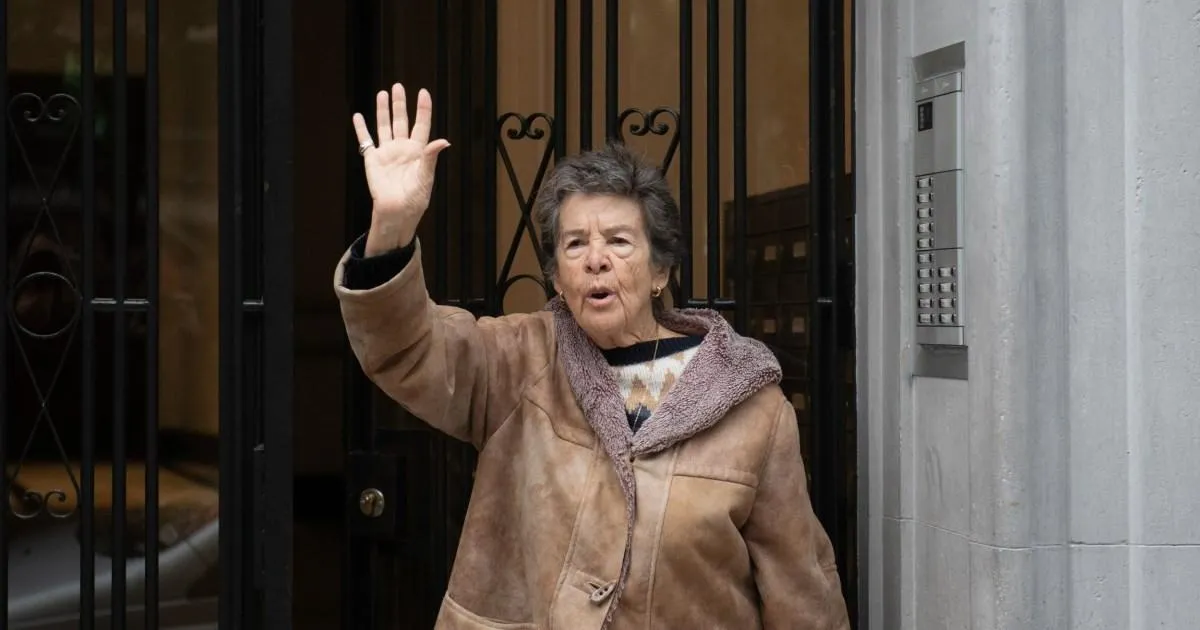
In the end, Maricarmen’s story is not just about a rent increase or an eviction notice; it is about a life, a home, and the quiet dignity of an 87-year-old woman who spent more than seven decades within the same walls in Madrid. María del Carmen Abascal, known to everyone as Maricarmen, was carried out of that home on a stretcher, her face turned toward the sky, while police cordoned off the streets to hold back protesters who had gathered to shout against what was happening. The image was unbearable: a woman who had lived through generations of Spanish history, who had watched her parents grow old and die in that apartment, who had worked as a secretary, retired, and filled her days with small errands and the careful tending of her belongings, suddenly reduced to a fragile body being lifted from the only place she had ever called home. She had lived there for 70 years. The apartment was not just a building; it was a memory palace, filled with black-and-white photographs, the echoes of her mother’s voice, the smell of her father’s presence, the ordinary rituals of a life that had become inseparable from the walls around her. When the rent jumped from €440 to €2,650 a month, the numbers were not just financial figures; they were a sentence. And when she was evicted, something inside her seemed to break. She was taken to the hospital, then told by a court she could return, but by then her body and spirit had endured too much. This week, Maricarmen died. Her death has shaken Spain, not only because of the cruelty of her final weeks, but because her story has become a mirror for a housing crisis that has left so many people feeling invisible, disposable, and alone.
The circumstances leading to that stretcher were not sudden. Since 2018, Maricarmen’s monthly rent had been climbing in a way that made no sense to her, from €440 to €2,650, a sixfold increase that she could not possibly absorb on a pension. For years, she had managed, perhaps with the help of family, perhaps by cutting back on everything except the essentials, but the gap between her income and the landlord’s demands kept widening. Spanish rental laws, shaped by a market that increasingly favors investors and short-term tourist lets over long-term residents, offered her little protection. The landlord wanted the property back, or wanted a market rate that the tourist economy could sustain, and Maricarmen, an elderly woman in a wheelchair, was caught in the machinery of a system that had no room for her history or her vulnerability. On the day of the eviction, she had to be carried out on a stretcher because she could not walk, because the stress and illness had already taken hold of her body. The images of that moment circulated around the world, and they were almost too painful to look at. Here was a woman in a nightgown, being borne away from a doorway she had walked through thousands of times, while around her the city roared with indignation. Police had to form a cordon because the crowd was so angry, so desperate to stop what was happening. The protesters were not strangers; they were neighbors, activists, students, older people who saw their own futures in her face. They chanted, they wept, they tried to block the stretcher, but the eviction went ahead. Maricarmen was taken to a hospital, where she would remain until her death. The court later said she could return to her flat, but the damage had been done. As her lawyer Beatriz Duro put it, the case leaves us with the image of the shameful violence of these types of evictions and the impact they can have on people’s health. The violence was not physical in the usual sense, but it was real: the violence of being uprooted, of being told that your life of 70 years matters less than a landlord’s profit, of being carried out like an object, of losing the home where your parents died and where you expected to die too.
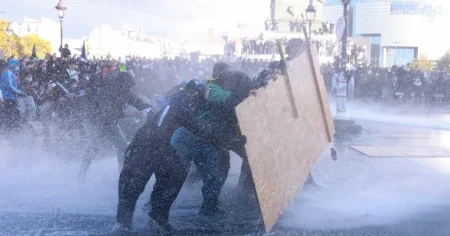
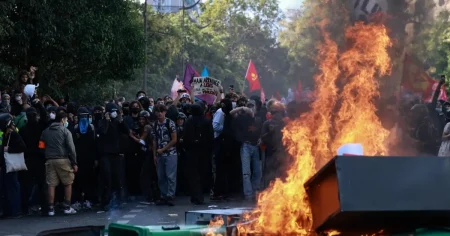
The public reaction to Maricarmen’s eviction and death has been visceral, because her story crystallizes a fear that millions of ordinary people now carry. In Spain, as in much of the world, the idea that a home is a stable place, a refuge, a right, has been replaced by the idea that a home is a commodity, an investment, a short-term rental opportunity. When people saw Maricarmen being carried out on a stretcher, they recognized not just an elderly woman but a symbol of everything that has gone wrong. The protests that erupted in Madrid were not only about one eviction; they were about the impossibility of finding affordable housing, the pressure of tourism on neighborhoods, the endless stream of apartments converted into holiday lets, the young people who cannot move out of their parents’ homes, the elderly who are pushed out of the only communities they know. Maricarmen’s lawyer, Beatriz Duro, spoke of the shameful violence of evictions and their impact on health, and her words resonated because they named something that is often hidden: evictions do not just remove people from buildings; they break them. Spanish Prime Minister Pedro Sánchez offered his condolences on social media, writing, “All my love to Maricarmen’s family and loved ones. A hug as well to all of us who feel this loss as our own today. Rest in peace.” But for many, the condolences felt hollow. A 22-year-old protester, Eugenio Melchor, was more blunt: “She was dying in her home and she almost did. They have killed her. I mean, there’s no other word for it, and I hope those responsible for this pay and go to trial.” The anger in his voice is not just youthful radicalism; it is the anger of a generation that has watched the social contract unravel. In a country where property prices have risen by about 13% in a year, where locals cannot compete with tourists willing to pay premium prices for short-term lets, where anti-tourism demonstrations have become a summer ritual across mainland Spain, Mallorca, and the Canary Islands, Maricarmen’s death feels like a breaking point. She was not the first person to die after an eviction, and she will not be the last, but her face, captured in those photographs, has become a rallying cry for a movement demanding stronger rights for tenants and a fundamental rethinking of housing policy.
To understand why Maricarmen’s death has touched so many people, it helps to know who she was beyond the headlines. She was born into a Madrid that no longer exists, a city of narrow streets and close-knit families, where people stayed in the same neighborhood for their entire lives. She lived in the family apartment with her parents and her brother, and later worked as a secretary, a job that in those days meant typing letters, answering phones, keeping order in an office, and coming home to a household that was warm and familiar. Her parents both died in that apartment, in the rooms where they had raised their children, and Maricarmen stayed on, alone but not lonely, surrounded by their furniture, their photographs, their memories. When she retired in 1998, she found purpose in small routines: running errands, buying bread, greeting the neighbors, taking care of the objects in her home that connected her to the people she had loved. El País reported that the only personal belongings she took with her to the hospital were black-and-white family photographs. That detail is devastating. In the chaos of eviction, in the confusion of being lifted onto a stretcher, in the fear and humiliation of being taken from her home, she reached for the one thing that mattered most: the faces of her parents, her brother, her younger self, the people who made the apartment a home. She did not take jewelry or money or documents; she took memories. The court eventually ruled that she could return to the flat, but by then she was already unwell, and the hospital became her last address. It is impossible not to imagine her in that hospital bed, clutching those photographs, thinking of the home that was still there waiting for her, the bed where her mother had died, the kitchen where she had made countless meals, the balcony from which she had watched the city change. She died before she could go back. The apartment, which had been her anchor for seven decades, was lost to her in the end, not through a sudden catastrophe but through a slow, bureaucratic, legal process that treated her as a problem to be solved rather than a person to be protected.
Maricarmen’s story is inseparable from the larger housing crisis that has gripped Spain. The country has become a playground for tourists, and while tourism brings money, it also distorts the housing market. In cities like Madrid, Barcelona, Valencia, and Seville, landlords can make far more money renting to visitors for a week than to residents for a month. Short-term holiday lets have multiplied, hollowing out neighborhoods and driving up prices. For locals in need of accommodation, it has become near-impossible to compete with tourists willing to pay premium prices for a temporary stay. The result is a generation of young people who cannot afford to leave home, families who are forced to move to the outskirts, and elderly residents who are priced out of the communities they have lived in for decades. Anti-tourism protests have become increasingly common, especially in the summer, when crowds of visitors overwhelm public spaces and push rents even higher. Demonstrations have taken place across mainland Spain, Mallorca, and the Canary Islands, with residents chanting that tourists are welcome but not at the expense of their homes. Property prices in Spain are now about 13% higher than they were a year ago, according to the national housing price index, and wages have not kept pace. The gap between what people earn and what housing costs has become a chasm. Officials have made attempts to address the crisis, including a ban on short-term rentals in Barcelona by 2029, but many locals feel that these measures are too little, too late. They want rent controls, they want more social housing, they want protections for vulnerable tenants like Maricarmen, they want the government to treat housing as a human right rather than a market. The eviction of an 87-year-old woman who had lived in her home for 70 years, and her subsequent death, has become a symbol of everything that is broken. It is not just a tragedy; it is a policy failure. It is the result of choices made by politicians, landlords, investors, and voters who allowed the market to run wild. And it is a warning that if nothing changes, there will be more Maricarmens, more stretchers, more funerals.
The political consequences of Maricarmen’s death are already unfolding. This week, Prime Minister Pedro Sánchez announced that an early election will be held in November, admitting that his government has “made mistakes and has not managed to do everything we set out to do.” The housing crisis is likely to be a central issue in that election, and Maricarmen’s face will hang over the campaign like a ghost. Sánchez’s words of condolence, however sincere, cannot undo the image of that stretcher, nor can they answer the question that protesters are asking: who is responsible? For many, the answer is a system that prioritizes property rights over human dignity, that allows rents to rise to levels that ordinary people cannot afford, that treats eviction as a routine legal procedure rather than a violent rupture. Maricarmen’s lawyer called the eviction a form of shameful violence, and the word “shameful” is important because it points to a collective guilt. We all live in a society that allowed this to happen. We all share, to some extent, the responsibility to demand better. The protesters who gathered in the streets last night to remember Maricarmen were not just mourning an individual; they were mourning a world that is disappearing, a world where people could grow old in their homes, where neighbors knew each other, where the idea of being evicted at 87 was unthinkable. They were also demanding a different future, one where housing is protected, where tenants have rights, where no one has to choose between paying the rent and buying food. Maricarmen cannot return to her apartment now. The black-and-white photographs she took with her to the hospital will be kept by someone else, perhaps a relative, perhaps a friend, and they will serve as a reminder of a life that was cut short by a rent increase. But her story can still change things. It can wake people up. It can push politicians to act. It can make the housing crisis impossible to ignore. In her final weeks, Maricarmen became a symbol, but she was also a human being, a woman who loved her home, her family, her routines, her memories. She deserved to die in peace, in the place she belonged, surrounded by the objects and faces she loved. Instead, she died in a hospital, after being carried out of her home on a stretcher, while the world watched. The least we can do is remember her, and the least we can demand is that no one else has to die like this. Rest in peace, Maricarmen. Your home was never just a building, and your death was never just a news story. It was a call to conscience, and we must not let it be in vain.