

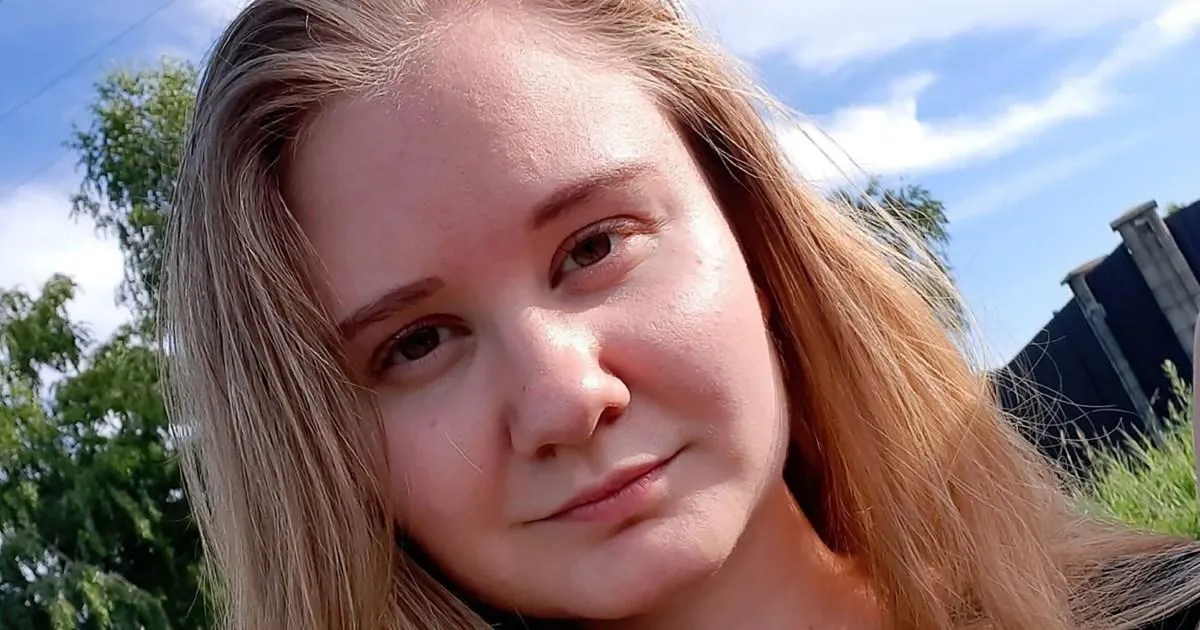
The death of a young Siberian scientist has become a story that refuses to stay buried in the sterile corridors of a research laboratory. When 28-year-old Darya Shipilova, a laboratory worker at the Irkutsk Anti-Plague Research Institute of Siberia and the Far East, died on October 2 after falling suddenly ill, the world did not simply mourn a promising life cut short. Instead, her death sparked a whirlwind of dark rumors, official denials, and a mother’s anguished plea for the truth. Darya had been rushed to a hospital in Shelekhov, a town not far from the institute where she spent her days working with some of the most dangerous pathogens known to humanity. As news of her passing spread, whispers of a suspected pneumonic plague infection began to circulate, turning a personal tragedy into an international mystery. Yet even as the Russian health watchdog insisted that tests found no “micro-organisms” in her body linked to her work, and the Kremlin dismissed allegations of a plague outbreak or any anti-plague measures, her mother, Svetlana Shipilova, refused to accept the official narrative. For Svetlana, this was never about politics or global conspiracy; it was about the loss of a daughter, and the unbearable feeling that those in power had failed her child.
The official story, as it emerged, was that Darya had somehow become infected despite all safety protocols, perhaps through a freak accident involving broken laboratory equipment. But Svetlana, who is herself a scientist, responded to these claims with the frustration of an expert who knows exactly how such laboratories operate. She poured scorn on the suggestion that her daughter could have pricked herself or been exposed through a broken test tube. “I know the truth,” she told the Russian outlet Glubina, her words carrying the weight of both professional knowledge and maternal grief. “I’m having to fend off stupid acquaintances who believed all this, the clever ones didn’t believe it, of course.” She went on to explain, with the patient tone of someone forced to teach basic science to skeptics, that the glass vials used to store such lethal samples are not easily shattered. “Not even all medical professionals understand it’s impossible to break a test tube like that,” she said. “Even if you fling it at the wall. Only an amateur could say something like that. Even hypothetically, you simply can’t spill what’s inside or break the tube – they’re that well protected.” For Svetlana, the story of the broken test tube was not just scientifically absurd; it was an insult to her daughter’s memory, a cheap narrative designed to hide something far more troubling.
At the heart of Svetlana’s anguish is the accusation that the authorities “simply let my daughter die.” This devastating claim, made in since-deleted social media posts, suggests a level of negligence or even deliberate concealment that goes far beyond a simple laboratory accident. The Irkutsk Anti-Plague Research Institute is not an ordinary research facility. It is one of Russia’s premier centers for the study of plague and other highly dangerous infections, a Cold War-era institution that has long been shrouded in secrecy. Working there requires not only scientific expertise but also a certain fearlessness, an acceptance of daily proximity to some of the deadliest organisms on Earth. Darya was one of those dedicated individuals, a young woman who chose a career in the service of public health, spending her days trying to understand and combat diseases that have plagued humanity for centuries. Her mother, a scientist in her own right, understood the risks of such work better than most. But understanding the risks does not make the loss any easier to bear, especially when the official explanations seem hollow, contradictory, or outright insulting.
The mystery surrounding Darya’s death was further deepened by the chaotic and contradictory official responses. Local officials, in posts that were later deleted, reportedly claimed that the scientist had died of a plague infection. This admission, however brief, set off a wave of panic and speculation. Had there been a second case? Was the outbreak contained? Were local residents in danger? The Kremlin was quick to try to quash these fears, with spokesperson Dmitry Peskov labeling the reports as “false information.” But in a country where trust in state institutions is often fragile, such categorical denials rarely put an end to public unease. Instead, they often have the opposite effect, convincing many that there is indeed something to hide. The juxtaposition of a mother’s desperate plea for the truth with the government’s dismissive tone created a tense atmosphere, one in which every new piece of information was met with suspicion and every official statement was dissected for hidden meanings. In this climate of uncertainty, the truth became a casualty, lost somewhere between a grieving family’s need for answers and a state’s desire for control.
The story then took on an even more extraordinary geopolitical dimension when it reached the highest levels of international power. In a phone call confirmed by former US President Donald Trump, he spoke with Russian President Vladimir Putin about the situation. When asked directly whether the infection could have been the result of a biological weapon, Trump offered a measured response, stating, “We do not think so. They are saying it is very much under control. Russia is not saying much either.” These words, delivered at a time of already extreme tension between Washington and Moscow, added another layer of intrigue to an already bewildering story. The fact that the American president was discussing the death of a Siberian lab worker with his Russian counterpart suggests that this was not a minor local incident but an event with significant geopolitical implications. Whether Darya’s death was the result of a lab accident, a rare natural infection, or something more sinister, the global attention was immediate and intense. The mention of biological weapons, even as a hypothetical question, was enough to turn a human tragedy into a matter of international concern.
In the midst of the speculation and denial, another layer of the story emerged that seemed to connect Darya’s work to a broader and more disturbing pattern. Reports surfaced, and were widely shared, that Russia’s “patient zero” in this potential outbreak had been working with “plague-infected squirrels” before collapsing. This detail, if true, would place Darya not as a random victim but as the first casualty of a possible zoonotic spillover, a frightening reminder of how diseases can jump from animals to humans in the remote, wild expanses of Siberia. The region is home to vast populations of marmots and ground squirrels, rodents that have long been natural reservoirs for the plague bacterium Yersinia pestis. Every few years, outbreaks of bubonic or pneumonic plague occur among these wild rodent populations, and sometimes the disease spreads to humans who come into contact with them. For scientists at the anti-plague institute, monitoring these natural foci is a routine part of the job. But routine can quickly turn deadly when a simple cut, a careless moment, or a single escaped particle leads to a fatal infection. The mention of Darya working with “plague-infected squirrels” before her collapse only added another layer of grim fascination to the story, painting a picture of a young woman on the front lines of disease surveillance, exposed to nature’s most unforgiving threats.
The international dimension of the story added yet another layer of complexity. Former US President Donald Trump confirmed that he had spoken with Vladimir Putin about the situation, and when asked whether the infection could have been caused by a biological weapon, he was quick to downplay the theory. “We do not think so,” Trump told reporters. “They are saying it is very much under control. Russia is not saying much either.” This brief exchange, conducted at the highest levels of global diplomacy, underscored the geopolitical implications of the case. For decades, the Soviet Union and later Russia have been accused of developing biological weapons at facilities like the Irkutsk institute, and any story about a scientist dying from a mysterious illness was bound to raise uncomfortable questions. Trump’s comments, while reassuring, did little to dispel the air of suspicion. His assertion that the infection was “very much under control” was met with a mixture of skepticism and relief, depending on one’s view of the Russian government’s credibility. But for Svetlana Shipilova, the international political theater was a sideshow. Her focus remained fixed on a single, agonizing question: what really happened to her daughter?
The story also resonated far beyond the borders of Russia, drawing in world leaders and raising alarming questions about the safety and security of biological research in the modern age. In a bizarre twist, former US President Donald Trump confirmed that he had spoken with Russian President Vladimir Putin about the incident. When asked whether the infection could have been caused by a biological weapon, Trump repeated the assurances he had received, saying, “We do not think so. They are saying it is very much under control. Russia is not saying much either.” The fact that such a high-level conversation touched upon the death of a young laboratory worker in Siberia only underscores how extraordinary these events had become. The image of two world leaders discussing a potential plague outbreak behind closed doors felt like something out of a political thriller, not a news report. Yet for Svetlana Shipilova, this was not a geopolitical drama or a matter of diplomatic posturing. It was the deeply personal, profoundly painful reality of losing her daughter, and the growing suspicion that the world would never know exactly what happened in those final, fatal days.
The broader context of Darya’s death only adds to the sense of unease. This tragedy occurred just as reports emerged of other strange events in the region, including a separate story about a “patient zero” who had been working with “plague-infected squirrels” before collapsing. The coincidence was too much for many to ignore, and social media began to buzz with theories ranging from the plausible to the outlandish. Some speculated about a deliberate cover-up, while others wondered if the institute’s strict safety protocols had somehow been breached. The fact that former President Donald Trump, in a conversation with Russian President Vladimir Putin, reportedly stated that the United States did not believe the infection was from a biological weapon, only added to the surreal nature of the affair. When asked about the case, Trump told reporters, “They are saying it is very much under control. Russia is not saying much either.” This brief, almost casual acknowledgment from a world leader did little to calm the fears of those who were already suspicious, and it raised the uncomfortable question of why the United States was commenting on a seemingly internal Russian health matter at all.
In the midst of the political posturing and the official denials, it is easy to lose sight of the human being at the center of the story. Darya Shipilova was not just a symbol of scientific risk or a pawn in a geopolitical game. She was a daughter, a colleague, and a dedicated researcher who lost her life under circumstances that remain disturbingly unclear. Her mother’s quest for the truth is not driven by a desire to embarrass the Russian government or to stoke international tensions; it is driven by love, by the need to understand how a healthy young woman could die so suddenly and so mysteriously. Svetlana’s refusal to accept the official narrative is not born of a distrust of science, but of a deep understanding of it. She knows that test tubes are not broken by flinging them at walls. She knows that the safety protocols at such high-security facilities are designed to prevent exactly this kind of tragedy. And she knows, perhaps above all, that her daughter deserved better than a hastily constructed cover story and a series of deleted social media posts.
The international dimension of this story added another layer of intrigue, drawing even the President of the United States into the fray. Donald Trump confirmed that he had spoken with Vladimir Putin about the situation, revealing that the subject had been a topic of high-level discussion. When asked whether the infection could have been caused by a biological weapon, Trump said, “We do not think so. They are saying it is very much under control. Russia is not saying much either.” These words, while seemingly reassuring, did little to dispel the fog of uncertainty hanging over the case. The fact that such a question was even asked reflects the deep-seated anxieties that surround Russia’s biological research programs, anxieties rooted in the Cold War and fueled by decades of mutual mistrust between Moscow and the West. For many, the image of a young scientist dying of a mysterious illness in a top-secret Siberian lab was simply too evocative, too reminiscent of conspiracy thrillers, to be dismissed as a routine tragedy. Yet for Svetlana Shipilova, all the geopolitical intrigue in the world was secondary to a much simpler and more painful question: why did her daughter have to die?
The mother’s grief has become a lens through which to view the broader, troubling questions raised by this case. If the official account is true, if Darya simply died of a tragic but unrelated illness, then why did local officials feel the need to delete their posts about plague? Why were the Kremlin and the health watchdog so eager to shut down discussion, even involving world leaders in the denial? The fact that US President Donald Trump confirmed he had spoken with Vladimir Putin about the case, and felt the need to publicly state that the United States did not believe the infection came from a biological weapon, speaks volumes about the geopolitical storm that had gathered around this young woman’s death. Trump’s comments, made in the midst of his own political controversies, added another layer of surrealism to an already bizarre saga. “They are saying it is very much under control,” he said, quoting the Russian government, while adding, “Russia is not saying much either.” The implication was clear: even the most powerful leaders were uncertain, and their attempts to downplay the situation only fueled further speculation.
For Svetlana Shipilova, however, the global attention is a distraction from the central tragedy. She is not interested in geopolitics or in scoring points against the Kremlin. She is a mother who lost her daughter, and she wants answers. Her statement to the press was not the ranting of a conspiracy theorist but the measured, sorrowful voice of a woman who has been told a story she knows to be false. She has heard the rumors, read the deleted posts, and watched the official denials, and she remains unconvinced. Her grief is compounded by the thought that perhaps her daughter’s life could have been saved if only those around her had taken her illness more seriously, if the system had not been so focused on protecting its own reputation. “They simply let my daughter die,” she said, the words heavy with a pain that no official inquiry can heal. In the vacuum left by the official silence and contradictory statements, her testimony stands as a powerful counter-narrative, one that speaks not to conspiracy but to a deep, personal sense of betrayal.
The case has inevitably drawn international attention, given the geopolitical context. When asked about the mysterious death and the rumors of a biological weapon, even former US President Donald Trump was drawn into the fray. Confirming that he had spoken with Russian President Vladimir Putin, Trump told reporters that the infection was not believed to be from a biological weapon. “They are saying it is very much under control,” he said. “Russia is not saying much either.” These comments, however reassuring they were intended to be, did little to quell the anxiety. The idea that a deadly pathogen might have been released from a high-security laboratory, whether by accident or design, is the stuff of nightmares. And in the absence of clear, credible answers from Russian authorities, the vacuum has been filled with speculation, fear, and conspiracy theories. The mention of Darya having previously worked with “plague-infected squirrels” before her collapse only added another layer of dark intrigue to an already murky story, even as the Kremlin continued to maintain that everything was under control.
As the world looks on, the story of Darya Shipilova has become more than just a tragic footnote in the annals of laboratory safety. It has become a symbol of the tension between scientific curiosity and political expediency, between the need for transparency and the instinct for self-preservation. For her mother Svetlana, however, all of this is deeply personal. She is not concerned with the geopolitical ramifications or the Twitter speculation from across the ocean. She is not interested in Donald Trump’s comments that he had spoken with Vladimir Putin and that Russia said the infection was “very much under control,” nor in his reassurance that it was not a biological weapon. She is simply a mother who has lost her child under circumstances that do not add up. “They simply let my daughter die,” she insists, and those words hang heavy in the air, a challenge to a system that seems more concerned with protecting its reputation than with protecting the lives of its workers. As the world moves on to the next headline, Svetlana remains behind, demanding the only thing that matters to her now: the truth. And for a mother’s grief, no scientific explanation, no official denial, and no political reassurance will ever be enough.