


Here is the content summarized and humanized into six paragraphs.
—
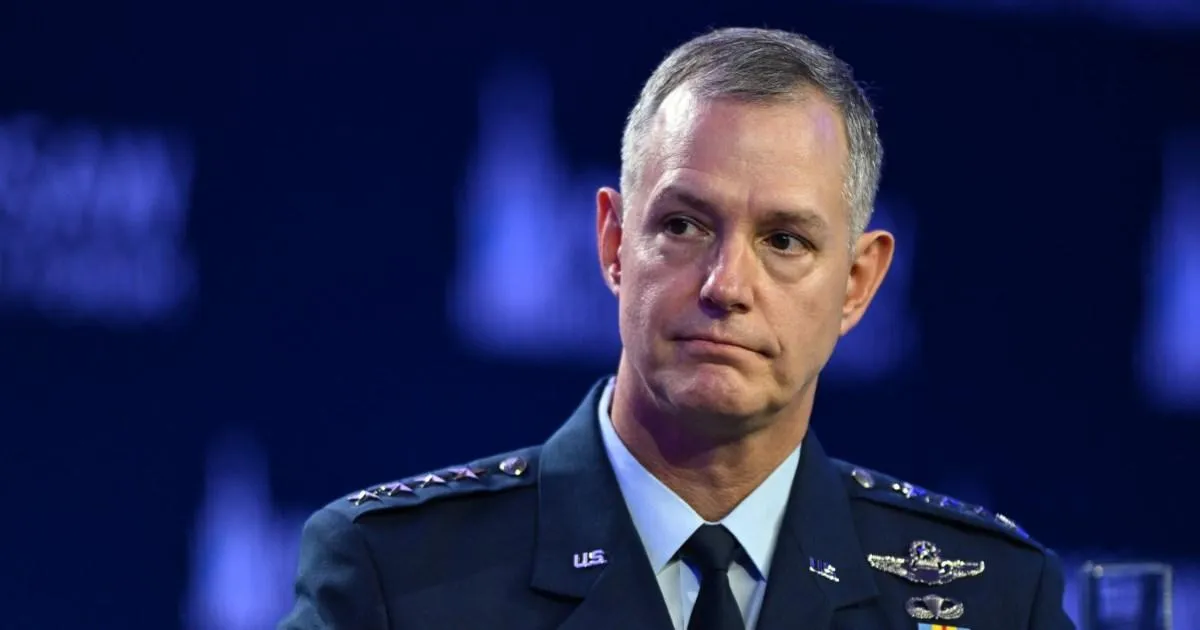
The words landed with the weight of a steel door slamming shut. Standing before a security conference in Warsaw, shortly after Volodymyr Zelenskyy had addressed the same room, NATO’s top commander, US Air Force General Alexus Grynkewich, delivered a message that was as simple as it was chilling: if Russia were to test the alliance’s resolve, it would find a force ready to meet it in the dark. “We’d be ready to fight tonight,” he said, and while he was careful not to fan the flames of panic—insisting that he did not believe conflict was “imminent or inevitable”—the sentiment was unmistakably stern. This was not the abstract language of diplomatic hedging or the careful vagueness of political maneuvering. It was a direct, unambiguous statement from a man whose job hinges on anticipating the worst, aimed squarely at a nation that has spent years probing the edges of NATO’s patience. In the same breath, however, he struck a note of cautious reassurance, reminding everyone in the room that the alliance’s posture is fundamentally defensive. The goal is not to provoke a war, but to make the idea of one so clearly disastrous that no rational leader would ever consider it. There was something almost paternal in the warning, a seasoned general telling a dangerous neighbor not to make a mistake that everyone would regret.
The human core of Grynkewich’s message was not about a desire for battle, but about the grim necessity of preparation. When he invoked the phrase “fight tonight,” he was doing more than reciting a military mantra; he was painting a picture of a standing force so alert, so well-drilled, and so seamlessly integrated that it could transition from peacetime routine to full combat operations in a matter of hours. This is the quiet, unglamorous work that happens long before the first shot is ever fired—the intelligence analysts tracking satellite movements, the fighter pilots running endless simulations, the logistics officers ensuring that fuel and ammunition are never more than a few hours away. For the people in uniform, this readiness is not a political statement; it is a profession. They do not hope for war, but they have sworn to be ready for it, and there is a strange comfort in knowing that the men and women standing guard are not hoping, but actively training to ensure that if the unthinkable happens, they will not be caught flat-footed. Grynkewich’s phrasing was intentionally blunt because he understands that in the fog of geopolitical tension, clarity is a virtue. He was not issuing a threat, but a promise to the millions of civilians across Europe and North America who sleep soundly at night because of this invisible shield.
At the heart of his speech was what he called a “theory of victory,” a concept that sounds abstract until he fleshed it out. Should Moscow be “foolish enough” to launch an assault on NATO territory, Grynkewich made it clear that the response would not be a simple, defensive pushback at the border. Instead, he described a systematic, devastating dismantling of the entire Russian war machine. “Should the adversary choose to press the attack or commit his reserves,” he declared, “we will break the warfighting system engaged against us. This includes not just the attacking force itself, but anything and everything that supports, sustains, and controls that force.” In plain terms, he was saying that the first wave of troops crossing the line would be only the beginning of their problems. The missiles firing from ships, the logistics convoys bringing fuel, the communication nodes sending orders, the generals sitting in command bunkers hundreds of miles away—all of it would be fair game, and all of it would be targeted. The image he conjured was not that of a border skirmish, but of a surgical, all-encompassing annihilation of the adversary’s ability to continue fighting. It was a stark reminder that NATO’s military power is not just about numbers on a budget sheet; it is about the ability to reach out and touch every single component of an enemy’s operation, turning an offensive into a catastrophic miscalculation.
The general’s tone sought to transform fear into confidence, urging the public to find reassurance in the alliance’s overwhelming capabilities. “We should take comfort in our ability to deliver mass effects and the implicit warning that we could match any enemy move up the escalation ladder,” he said. These words were carefully chosen, acknowledging that deterrence is a psychological game as much as a military one. The goal is to make the adversary believe, with absolute certainty, that any step they take toward conflict will be met with a correspondingly heavier step from NATO. If they escalate, they will find the alliance right there with them, not blinking, not backing down. Grynkewich argued that any rational adversary looking at the alliance would see not a patchwork of squabbling nations, but a united, strong, and ready coalition—and that this should give them serious pause. “They should quickly realise the military calculus of escalation is too high,” he added, distilling decades of strategic thinking into a single, sobering sentence. This is the true purpose of NATO’s strength: not to win a war, but to prevent one from ever starting. By being louder and more prepared than any potential aggressor, the alliance hopes to convince Moscow that the cost of even beginning a conflict would outweigh anything they could possibly gain.
Though Grynkewich was careful not to name Russia explicitly, there was no doubt about who was in his crosshairs. The context alone said enough. NATO’s official strategic concept has already identified Russia as the most significant threat to the alliance’s security, and the tension between Moscow and European nations has been escalating on a worrying trajectory. European governments have increasingly accused the Kremlin of waging a shadow war against them, marked by sabotage operations, drone incursions, and relentless cyberattacks. These are the weapons of a conflict that does not always make headlines but wears down the foundations of national security—a power grid disrupted here, a railway signaling system tampered with there, a suspicious drone spotted over a military base. This is the murky, deniable realm of modern warfare, and it is precisely why Grynkewich’s public statement mattered. He was not just responding to a hypothetical invasion; he was drawing a line under a broad pattern of aggressive behavior. And the stakes were raised even further last month when Moscow warned that it would resort to nuclear weapons if NATO attempted to sever its exclave of Kaliningrad. That threat, hanging over the Baltic region like a poisoned cloud, is the kind of rhetorical brinkmanship that keeps military planners awake at night and makes declarations of readiness so vitally important.
In the end, Grynkewich’s speech was a dual-sided coin, crafted for two very different audiences. For the ordinary citizens of NATO member states, it was a message of reassurance: the alliance is not asleep at the wheel, it is not divided, and it will not be caught unprepared. “We will, in short, ensure any attack against any ally proves utterly futile,” he said, turning the concept of defense into a promise that no member nation would ever have to face the storm alone. For the adversary, however, the message was an altogether darker warning. He framed the world in terms of action and consequence: fight, and you will be stopped; attack, and you will be broken; escalate, and you will lose everything. “If someone is foolish enough to attack us, we will fight,” he said. “We will stop the attack and deny them the ability to achieve their objectives, whatever those might be.” There is no joy in these words, no bloodthirsty eagerness for war. Instead, there is the weary, steel-eyed realism of a commander who has spent his life studying the horrors of conflict and has come to one conclusion: the best way to honor the sacrifices of the past is to make certain that the future never demands them again. It is the voice of deterrence, humanized into a simple, unshakeable creed—we are ready, we are united, and we will not be moved.