

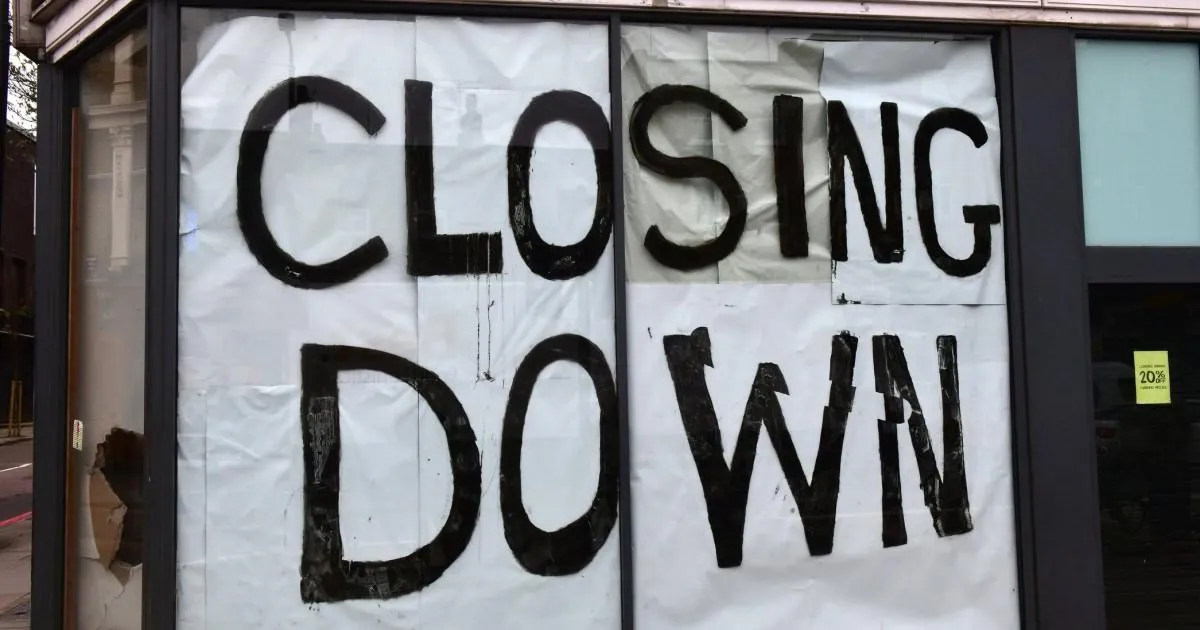
There is a particular kind of sadness that comes with watching a shop you love slowly pack up its shelves, and for anyone who has ever lost an hour inside a Typo store, the news of its departure from the UK high street feels personal. Typo, the Australian stationery and accessories chain owned by the fashion group Cotton On, has announced that it will close all of its stores across the country, as well as its UK website, by early 2027. At present, around 13 Typo stores remain operational, scattered across England and Scotland, from Glasgow to Bristol, but many have already begun holding closing-down sales. For a brand known for its colourful notebooks, motivational wall art, novelty mugs, phone cases, and the kind of small, brightly packaged gifts that make people smile, this is not just another corporate retreat; it is the end of a small but meaningful chapter in the lives of the communities where these shops have become familiar landmarks. The news arrives with the usual corporate gentility—a statement expressing gratitude, a promise to support staff through the transition—but behind the polished words lies a quieter, more human story of jobs lost, daily routines disrupted, and a retail landscape that continues to shrink in ways that feel increasingly hard to ignore.
The closures have already begun in some locations, with several prominent Typo branches having shut their doors in recent weeks and months. In London, the store at Westfield Stratford is gone, as is the branch at Westfield White City, along with a concession inside Selfridges and a store in Angel. In Newcastle, the Eldon Square branch remains open but is reportedly holding a closing-down sale, a familiar sight that shoppers have learned to recognise as the beginning of the end. The full list of remaining stores expected to close includes Buchanan Galleries in Glasgow, Metrocentre in Newcastle, Union Square Shopping in Aberdeen, Meadowhall Centre in Sheffield, Derbion in Derby, Bentall Centre in Kingston upon Thames, Bluewater Shopping Centre in Kent, Festival Place in Basingstoke, Centre MK in Milton Keynes, Grand Arcade in Cambridge, Gravel Walk in Canterbury, Southgate in Bath, Cabot Circus in Bristol, and High Street in Exeter. Each of these names represents more than just a shopping centre; they are places where people meet friends, where teenagers spend their pocket money, where parents take children on rainy Saturday afternoons. The list of locations reads like a map of everyday British life, and the loss of Typo from these spaces will leave a small but noticeable gap in the experience of wandering through a mall or a high street, especially for those who have come to rely on the brand for affordable, expressive gifts and stationery that feels just a little bit special.
In a statement provided to ChronicleLive, the company explained the decision with the kind of language that has become all too familiar in retail announcements. ‘After careful consideration, we are closing Typo’s operations in the United Kingdom, with all stores and online trading to close by early 2027,’ the statement read. ‘We recognise the impact of this decision on our Typo UK team who are already aware of this, and our priority is to support our people through this transition.’ The parent company, Cotton On, went on to cite ‘ongoing high rent and operating costs’ combined with low sales as the reasons the chain had become unsustainable, despite what it called ‘the efforts of our teams.’ For the staff who work at Typo, this news is more than a headline; it is the beginning of a difficult period of uncertainty, a time of CVs and interviews, of explaining to friends and family that the place where they have spent their working days will soon be gone. While the company has said it is prioritising support for its employees, the reality of retail job losses is often harsher than the statements suggest, and for many workers, especially those in their first jobs or those balancing work with study, the closure represents a significant personal setback. The phrase ‘support our people’ can feel hollow when the very foundation of that support—the job itself—is being removed, and the human cost of high-street decline is often measured in quiet, individual struggles that never make the news.
Typo’s departure is part of a broader pattern that has reshaped the UK high street over the past decade, and it would be easy to see this as just another casualty in a long war between physical shops and online shopping. The same week that Typo announced its closures, headlines were dominated by HMV on Oxford Street closing its doors just three years after reopening, as well as the news that Halifax’s online banking app is closing for good, and a long list of other shop and restaurant closures confirmed for September 2026. The high street has been in a state of constant flux for years, with well-known brands disappearing, being bought out, downsizing, or reinventing themselves in desperate attempts to survive. The pandemic accelerated trends that were already underway, and the cost-of-living crisis has made consumers more cautious, more price-sensitive, and more likely to shop around online for the best deals. For a brand like Typo, which sits in the middle ground between necessity and impulse purchase, the squeeze is particularly acute. Stationery and accessories are not essentials, and when budgets are tight, they are often the first things to be cut. At the same time, the costs of maintaining a physical presence in premium shopping centres have continued to rise, and the footfall that once justified those costs has not returned to pre-pandemic levels. The result is a slow, grinding process of attrition, where even brands with loyal followings find themselves unable to make the numbers work.
Yet there is something about Typo that feels different from the average chain, and that is why its closure carries an emotional weight that might surprise even those who rarely visited. Typo has long been a destination for a certain kind of shopper: the person who loves browsing through racks of notebooks with witty covers, pens in every colour of the rainbow, phone cases with quirky patterns, and small trinkets that turn a desk into a personal statement. It is a shop that understands the joy of small things, the pleasure of choosing a gift that says ‘I know what makes you smile’ without costing a fortune. For many young people, Typo was their introduction to stationery as self-expression, a place where you could buy a journal that felt like it was made just for you, or a mug that made you laugh every morning. For students, it was a go-to for back-to-school supplies that felt less boring than the standard supermarket packs. For friends, it was the perfect place to pick up a little something just because. The brand’s aesthetic—playful, bold, sometimes sarcastic, often colourful—filled a niche that few other high-street retailers have managed to occupy with the same consistency. Losing Typo means losing a place where shopping felt less like a transaction and more like a treasure hunt, and that is a loss that cannot be measured in sales figures alone.
As the remaining stores hold their closing-down sales and the shelves slowly empty, shoppers are left with a bittersweet feeling. There is, of course, the practical opportunity to grab a few last notebooks or phone cases at a discount, but there is also the realisation that this is the final goodbye. The announcement that all stores and online trading will close by 2027 gives the brand a longer runway than many closures, but the end is inevitable, and the countdown has begun. In the months ahead, the familiar green and white signage will disappear from shopping centres across the country, and the spaces where Typo once stood will be filled, eventually, by something else—or will remain empty, as so many units now do. The closure is a reminder of how fragile the physical high street has become, and how much we take for granted the small, colourful shops that make our towns feel like places rather than just collections of buildings. It is also a reminder of the importance of supporting the places we love while they are still there, of buying that notebook even if you do not really need it, of lingering a little longer in a shop that makes you happy. For the staff, the customers, and the communities that welcomed Typo into their daily lives, the next few months will be a time of farewells. And when the doors close for the final time, there will be a moment of quiet loss—a small, empty space where colour used to be. But the memories of what was found there, the gifts given, the journals filled, the little sparks of joy, will linger long after the shutters come down.