

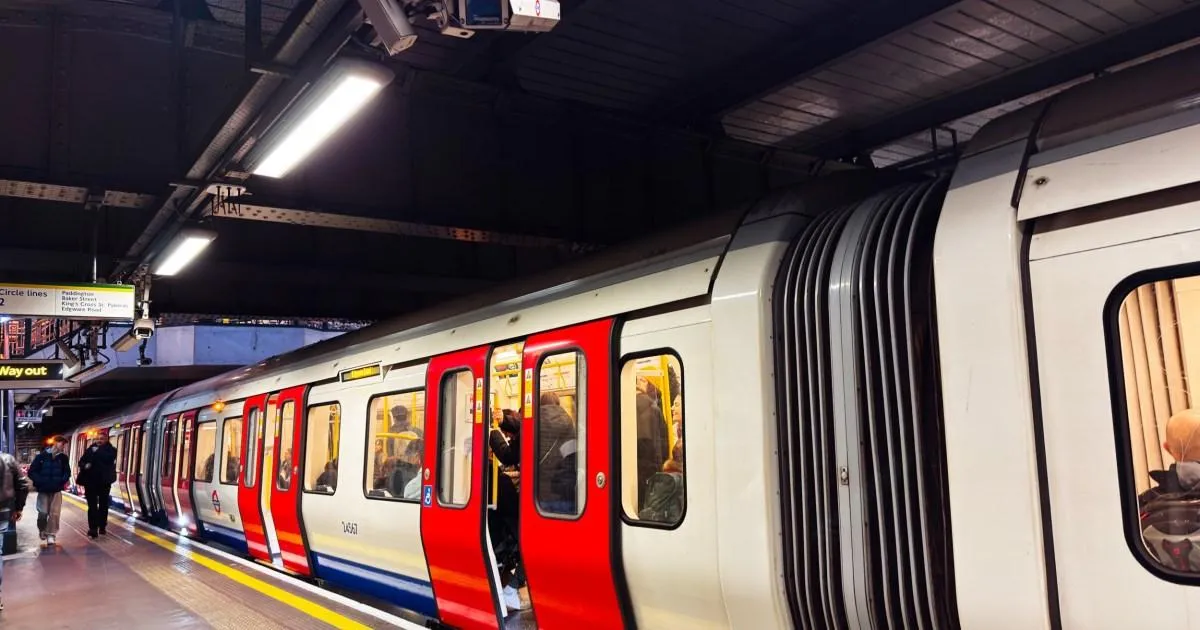
Imagine this: you’re standing on a crowded Tube platform after a long day, headphones in, half-watching the digital countdown to the next train. Then you hear raised voices. Someone is being shouted at for the way they look, the clothes they wear, the language they speak. Your stomach knots. You glance around and see other passengers looking at their shoes. Should you say something? What if it makes things worse? What if the aggressor turns on you? In that split second, most of us freeze. That feeling of helplessness, that awful uncertainty, is exactly what Transport for London is trying to change this week, and they’re doing it in a way that feels genuinely cutting-edge: virtual reality. Yes, VR, the same technology that powers your gaming console or your phone’s fancy new apps, is being used to drop commuters straight into the middle of a hate crime scenario. But not as the victim and not as the perpetrator. You’re the bystander, the ordinary person who happens to be there when something horrible unfolds. And the point isn’t to scare you or make you feel guilty. It’s to show you, in a safe and controlled environment, that you actually have more power than you think to help. TfL has set up these demonstrations at eight Underground and Overground stations across London, and they’ve timed them to coincide with National Hate Crime Awareness Week, which runs from October 10 to October 17. It’s a smart, modern, deeply human approach to a problem that has been growing on the network, and it turns a passive message like “see something, say something” into an actual learning experience you can feel.
The sessions themselves are drop-in, which means you don’t need to book a ticket or register your name; you just show up at the station during the advertised window, put on a headset, and spend a few minutes in someone else’s shoes. A couple of these events have already happened, so if you were hoping to catch the one at Stratford or Liverpool Street, you’ve missed those particular boats. But don’t worry, there’s still plenty of opportunity to take part. On Tuesday, October 13, you can find the team at Harrow-on-the-Hill between noon and 3pm. Wednesday, October 14 brings two sessions: Victoria from 10am to 12pm and Euston from 1.30pm to 3.30pm. Thursday, October 15, the VR kit will be at Golders Green from 12pm to 3pm. And Friday, October 16, the final day, features Stamford Hill in the morning from 10am to 12pm, followed by Finsbury Park from 1.30pm to 3.30pm. So whether you’re a daily commuter, a tourist with some time to kill, or a curious local, there’s a decent chance one of these stations is near you. And if you can’t make it to any of those physical locations, TfL has made sure you’re not left out. They’ve partnered with a charity called Protection Approaches to offer six free online active bystander training sessions, which you can book through Eventbrite. These live virtual workshops go deeper into the same ideas the station demos touch on, giving you practical tools and language to use in difficult situations. It’s all free, all voluntary, and all designed to make you feel a little less powerless next time you witness something ugly. You don’t need to be a hero or a trained mediator. You just need to be willing to learn.
The reason this matters so much right now is that hate crime on London’s transport network has been climbing at a worrying rate. TfL reported a 36 percent increase in hate crime compared with the previous year, with 2,396 incidents recorded between January and August of this year. Let that number sink in for a moment. That’s not just a statistic; that’s 2,396 real people who were insulted, threatened, spat at, or attacked simply because of who they are. It’s a woman in a hijab trying to get home after work, a young gay man holding his boyfriend’s hand on the Night Tube, a Jewish family heading to Golders Green for Shabbat, a Black teenager in a school uniform just trying to get to class. Each one of those incidents leaves a mark, not only on the victim but on everyone who witnesses it. And while TfL says part of the increase is down to improved reporting, which is actually a good thing, they also acknowledge that international events and rising tensions in society are playing a role. When the world feels more divided, those divisions show up on public transport. The bus, the Tube, the Overground, these are places where all of London mixes together, where every class, every culture, every identity shares the same carriage. That’s usually something beautiful, but it also means that when hatred creeps in, it has a very visible stage. The good news is that more people are reporting these crimes, which means the problem is being seen. The challenge now is making sure everyone knows what to do in the moment, and that’s exactly what this VR initiative is trying to accomplish.
So what does it actually feel like to take part in one of these demonstrations? From the descriptions TfL has shared, you’re not just watching a screen; you’re immersed in a scenario where you hear the angry words, see the body language, and feel the tension of a platform that has suddenly gone quiet. You’re placed in the role of a bystander, and you’re given choices. Do you walk away? Do you catch the victim’s eye? Do you ask the aggressor a calm question to break their rhythm? Do you create a small distraction, like dropping your bag or checking the time? These are the kinds of everyday tactics that active bystander training teaches, and they’re far more practical than the dramatic “jump in and stop the fight” moves we see in movies. The point is that intervention doesn’t have to be confrontational. Sometimes the most powerful thing you can do is simply stand next to the person being targeted, making it clear they’re not alone. Sometimes it’s recording what’s happening safely or alerting a member of staff. Sometimes it’s just asking, “Are you okay?” after the aggressor has moved on. All of these actions send a message, both to the victim and to the person causing harm, that this behavior is not acceptable. The charity Protection Approaches, which is leading the online training, has years of experience in this field, and their methods are grounded in real research about what works. They don’t ask you to be fearless. They ask you to be human. And by practicing these skills in virtual reality, you’re building muscle memory in a way that a poster or a pamphlet never could. When the moment comes, and it might come sooner than you think, your brain won’t have to scramble for ideas. It will remember what it practiced.
The people running London’s transport system are clearly aware of how important this work is, and they’ve said so in terms that leave no room for doubt. Siwan Hayward, TfL’s director of security, policing and enforcement, made a point of reassuring Londoners that everyone’s safety is taken seriously. “We will not stand for hate crime of any form on our network, whether it’s against our customers or staff,” she said, adding that the station events and online training are valuable opportunities to give customers practical advice so that “even more customers feel confident and comfortable to intervene in the event of a hate crime.” That word, confident, is crucial. It’s the difference between wanting to help and actually helping. A lot of us want to do the right thing, but we’re scared of getting it wrong. These sessions are designed to replace that fear with confidence, to show you that even a small gesture can make a big difference. Kaya Comer-Schwartz, the deputy mayor for policing and crime, echoed that message with a simple and powerful statement: “Everyone should feel safe and be safe when traveling in London.” She went on to say that hate crime and harassment have no place on the transport network or anywhere in the city, and that the authorities are determined to tackle and prevent these awful crimes. It’s easy to become cynical about statements from officials, but there’s something genuinely heartfelt in these words. They acknowledge that safety isn’t just about physical security, it’s about dignity, respect, and the freedom to move through the city without fear. When a leader says that everyone deserves to feel safe, they’re talking about the emotional experience of travel too, the simple comfort of knowing that the person sitting next to you isn’t going to judge you or attack you for being yourself.
At its heart, this VR initiative is about more than just crime prevention. It’s a statement about what kind of city London wants to be. London has always prided itself on being a place where people from every corner of the globe can rub shoulders and, for the most part, get along. That diversity is not a weakness; it’s the city’s greatest strength. But that strength needs to be protected, and it’s protected by ordinary people as much as by the police or transport staff. The message of this campaign is that we all have a role to play. You don’t need to wear a uniform or carry a badge to make your community safer. You just need to pay attention, care about the people around you, and be willing to step outside your comfort zone when it matters. The virtual reality sessions are a brilliant way to practice that mindset in a safe space, but the real test comes afterward, on the actual platform, in the actual carriage, in the everyday moments where hate can either be confronted or allowed to flourish. So if you’re in London this week, consider stopping by one of the remaining sessions. Put on the headset. Let yourself feel uncomfortable for a few minutes. Learn what it’s like to be a witness, and more importantly, learn what it’s like to be a person who acts. Because the next time you hear someone being harassed, you won’t have to wonder what you should do. You’ll already know. And in that moment, you might just make all the difference to someone who needs you. That’s the real power of this technology: it doesn’t just show you a problem, it shows you that you can be part of the solution. And in a city as big and busy as London, that feeling of connection, of shared responsibility, is something worth holding onto.