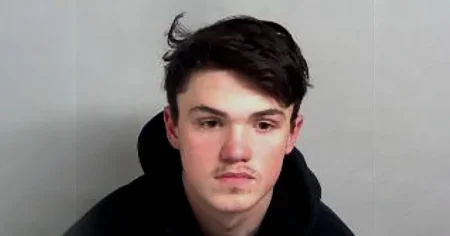

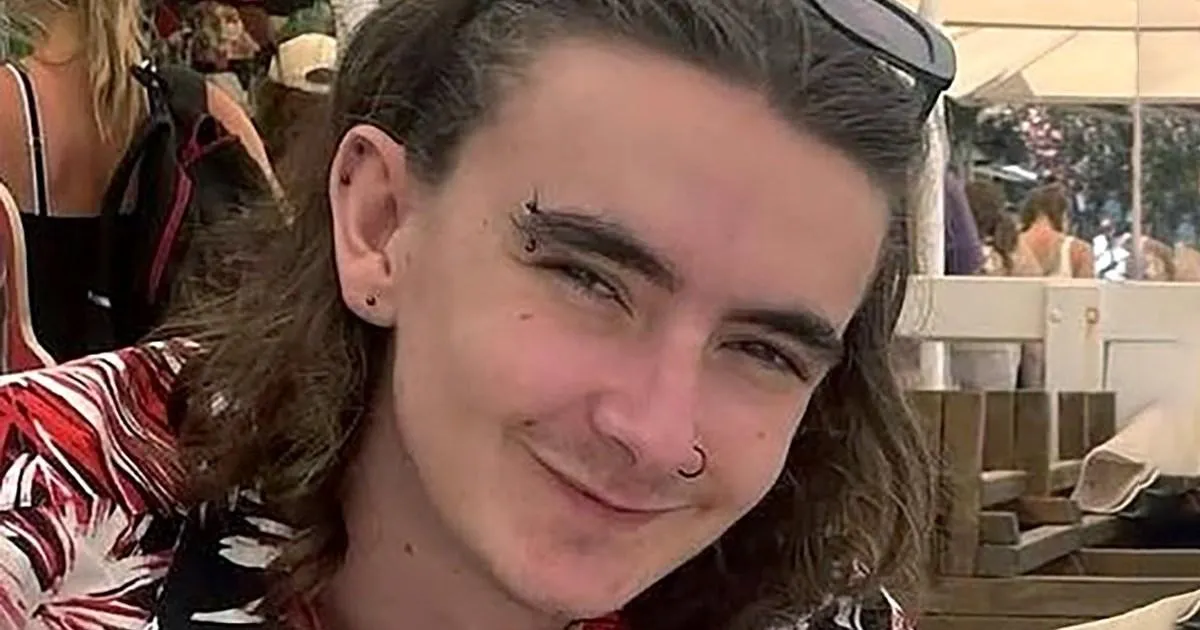
Some stories are so violent that they seem to belong to another world, far away from the ordinary routines of daily life. But this one unfolded in a shared student house in Filton, South Gloucestershire, and its victim was a 21-year-old robotics student with his whole future ahead of him. Jamie Collins had spent the day at the University of the West of England, studying a subject he loved among friends and classmates. On the afternoon of April 8, shortly before 6pm, he returned to the home he shared with his fellow student and supposed friend, Zack Coughlan. It should have been just another evening. Instead, according to prosecutors, someone was waiting for him in the garden, hidden in the shadows, dressed all in black and wearing a mask and gloves. That person, the prosecution alleges, was Coughlan. Jamie was stabbed 30 times in a ferocious and sustained attack that left him mortally wounded. He was left to die in the alleyway behind the house as his attacker cycled away into the early evening, leaving the scene as though Jamie’s life meant nothing. The horror of those moments is almost impossible to absorb. A young man who had every reason to believe he was safe, arriving home after a day of study, met a sudden and brutal death at the hands of someone he knew, someone he lived with, someone who would later pretend to find his body and play the part of the grieving housemate.
The prosecution case, laid out at Bristol Crown Court, paints a chilling picture of premeditation. Zack Coughlan, 23, dressed entirely in black, wore a mask and gloves while he waited for Jamie to come home. This was not a spontaneous argument or a moment of madness. It was a planned ambush, carried out in the garden of the house the two men shared on Cleve Road. The attack was captured on CCTV installed at the property, and it showed the masked figure lying in wait. When Jamie appeared, the violence erupted. He was stabbed repeatedly, 30 times in total, in an assault so frenzied that it left him dying in the alleyway. Coughlan then cycled away, leaving his victim behind. But his movements after the attack, as described in court, reveal a disturbing calm. He dumped the bicycle at a nearby retail park, bought himself a change of clothes, and threw his bloodstained clothing into a pond. By 9pm, just a few hours after leaving Jamie to die, Coughlan had returned home, put a pizza in the oven, and sat down to play online games with friends. It is a detail that is hard to reconcile with the image of a young man who had just committed an unimaginable act of violence. Yet according to the prosecution, that is exactly what he did, and the mundanity of his evening, the pizza, the gaming, the pretence of normality, makes the alleged crime even more chilling.
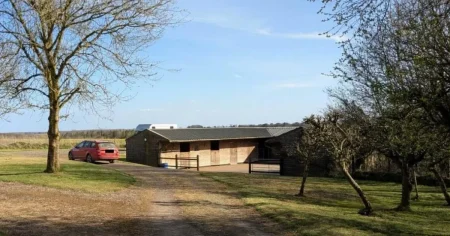
The deception continued for hours. It was not until 2am, eight hours after the stabbing, that Coughlan finally called 999. He told the emergency operator that his friend had been stabbed. They instructed him to perform CPR until paramedians arrived, and he claimed that he was doing so. When armed police officers arrived at the house, they found Jamie’s body in the back garden. Coughlan told them a carefully constructed story. He said he had been out at the park and had only just come home. He said he had noticed the back gate was open, and that when he went outside to investigate, he found Jamie lying in the garden. He even showed officers the CCTV footage from the house, apparently as a witness anxious to help, not as a suspect trying to hide his guilt. For a time, the act worked. Police initially treated him as a witness. But the investigation soon exposed the gap between the story he told and the evidence on the ground. The chilling art of his performance, the calm voice on the 999 call, the staged discovery of the body, the willingness to point officers toward the very camera that had captured the attack, is not something any ordinary person would expect from a housemate and friend. But the prosecution would later argue that the mask he wore in the garden was not the only mask Zack Coughlan wore that night.
The turning point came when forensic and digital evidence began to unravel the story. The investigation found Coughlan’s blood on Jamie Collins’s bicycle, a detail that placed him at the scene in a way words could not explain. Analysis of his mobile phone matched his movements to the killer’s movements after the attack, captured on CCTV at various points in the area. His hands were injured, and when people noticed him bleeding, he told them he had been climbing trees and had fallen. It was a flimsy excuse, and it did not survive contact with the evidence. According to Adam Vaitilingam KC, the prosecuting barrister, the investigation showed clear evidence that Zack was the man who waited for Jamie and then stabbed him to death before cycling away. The police now had a different picture. The witness had become a suspect, and Coughlan was arrested and interviewed. He now accepts that he killed Jamie Collins, but he denies murder. That is a crucial legal distinction. By admitting the act but denying the charge, Coughlan’s defence is likely to focus on his state of mind at the time of the attack, whether he intended to kill or cause serious harm, or whether there were circumstances that reduced his culpability. The jury will have to decide not only what happened, but what was going on in his head during those terrible moments in the garden.
Perhaps the most haunting part of this case is how normal, and how known, the two young men were to each other. Jamie Collins and Zack Coughlan were both final-year students at UWE Bristol, studying robotics together on the same course. They lived under the same roof, in a house owned by Coughlan, and their lives were intertwined in the way student lives often are. They shared meals, conversations, deadlines, and the quiet rhythms of university accommodation. There had been disagreements between them in the past, according to the court, mostly about rent and about whether Coughlan was charging too much for the rooms. But those disputes had apparently been resolved. Friends who knew them both said there were no significant problems between them. They said the pair hung out often and went out together. They seemed, to the outside world, to be two ordinary students navigating the pressures of final-year work and shared living. How, then, does a relationship like that end in a knife attack, with one young man left bleeding in an alleyway and the other cycling away into the night? It is a question that no court may ever be able to answer fully. There is something profoundly unsettling about the idea that someone you live with, someone you chat to in the kitchen, someone you play games with online, could be hiding a capacity for such extreme violence. The banality of their conflicts, rent, house rules, small daily frustrations, makes the alleged crime feel even more inexplicable. It reminds us that the people closest to us are not always who we think they are, and that violence can erupt in the most ordinary of settings.
Now a jury at Bristol Crown Court must decide what justice looks like for Jamie Collins. The trial will continue to hear evidence about the attack, the cover-up, and the investigation that followed. The prosecution has set out a detailed case: the black clothing, the mask, the gloves, the 30 stab wounds, the discarded bicycle, the bloodstained clothes thrown into a pond, the pizza eaten hours later, the phone call at 2am. Coughlan denies murder, and he is entitled to defend himself against that charge, but the human loss at the centre of the case is not abstract. Jamie Collins was a son, a friend, a student with dreams and ambitions, a young man who loved robotics and had a future ahead of him. His life was not a case file or a headline. It was real, and it was cut short in the most brutal way imaginable. No verdict will bring him back. No sentence will heal the grief of the people who loved him. The trial is not just about establishing legal guilt. It is about bearing witness to the worth of a life that was taken far too soon, and about trying to make sense of something that makes no sense at all. In the end, the only answer the law can offer is accountability. For Jamie’s family, for his friends, and for all those left behind, that may have to be enough.