

-
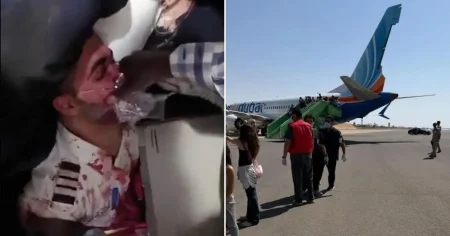
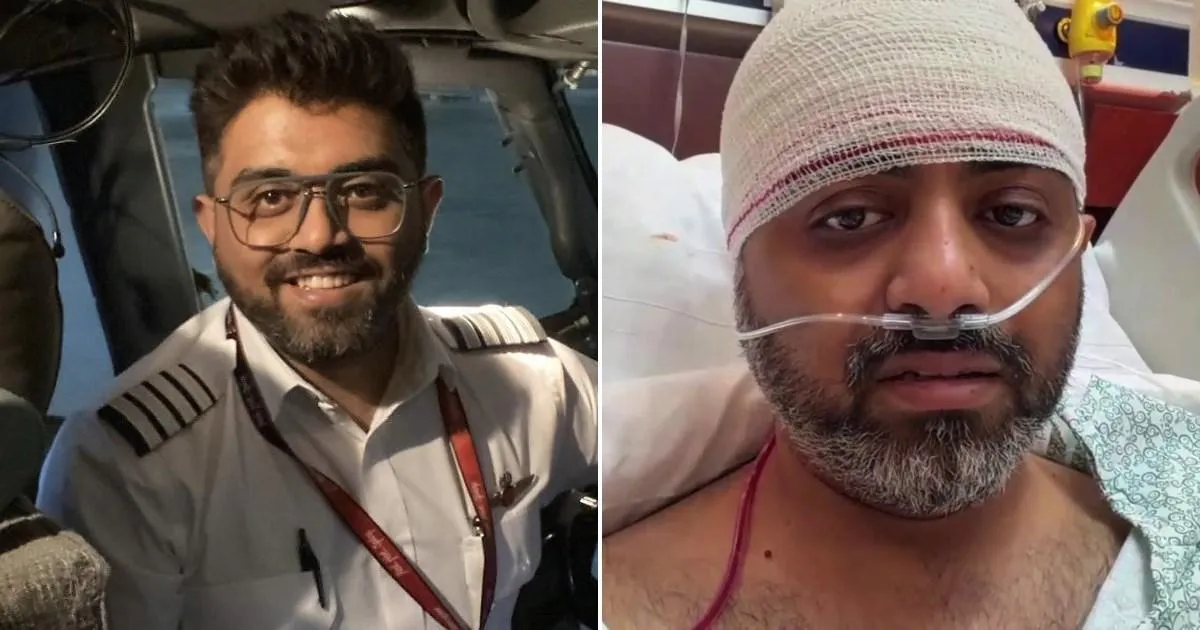
Every so often, a story emerges that cuts through the noise of the news cycle and reminds us what courage truly looks like. This is one of those stories. Captain Smit Machchhar, a commercial pilot for Flydubai, was commanding a routine flight bound for Israel when his cockpit turned into a scene of chaos and terror. Somewhere in the cabin, a co-pilot—a man who was supposed to be part of the team responsible for the safety of everyone on board—became something else entirely. He attacked. In the cramped, confined space of the flight deck, he turned on the captain with shocking violence, leaving Machchhar wounded and on the floor. The aircraft, suddenly without proper control, began to plunge toward the earth. It fell more than 17,000 feet in what must have felt like an eternity of terror. Yet in that horrifying moment, with blood and fear and the screaming of alarms filling the air, Captain Machchhar did not give up. His body was broken, but his will was not. He somehow managed to drag himself toward the cockpit door and force it open from the inside, knowing that if he could just get that door open, there was a chance—a small, desperate chance—that others could rush in and help. That single act, born out of sheer determination, would go on to save the lives of 174 people. It is the kind of heroism that is easy to admire but almost impossible to imagine performing, because it asks you to find strength in your very worst moment. Machchhar found that strength, and because he did, a disaster that could have ended in unspeakable loss became a story of survival.
-
To understand just how remarkable his actions were, you have to picture the scene inside the cockpit. Flying a modern commercial airliner is a task that requires precision, constant attention, and calm collaboration between the pilots. When one of those pilots turns into an attacker, the entire environment becomes a nightmare of smoke, violence, and unresponsive controls. Captain Machchhar was not only fighting for his own life; he was fighting against time itself, because every second the aircraft remained without proper guidance brought it closer to the ground. The plane was rapidly sinking, and the controls were not being handled by anyone capable of leveling it off. In the cabin, passengers were likely unaware at first of the full extent of the danger, but they must have felt the stomach-lurching sensation of the nose dropping, the sudden weightlessness, the panic that grips you when a plane starts to fall. Two off-duty pilots were among the passengers, but they were locked out of the cockpit, unable to do anything without access. The door was sealed, and the man who had the keys and the authority to open it was lying on the floor, injured and bleeding. It would have been so easy to surrender to exhaustion, to let the darkness close in, to think only of the end. But Captain Machchhar refused. He later described the moment with haunting simplicity, recalling that he lay there injured but told himself he had to go for one last push to open the door from inside. He was fighting for his own survival, yes, but he was also carrying the weight of every person on that plane in his heart. He knew that if he stopped, if he gave up, they would all be lost. So he pushed, and he pushed, until the door finally gave way.
-
What happened next is a testament to the idea that heroism is rarely a solo act. When Captain Machchhar managed to get the cockpit door open, a stream of people rushed in—passengers and cabin crew, along with the two off-duty pilots who had been waiting helplessly in the cabin. It was their collective effort that changed the trajectory of the flight. They overpowered the attacker, restrained him, and took control of the situation long enough to stabilize the aircraft. In the chaos, everyone played a role. Machchhar himself was remarkably humble about what had happened, insisting that others also played a role in controlling the situation. He said he was fighting for his own life, but at the same time, he knew he was not going to let others die. That simple sentence carries so much weight. It speaks to a kind of instinct that cannot be taught in-flight training, a deep-seated sense of responsibility that separates true pilots from mere technicians. The off-duty pilots who came to the rescue were strangers to the crew, but they stepped into an impossible situation without hesitation. Together, they managed to stabilize the plummeting plane and prevent a catastrophe. The flight was diverted to Saudi Arabia, where emergency services were waiting on the ground. When the plane finally landed, the danger was not yet over, but the worst had passed. Captain Machchhar was taken to a hospital, where he would begin the slow, painful process of recovery. The 174 people who walked away from that flight owe their lives to a chain of courage that started with one man’s refusal to die, and continued with the willingness of others to risk their own safety for the sake of everyone on board.
-
In the days that followed, the world began to learn more about the man at the center of this incredible story, and his words from the hospital resonated far beyond the aviation community. Captain Machchhar did not speak like a man defeated by his injuries. He spoke with a quiet, unshakable faith in his own recovery. “I am not looking at this wound like a wound because that would make my recovery even more difficult,” he said. “I am looking at it as a journey which is slowly going on and will take time, but I am confident that the recovery will be there and I will become fit and healthy again.” There is something profoundly human in that perspective. He had just survived an attack, saved more than a hundred lives, and been rushed to an unfamiliar hospital in a foreign country. He was in pain, far from home, facing a long road ahead. And yet he chose to frame his injury not as a setback but as a journey. That kind of mindset is not just inspirational; it is a survival strategy. It allowed him to look forward instead of backward, to focus on healing instead of reliving the terror. It also gave the world a glimpse into the character of the man who had acted so selflessly. His bravery in the cockpit was not a fluke; it was a reflection of who he is. He was the same person in the hospital bed, with the same courage, the same patience, and the same quiet confidence that things would get better. His words offered comfort to everyone who had followed the story, because they reminded us that even in the aftermath of violence, there is room for hope.
-
The recognition came quickly and from the highest levels. Indian Prime Minister Narendra Modi spoke directly to Captain Machchhar, praising his courage, patience, and quick decision-making. Modi said that the captain had saved the lives of so many people, and that the whole country was proud of him. For a nation like India, where heroes are often celebrated with great enthusiasm, this was a moment of collective pride. But the admiration did not stop at India’s borders. Israeli Prime Minister Benjamin Netanyahu also described Machchhar as a “true hero,” a phrase that carries particular weight given that the flight was bound for Israel and the attack was linked to broader tensions in the region. Netanyahu’s comments added an international dimension to the story, transforming a personal act of bravery into a symbol of resilience in the face of terror. It is rare for two prime ministers from different countries to unite in praise of a single individual, but this was no ordinary individual. Machchhar had become a global symbol of the goodness that can exist even in the darkest situations. He had shown that ordinary people are capable of extraordinary things, and that the bonds of shared humanity are stronger than the forces of hatred and violence. His name now sits alongside other heroic pilots who have faced impossible circumstances with grace and determination. He did not seek fame, and he did not ask for recognition. He simply did what needed to be done, and the world responded with gratitude. That response matters, because it reminds us that heroism is still valued, and that courage still inspires.
-
As more details emerged about the suspected attacker, the story became even more complex. The co-pilot accused of trying to hijack the plane was reportedly an Omani national, and there were suggestions that he had shown “very strange behavior” before the attack. Some reports described him as a religious extremist, and Netanyahu suggested that it was clear the man was suicidal. According to the Israeli prime minister, the attacker was shouting “kill me” after he was tied up, a chilling detail that points to a state of mind completely consumed by destruction. The investigation into his background and motives is ongoing, and official confirmation of his identity has not yet been released. But even as the focus shifts to understanding what drove him, the memory of Captain Machchhar’s heroism remains the defining image of this story. It would be easy to dwell on the darkness, to worry about the vulnerabilities in aviation security, to wonder how such a thing could happen on a routine passenger flight. Those questions are valid, and they deserve serious attention. But the story is ultimately not about the attacker. It is about the people who refused to be victims. It is about a captain who lay bleeding on the floor of a plunging aircraft and somehow found the strength to save everyone on board. It is about off-duty pilots who rushed into danger without hesitation, and passengers who worked together in the most terrifying moment of their lives. It is about the triumph of courage over cowardice, of life over destruction. Captain Machchhar may be one man, but his actions represent something universal: the refusal to give up, the determination to protect others, and the belief that even in the worst nightmare, there is always a way forward. His recovery will take time, but his legacy is already secure. He is a true hero, not because he was invincible, but because he was vulnerable and chose to keep going anyway. In a world that sometimes feels full of fear and division, his story is a reminder that ordinary people can do extraordinary things, and that one person’s courage can save the lives of many.