

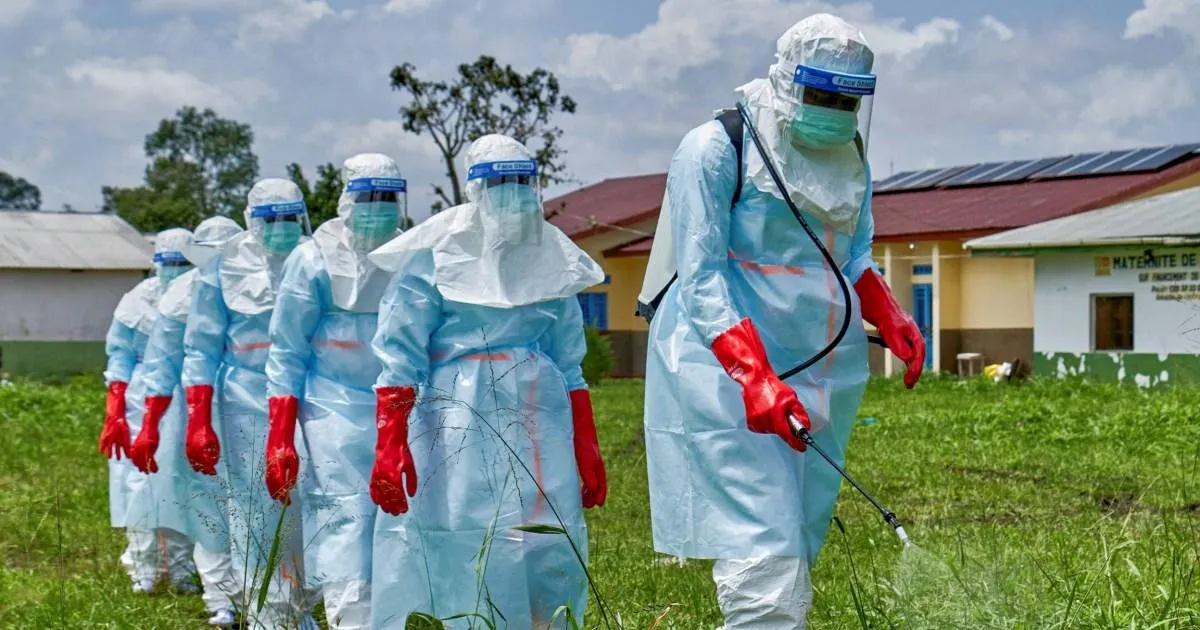
The Democratic Republic of Congo is currently facing a harrowing chapter in its public health history as a relentless Ebola outbreak continues to claim lives and dismantle communities. With over 1,800 fatalities and more than 4,000 recorded cases, the situation has moved beyond a standard health emergency into a state of profound crisis. The weight of this tragedy is compounded by the unsettling suspicion among health officials that the virus may be mutating. The current strain, known as the Bundibugyo variant, is demonstrating a level of virulence that has experts deeply concerned, prompting international health bodies to sound the alarm for an immediate and aggressive escalation in our response efforts.
The anxiety surrounding a potential mutation stems from the unprecedented severity of the current outbreak, which, while officially declared in May, likely began smoldering beneath the surface as early as January. Dr. Jean Kaseya, director general of the Africa Centers for Disease Control and Prevention, has articulated a chilling reality: we are seeing transmission patterns that defy previous experiences with this strain. Because so many victims in hotspots like Ituri are passing away outside the protection of clinical facilities, officials fear the true scale of the infection remains shrouded in shadow. We are quite literally flying blind in parts of the region, unable to fully map the path of the virus or gauge its next evolution.
To combat this rising tide of uncertainty, the Africa CDC is pivoting to a strategy of “active case searching.” This represents a shift from passive monitoring to a more proactive approach, which involves deploying health workers to go door-to-door to identify and isolate cases before they can spread further. The current contact tracing system is woefully inadequate; whereas medical protocols usually dictate identifying roughly 40 contacts for every confirmed patient, current efforts in the DRC are barely reaching ten. This gap in the surveillance net is where the virus is winning, allowing it to move through the population largely unchecked while families suffer in silence.
The mission to contain this outbreak is made infinitely more difficult by the backdrop of instability that plagues the region. The DRC is no stranger to internal conflict, and the constant movement of displaced people, combined with the dangerous terrain near the Ugandan border, turns simple logistics into a strategic nightmare. Even the frontline responders, whose bravery is the only barrier between the virus and further tragedy, are struggling; recent protests over unpaid wages reflect a system stretched to its absolute breaking point. It is a heartbreaking reality where those on the front lines of a humanitarian catastrophe are forced to worry about their own livelihoods while fighting a lethal pathogen.
While the absence of a specific vaccine for the Bundibugyo strain remains a major hurdle, there is a flicker of hope on the horizon. Researchers are optimistic that other existing Ebola vaccines might offer some level of cross-protection, potentially dulling the edge of the disease and reducing the mortality rate. However, hope alone cannot stop an epidemic. The global community must recognize that geography is no longer a shield; with cases having already emerged in neighboring Uganda and incidents appearing as far away as Europe through international travel, the threat is global. Ebola remains a rare but unforgiving enemy, with fatality rates that can soar as high as 90% in some outbreaks.
Ultimately, the human cost of this tragedy demands more than just scientific observation; it demands sustained empathy and global solidarity. Every statistic cited—the 1,800 lives lost, the thousands of families shattered—represents a person who was loved and a community left grieving. As the world watches, the mission in the DRC is not just about identifying a potential mutation or rolling out new medical protocols; it is about restoring dignity and safety to a population caught in a desperate struggle for survival. We must support the health workers, respect the reality of the crisis, and ensure that the, often silent, victims of this outbreak are not forgotten by the wider world.