


In the quiet, unassuming corners of Lambeth, south London, two women are fighting a battle no tenant should ever have to face — a battle not against the weather or old age, but against the very institution meant to protect them. Vanesha Rose, a young foster carer in her prime, and Jay Allen, an 83-year-old former singer and actress who once graced the West End stage, live just a few miles apart, yet their stories are painfully similar. Both describe their council homes as “homes from hell,” both struggle with damp, unsafe wiring, and broken promises, and both feel that Lambeth Council treats them as “non-persons” — invisible, unimportant, and undeserving of basic dignity. For years, they have watched ceilings crumble, waited through endless phone calls, welcomed contractors who never come, and tried to raise children and live out their golden years in properties that would be condemned in almost any other context. Their homes are not just buildings; they are the foundations of their lives. When those foundations are allowed to rot, everything else begins to collapse too. This is not merely a story about repairs and maintenance. It is a story about power, neglect, and the quiet desperation of ordinary people who have been let down by the system that swore to house them safely.
Vanesha Rose’s ordeal began dramatically in January, when the ceiling of her Lambeth council house in Crystal Palace crashed down around her and her three-year-old daughter. The family was temporarily rehoused while workers assessed the damage, and in May they returned home, hoping the worst was behind them. It was not. In August, with her nephew visiting, the ceiling collapsed again, sending debris onto both of them. They were rushed to hospital — Vanesha has suffered from back pain and persistent headaches ever since, a constant physical reminder of the trauma. But the pain does not end there. The home she returned to is barely habitable. The floors are bare concrete, exposed wires hang from damp fittings, the lighting is intermittent at best, and water leaks have stained walls and ceilings throughout the property. She has begged the council to fix the root of the problem — the leaks that caused the collapses — rather than simply patching the plaster and waiting for the next disaster. But her pleas have been met with silence and inaction. The enormous pile of damp furniture and ruined belongings that was dumped in her garden after the first flood remains there, a mountain of memories rotting in the open air. “We can’t use the garden and most rooms in the house are off limits because of dangerous wiring, damp and floors which are uneven and treacherous,” she said, her voice heavy with exhaustion. Her foster child, a young boy who had already been through so much, has had to move to another home because the property is too dangerous for him. He is very upset, she says, and so is her daughter, who has no routine and no stable place to play. “I have a young daughter; we can’t have a routine and our lives are totally in limbo. It’s a home from hell.” Vanesha is not asking for luxury. She is asking for safety, for repairs that actually repair, and for a council that treats her family with the same urgency they would apply to their own homes.
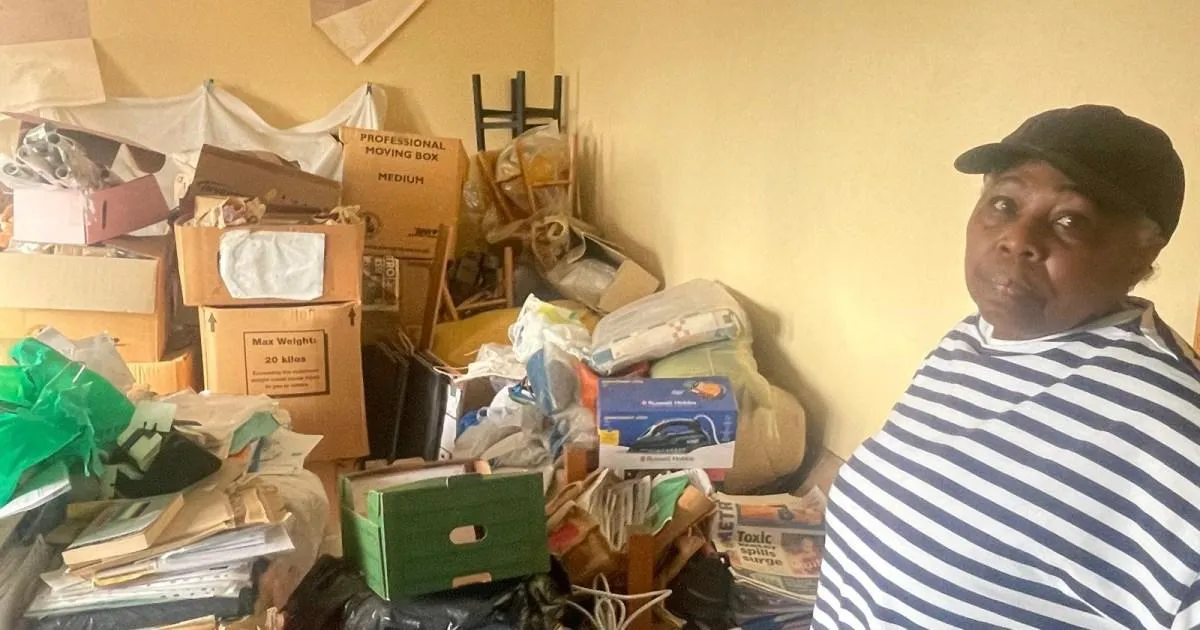
Jay Allen’s story is longer, quieter, and no less heartbreaking. For fifty years, she has lived in her Stockwell flat, on the 11th floor of a tower block that she once loved. A former performer in hit musicals like Starlight Express, Jay has lived a life of creativity and discipline. She used to pay her rent in advance, sometimes leaving the council with as much as £5,000 on account. She was a model tenant, proud of her home, grateful for her independence. But for decades, she has been trapped in a damp nightmare. The flat have been overtaken by moisture and mould, with walls stained and air thick with the smell of rot. In 2015, council contractors removed her possessions to store them while they tackled the damp. It sounded like progress. But the belongings were not returned until 2018, and when they finally came back, they were dumped in damp boxes in her living room, where they have remained ever since. Jay does not dare touch them. “I’m not touching the boxes because they will say the damage to my possessions is my fault,” she explained. She has sought legal advice and demanded the council sort out the mess, but they have ignored her. “They treat me as a non-person. I think that’s what they do with council tenants,” she said. Her gas has also been cut off after the council found unsafe pipes in the building and replaced the system with electric heating. That means no proper cooker, no hot meals cooked with ease. She now survives with a hot plate, but even that is dangerous because of the damp. “I can’t have a proper electric cooker as there is still damp and water and electricity together is dangerous. Everything is a struggle in my flat; I feel isolated and left to rot by the council,” she told reporters. At 83, she wants nothing more than to live quietly and peacefully in the home she has known for half a century. Instead, she spends her days navigating a labyrinth of broken promises, unable to live fully, unable to cook properly, unable to escape the damp that seeps into her bones and her spirit.
What makes these two cases so emblematic is that they are not isolated incidents. Both women have become entangled in what they describe as a bureaucratic nightmare, where departments do not speak to one another, contractors fail to show up, and cases drag on for years without resolution. Vanesha says the council has done nothing since the second collapse, despite her desperate phone calls and letters. Jay says the council makes promises and then retreats into silence, leaving her to wait in her damp, dim flat for a solution that never arrives. Both have had to hire solicitors to fight their cases, spending precious time, energy, and money that they simply do not have. The emotional toll is as devastating as the physical damage. Vanesha describes a life in limbo — no routine, no safety, no certainty. Jay speaks of loneliness and exhaustion. “It’s so lonely and it drains all your energy. I’m 83 and want a quiet life. I’ve been living here for decades and was originally happy. But it ended my career early because I was bogged down in trying to get the council to do the decent thing and make my home liveable,” she said. The fight to survive in your own home should never be this hard. But for these women, and for countless others across Lambeth, it has become a full-time occupation. They are not asking for special treatment. They are asking for the basics — a roof that does not fall on their heads, walls that do not weep with damp, wiring that will not electrocute them, and a stove they can use without fear. The council claims to be committed to repairs, but the lived experience of these tenants tells a very different story.
When approached about Vanesha’s case, a spokesperson for Lambeth Council said they were aware of the repairs needed at the property and had been in touch with her several times. They insisted they were committed to responding quickly to all requests from tenants and carrying out repairs as swiftly as possible. However, they also suggested that one of the problems had been contractors gaining access to the house. Vanesha strongly denies this, telling reporters that she is not blocking works and would welcome any contractor at any time. The same pattern emerges in Jay’s case. Pete Elliott, the cabinet member for housing, expressed deep regret for what Ms. Allen has experienced due to the work required to her home, and acknowledged that the administration is determined to address historic failures in the repairs service. “My number one priority as cabinet member is to rebuild trust with tenants and leaseholders through genuine transparency and accountability,” he said. Officers, he added, had made multiple unsuccessful attempts to access the property and would continue to try to arrange a time that works for Ms. Allen. But for Jay, these words ring hollow. She has heard apologies before. She has heard promises before. What she has not heard is the sound of a doorbell, a knock at her door, or the hum of a contractor’s tools in her flat. The blame game — suggesting tenants are somehow preventing repairs — undermines the already fragile trust between the council and the people it serves. When a woman is 83 years old, living alone in a damp flat, with no gas, no proper cooking facilities, and boxes of ruined memories piled in her living room, the last thing she needs is to be accused of obstructing the very help she begs for.
These two stories are more than just individual grievances; they are a mirror held up to a wider crisis in social housing. Across the country, millions of tenants are living in homes that fail basic safety and decency standards. But the human cost is often hidden behind bureaucratic language, access disputes, and repair schedules. Vanesha’s daughter should be learning to walk and talk in a safe, warm living room, not navigating around exposed wires and uneven floors. Her foster son should be experiencing the stability of a loving home, not being moved again because the ceiling is unsafe. Jay Allen, after a lifetime of contributing to the cultural life of this country, deserves to retire with dignity, not to spend her evenings trying to cook on a hot plate in a damp flat, surrounded by the decaying memories of her past life. The phrase “non-person” is chilling, but it is exactly how these women feel — erased from the list of people who matter. They are not statistics, not case numbers, not headaches for the housing department. They are human beings with histories, hopes, and basic needs. And they are also symbols of what happens when institutions forget that their first duty is to the people they serve. Rebuilding trust will require more than apologies. It will require visible action, genuine accountability, and a recognition that every day a tenant spends waiting for a repair is a day of their life that they will never get back. For Vanesha, that means fixing the leaks, repairing the ceiling, clearing the garden, and making the wiring safe — not as a favour, but as a right. For Jay, that means restoring her gas, removing the damp, returning her belongings to a fit state, and treating her with the respect she deserves. For all the Vaneshas and Jays across Lambeth and beyond, it means ending the cycle of neglect and finally remembering that a home is not just a physical structure — it is the foundation of a life. Until that happens, too many people will continue to be left alone, in the dark, in the damp, wondering if anyone is ever coming to help.