



As the mercury climbs toward a staggering 38°C in parts of southern England and Wales this week, many of us are starting to feel the pressure—and not just from the sun. With red weather warnings looming, the standard workday feels increasingly surreal. While the weather forecast is undoubtedly intense, the bigger question for many employees is how to navigate the professional landscape when the environment becomes physically unbearable. Whether you are stuck in a stuffy office or struggling to focus in a home setup, it is time to look at what your rights are and how employers should be stepping up to keep their teams safe, hydrated, and able to function under these extreme conditions.
It is a common misconception that there is a strict legal maximum temperature for the workplace, but in reality, the law is a bit more nuanced. While there is a legal minimum of 16°C, there is no official “ceiling” for heat. This exists because certain industries, like commercial kitchens or bakeries, naturally run hot; a blanket rule would be impossible to enforce uniformly. However, the lack of a legal maximum doesn’t mean your employer can simply ignore the heat. Under the banner of a “duty of care,” companies are legally and ethically obligated to ensure the workplace environment does not cause staff to fall ill. If the heat is reaching dangerous levels, they are responsible for mitigating those risks.
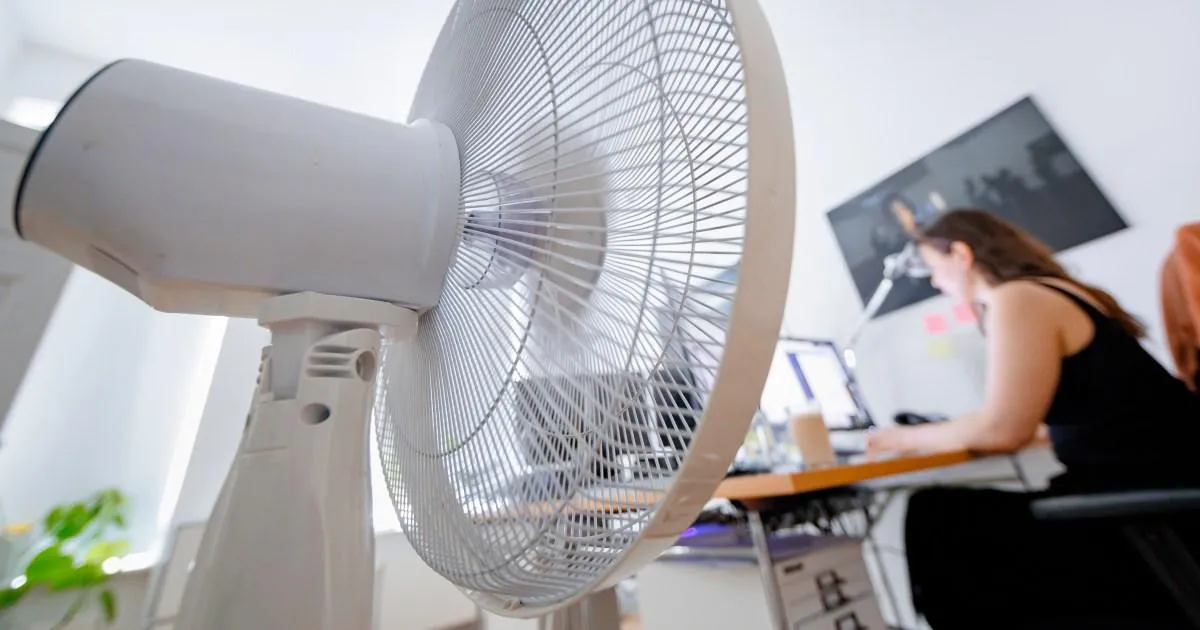
For those working from home, the challenges are equally real. While you might avoid a commute, you might lack industrial-grade air conditioning, and opening a window often invites a chorus of street noise that makes professional calls impossible. Employers need to be creative and empathetic here. If they aren’t providing climate-controlled offices, they should consider practical adjustments, such as providing electric fans or allowing for flexible schedules. Working the traditional nine-to-five during the peak hours of a heatwave is, frankly, counterproductive. Adjusting hours to start earlier or finish later, similar to the customs adopted in hotter climates, can make a world of difference for both comfort and overall output.
Dress codes are another area ripe for a common-sense overhaul. Requiring staff to wear stiff suits, ties, or heavy fabrics during a heatwave is not just dated—it is a recipe for low morale and physical distress. Employers should be proactively relaxing these requirements, even for remote video calls, to help staff deal with the heat. When an employee is more focused on their personal discomfort than their tasks, productivity inevitably nosedives. By embracing a sensible “dress-down” policy for the duration of the heatwave, companies can show they prioritize human well-being over rigid, outdated aesthetic standards.
Beyond basic comfort, we must remember that heat affects people differently. Those with underlying health conditions, such as arthritis or chronic obstructive pulmonary disease (COPD), face significant risks in extreme temperatures, and employers have a legal obligation to make “reasonable adjustments” to accommodate them. Line managers should be checking in on their teams daily, encouraging regular breaks, and ensuring that water is easily accessible. If a workplace—whether an office, a retail floor, or a construction site—becomes too hot to be safe, management cannot simply force staff to struggle through it. Ignoring these health risks is a major oversight that can lead to long-term issues or even personal injury claims.
Ultimately, this heatwave serves as a reminder that the health and safety of the workforce should always trump “business as usual.” If conditions become hazardous, employers need to be prepared to adapt, whether by offering remote working options, adjusting hours, or simply maintaining an open dialogue about what employees need to stay safe. We are all more productive when we aren’t fighting the climate, and by showing proactive care, businesses can foster a much more supportive, resilient culture. So, if you’re feeling the heat this week, don’t be afraid to voice your concerns—your health is the one thing that simply cannot be compromised for an email or a meeting.