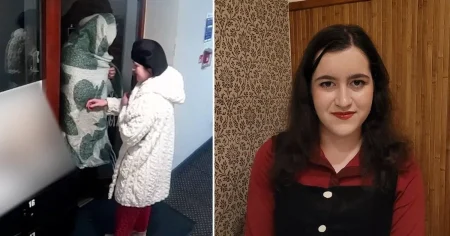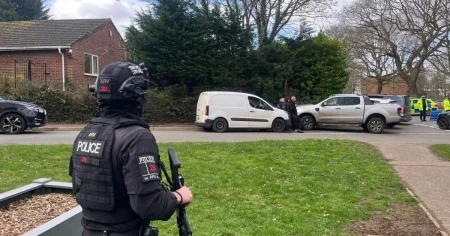



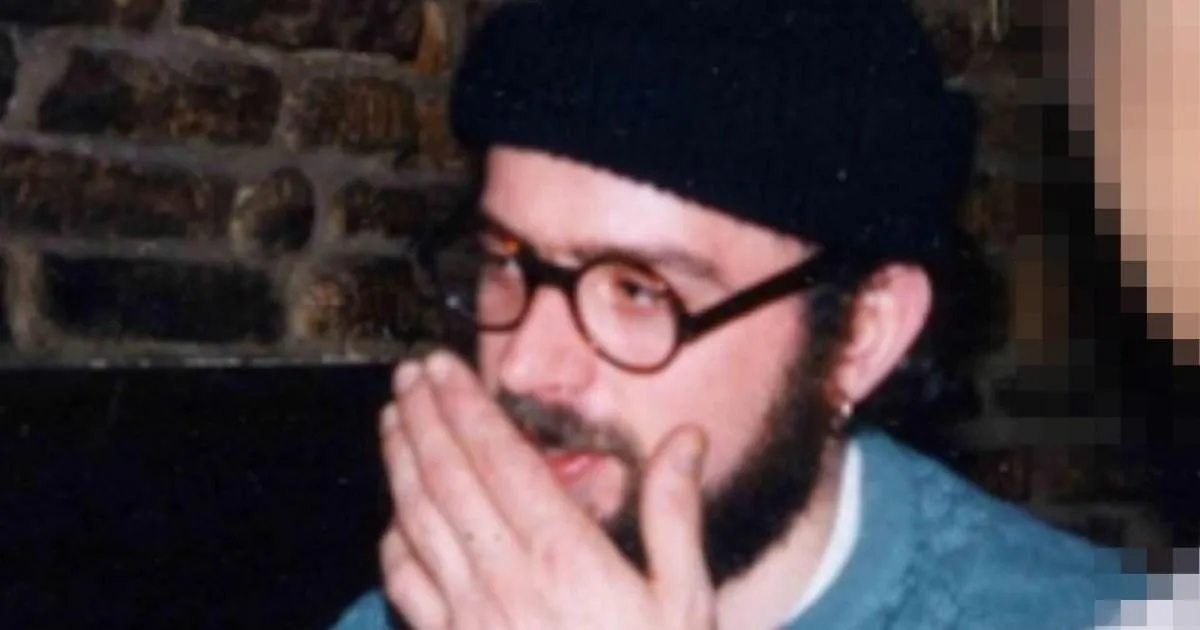
For a nineteen-year-old woman in early-1990s Britain, meeting Andrew Davey felt like a small, exciting chapter in an ordinary activist life. He was charming, a little older, and seemingly passionate about the same causes she cared about. He came to her house late in the evenings and stayed until it was hard to ask him to leave. One night, without warning, he kissed her. She did not have the confidence to refuse him, and so what began as infiltration became something far more intimate. But Andrew Davey did not exist. The man she knew was Andrew Coles, a 32-year-old married father and undercover Metropolitan Police officer with the Special Demonstration Squad, a secret unit that spent decades infiltrating protest movements. He was pretending to be 24 and single, and he was not falling in love with Jessica. He was gathering intelligence on animal rights and anti-hunting activists, and her bed had become part of the operation. For Jessica, now 54 and not her real name, the truth did not arrive until 2018, when the Undercover Policing Inquiry identified Coles as operative HN2, the man who had lived as Andrew Davey. In that moment, she says, her “whole world came to a crashing halt.” She realized the person she had called her first proper boyfriend was a carefully constructed fiction, deployed into her life by the state. “They created this person, and they deployed him into my life, and my bed. It’s a massive violation. It was like being raped by the state,” she said. She also learned that while she was falling for him, he was spying on her parents and her friends—all because she belonged to an anti-hunting group. She was a hunt saboteur. She had no criminal record. The immense machinery of state surveillance had focused on a teenager who, as she put it, was simply trying to rescue chickens. That is where her story begins: not with a heroic operation, but with a lie that was allowed to grow inside her most private life.
Being groomed by an undercover officer is not like being manipulated by an ordinary liar. The liar eventually slips, but a trained SDS officer was equipped with a false identity, a life story, and the resources of the Metropolitan Police to maintain the deception. Jessica has described Coles as her “first proper boyfriend,” a phrase that now carries a terrible weight. He slept in her single bed several times a week, she says, and she did not know who he really was. She has struggled to describe the sexual relationship in legal terms, but she is clear about the moral truth: “He knew that having sex with me would have been against my consent.” That is the particular cruelty of the SDS method. Consent cannot exist when the person you are consenting to is a stranger wearing the skin of someone you trust. Jessica says she did not have the confidence to refuse him when he first kissed her, and that pressure only continued. She was 19. He was 32. She thought he was single and childless. He was married with children. She believed he was sharing her ideals. He was taking notes for the police. This was not a mistake or a momentary lapse. It was an intelligence-gathering technique, one that the SDS allegedly used to keep informants close. The state did not just watch Jessica from a distance; it entered her home, her bed, her memory. “He was spying on my parents, my friends. And for what?” she asked. Decades later, she still struggles to find an answer. All those nights, all those whispered conversations, all those moments of vulnerability—they were material for police reports. The betrayal was not only sexual but existential. She had been used as a resource, a body to be deployed in the service of a secret agenda.
Coles, now 66, denies that any of this happened. “Her story is not true, absolutely not true,” he told the BBC, though he later admitted that the weight of evidence was “hard to defeat.” He also offered an odd defense: that undercover, he “didn’t behave very differently to [his] own personality.” Perhaps that is the most troubling thing about undercover work. It allows a person to act out their instincts without consequence, hiding behind the excuse of duty. Coles admitted to using cannabis to fit in, squirted a bottle of acid at a butcher’s shop window, and stole chickens from a farm as part of his cover. He described the work as protecting society from dangerous people and insisted he did a good job. But his definition of dangerous people seems to have included young women who opposed fox hunting and, allegedly, someone like Jessica who had no criminal record. He denied any sexual contact with her, though he acknowledged sleeping in her bed on one occasion. He remains unrepentant about the broader operation, even as his own brother’s memoir made the deception impossible to hide. Reverend Richard Coles, the well-known radio presenter and priest, wrote in his 2014 autobiography that his brother “had joined Special Branch and was undercover, living a double life, infiltrated into some sinister organisation while his wife and baby daughter made do with unpredictable visits.” That passage did not name Andrew, but it helped unravel the secret. By 2018, the Undercover Policing Inquiry had identified Coles as operative HN2. For the public, this was a fascinating scandal involving a celebrity’s sibling. For Jessica, it was the moment she understood that the man she had loved was a ghost—and that the state had sent him to haunt her.
Coles’s alleged behavior toward Jessica was not the only concern raised at the inquiry. During evidence in 2024, he was questioned about why his intelligence reports mentioned the physical attractiveness of female activists. Did he have the women’s looks on his mind? “No, not for me,” he replied, “but it was certainly a matter of… note.” He was then confronted with witnesses who described him as a “sex pest,” a “creep,” and a “lech.” There were allegations that he pursued women and sought unwanted sexual encounters. He had even written a handbook that advised officers on “sexual liaisons,” though he insisted he meant relationships, which officers were encouraged to break. Three people told investigators they had seen him behaving intimately with Jessica or emerging from her room in just his boxer shorts. Her handwritten notes to a friend from 1993 stated that she was “still going out with Andy” and that Andy had suggested they see other people because, if she stayed for another year, “he wouldn’t be getting enough sex.” Coles disputed the second letter, but a forensic graphologist told the BBC both notes were likely written around the same time. The cumulative picture is not one of a single disputed teenage romance. It is a pattern of behavior in which women were treated as part of the landscape of undercover work. The inquiry has heard from multiple people who felt targeted or harmed by his conduct, and those accounts have added weight to Jessica’s testimony.
Coles left the Metropolitan Police in 2012 and appeared to slip easily into civilian public life. He served on Peterborough City Council and became deputy police and crime commissioner for Cambridgeshire, a role that made him responsible for overseeing the very kind of policing he had once practiced. He was president of the Peterborough Conservative Association and was photographed alongside cabinet ministers. From the outside, he had reinvented himself as an upstanding citizen. But Jessica had not disappeared. When she learned the truth, she began a campaign against him, labelling him an abuser and appearing at council meetings to protest his continued presence in public office. He lost his council seat in 2024 and has twice run unsuccessfully to win it back. He says her campaign is “payback,” a word that tries to turn her testimony into a personal vendetta. Yet the institutional record tells a different story. The Met’s commissioner, Sir Mark Rowley, wrote that the force “has accepted that Andrew Coles had a sexual relationship with Jessica and is disappointed he did not tell the truth to the inquiry.” In 2017, the Met investigated the allegations and ruled that Coles would have faced a gross misconduct hearing if he were still serving. No criminal charges were ever brought, so he never had to face a court, but the finding acknowledges that he crossed a line. For Jessica, this institutional admission is important, even if it does not undo the past.
Now the Undercover Policing Inquiry is expected to rule on Jessica and Coles’s dispute next year. The wider investigation into the SDS has been running for more than a decade, is reportedly behind schedule, and has no end date in sight. For the survivors who have come forward, the inquiry is a slow, often painful reckoning. It has exposed how undercover officers infiltrated protest groups, formed relationships with activists, and in some cases fathered children before disappearing. Jessica’s case is one of many, but it is also uniquely intimate. She has spent years trying to explain to a public that may not fully understand what it means to discover that the person who kissed you, slept beside you, and made you feel loved was a fabrication designed by the state. No ruling can give her back her twenties, and no apology can undo the violation. But her willingness to speak has already forced a measure of accountability. The Metropolitan Police has admitted the relationship; an inquiry is examining the evidence; and a former officer’s career in public life has collapsed. There is a wider human lesson here: the power imbalance between an undercover agent and a young activist is so vast that any intimacy is inherently coercive. When the state sends someone into your bed, it is not pursuing justice. It is manufacturing trauma. For Jessica, who now lives quietly and fosters guinea pigs, the act of telling her story is a way of insisting that what happened to her was not her fault, that she was not naive, and that the man who betrayed her is not the only one with a right to be heard. The inquiry’s eventual ruling will matter, but her testimony has already changed the conversation.