

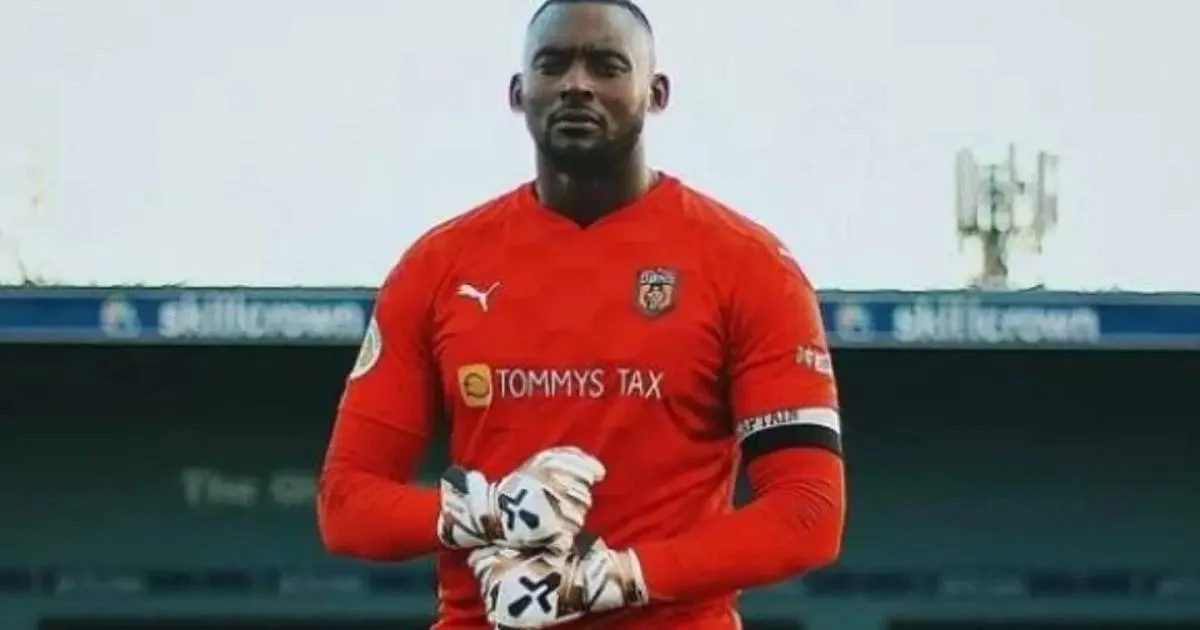
In a small, unassuming terraced house near Lewisham, southeast London, there is a football captain, a father, a neighbour who helps with ice packs and kind words. His name is George Desmond Kamurasi, and he may soon become a king. The story sounds like the plot of a feel-good film, but for George, it is suddenly real. The 36-year-old goalkeeper and captain of SE Dons, a grassroots football club, is being tipped as the first in line to the throne of the Tooro Kingdom in western Uganda. This extraordinary possibility follows the death of King Oyo Nyimba Kabamba Iguru Rukidi IV, who passed away in the United States last week. According to tradition, a successor must be officially named before the weekend, and George, a direct descendant of the Babiito clan and a cousin of the late monarch, finds himself at the centre of an ancient and deeply significant royal transition. His neighbours say he is the “perfect royal” — humble, caring, and a born leader — but they also laugh at the thought of him swapping his tracksuit for royal robes. Outside his family home, a “for sale” sign has appeared, hinting that a quiet life in London may be about to change forever.
The Tooro Kingdom is one of several traditional monarchies in Uganda, and while it no longer holds political power in the modern state, it remains a powerful symbol of culture, identity, and continuity for millions of people. King Oyo had ruled since 1995, when he ascended the throne as a young child, making him one of the youngest reigning monarchs in the world. His recent death in the United States sent shockwaves through both Uganda and the diaspora, and attention quickly turned to the question of succession. In a tradition shaped by lineage, clan, and ritual, George Kamurasi emerged as a name of enormous significance. As a descendant of the Babiito clan — the royal dynasty of Tooro — his bloodline connects him directly to the centuries-old legacy of the kingdom. Yet his life has been lived far from the palaces of western Uganda. George, known to teammates and neighbours alike as a friendly, grounded figure, has spent his years in a two-up-two-down home in southeast London, with a partner and a young child. His days have been filled with the rhythms of ordinary English life: work, family, football, and community. The idea that he might now be called to wear a crown and uphold a royal lineage on another continent is as thrilling as it is surreal. It raises questions about identity, belonging, and what it truly means to inherit a kingdom in the twenty-first century.
Those who know George best are not surprised he could be considered royal material, but they are already feeling the ache of a possible goodbye. Davee Kistamah, a pensioner and long-time neighbour and family friend, spoke with warmth and pride about the man he has watched grow up on the street. “He is a wonderful man,” Davee said. “He and his family have lived on the road for a long time. He has a partner and child and they are all lovely. I knew there was some royal connection, but this has come out of the blue. He is definitely fit to be a king. He is so caring and thoughtful.” Davee recalled a moment during the Covid pandemic when he fell over and found himself bleeding. George, without hesitation, rushed to help him, fetching ice for the swelling and making sure he was safe. “That’s the kind of person he is,” Davee said. “He’s so humble and willing to help.” For Davee, the thought of losing George is bittersweet. “I think he is ideal to lead people, but if he does leave the street, we will all be so sad. He and his family are part of us. We have been joking that his partner will now possibly be a Queen; she is a really nice, quiet person. It’s a lot for them to take in.” The quote captures the strange collision of worlds: a royal future being discussed over garden fences and cups of tea in a London street, where George is simply the good neighbour who helps when things go wrong.
The community’s reaction has been a mixture of pride, humour, and affection. Another neighbour, Michelle Leung, described George as “such a lovely guy” who is always seen in his football kit, friendly and polite. “I guess he may have to swap the football kit for a crown,” she joked. “I had no idea he was in line to be a king; it’s amazing news.” Her light-hearted tone reflects the mood of the street, which has embraced the possibility of George’s ascension with warmth. An unnamed neighbour added: “George is the most down-to-earth, brilliant guy you could meet. He’s king material for sure; he’s captain of his football team and is a born leader, if you ask me. He will have to swap the tracksuit for robes, though; I don’t know if he will be happy about that!” These remarks reveal a man deeply rooted in ordinary life, someone whose leadership qualities have been visible not in palaces but on football pitches and in everyday kindness. SE Dons, the club George captains, was founded in 2014 by British rapper Andrew McHugh, better known as Don Strapzy, and competes in the ninth tier of English football. It is a world of muddy pitches, cold Saturday afternoons, and pure passion for the game. That George has been a captain in such a setting speaks volumes about his character. He leads by example, earns respect through hard work, and remains approachable, grounded, and connected to those around him. It is this very ordinariness that makes his potential royal destiny so compelling.
Yet, as the news spreads, a wider debate is unfolding in Uganda about whether a man who has spent most of his life in Britain should inherit the throne. Some traditionalists question whether George can truly understand the customs, language, and responsibilities of a king who must act as a spiritual and cultural figurehead for the Tooro people. They wonder if a London-raised footballer, formed by British streets rather than Ugandan villages, can embody the rich heritage of the Babiito dynasty. Others, however, see his potential appointment as a beautiful and necessary evolution. They argue that the kingdom must remain relevant in a globalised world, and that someone who has lived across cultures may bring a fresh perspective while still honouring the traditions he was born into. The diaspora is an integral part of Uganda’s story, and having a king who understands both worlds could strengthen the kingdom’s connection to Ugandans everywhere. For George, the challenges would be immense. He would need to learn and embody intricate royal protocols, build relationships with elders and politicians, and relocate his young family to a country very different from the one they have known. His partner, the quiet and kind woman his neighbours describe, would suddenly be thrust into a role of public prominence. Their child’s future would change entirely. The “for sale” sign outside the family home becomes more than a practical detail; it is a symbol of a life being dismantled and rebuilt in ways no one could have imagined.
In the end, this story is not only about monarchy or succession. It is about how we measure royalty, leadership, and worth. George Desmond Kamurasi may have been born into a royal lineage, but the people around him believe his true nobility shows in how he treats others. He helped a bleeding pensioner, he captains a football team with grace, he lives humbly, and he is loved. Whether he takes the throne or not, he has already proven himself to be the kind of monarch any kingdom would be fortunate to have — not because of his blood, but because of his heart. Still, the world watches with fascination as an ordinary man from southeast London faces an extraordinary fate. If George does trade his football kit for royal robes, he will carry with him the spirit of a community that believes in him, and the lessons of a life lived far from grandeur. And perhaps that is exactly what the Tooro Kingdom needs: a king who understands the value of small things, the importance of kindness, and the grace of staying grounded. Whether he ends up on a throne in Uganda or on a football pitch in Lewisham, George Kamurasi has already shown that true royalty is not always about crowns. Sometimes, it is about being the person who shows up, who helps, who leads, and who makes a street feel like a home. His story is a powerful reminder that destiny can come knocking at the most unexpected doors — even one on a quiet terrace in southeast London, where a tracksuit may soon be laid aside for a robe, and a football captain may become a king.