


Here is a humanized and expanded summary of the provided news article, structured into six paragraphs.
—
It was shaping up to be a typical busy Friday evening at Manchester Airport, one of the UK’s busiest travel hubs. However, the routine rhythm of landings and takeoffs was violently disrupted when a significant security breach forced an unprecedented halt to all inbound flights. The situation, which unfolded late on Friday night, created a domino effect of chaos and delays that rippled across the country’s flight schedules, leaving hundreds of passengers stranded in the air and on the ground. The source of the entire disruption was a reported incident involving an individual who had managed to gain unauthorized access to the airfield’s “airside” area—the highly secure zone where aircraft park, taxi, and load, which is strictly off-limits to the general public.
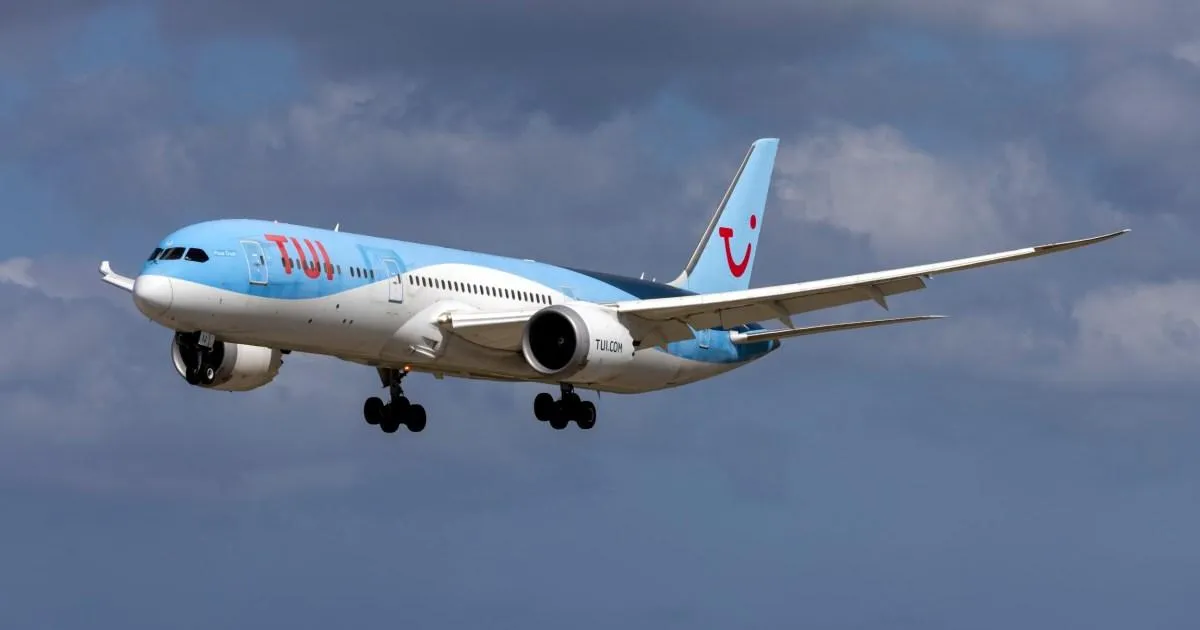
The closure of the airport to inbound traffic had an immediate and dramatic impact on aircraft already in the skies. At least six different flights were forced to divert from their intended destination of Manchester, scattering across the UK to alternative airports. Among the most affected was a TUI Airways flight, operating as flight BY439. This particular flight had initiated its journey earlier in the day from the Cape Verde islands, a popular holiday destination off the west coast of Africa. The flight had already been in the air for approximately five hours when it began its final approach to Manchester, only to be met with the news of the lockdown. The crew was instructed to abandon the landing plan and hold their position, effectively trapping the passengers and crew in a holding pattern high above the English countryside.
The immediate directive from air traffic control was to keep the TUI flight and others circling at a safe distance. Flight BY439 was ordered to enter a waiting pattern at an altitude of 6,000 feet over the scenic Peak District, a stunning national park known for its rugged hills and valleys. However, this was not a mere few minutes of circling. The security issue on the ground proved to be a complex one, requiring a significant amount of time to resolve. Each minute spent in the holding pattern burned precious fuel, and after roughly twenty minutes of delays, it became clear to the flight crew that they did not have enough fuel reserves to continue waiting safely. Facing a potential fuel emergency, the pilots made the critical decision to declare a “squawk 7700″—the international emergency code transmitted by an aircraft’s transponder to alert ground control to a life-threatening emergency, in this case, low fuel.
This declaration of an emergency prompted immediate action from air traffic control, which cleared the TUI flight for an immediate landing at the nearest available airport, located a short distance away in East Midlands. The diversion was executed flawlessly, with the aircraft touching down safely at East Midlands Airport to refuel. The passengers, who had anticipated a five-hour journey, were now facing a significantly extended travel day. After the plane was refueled, the crew prepared for the short second leg of the journey. The flight from East Midlands back over to Manchester was relatively quick, taking roughly just 18 minutes. While the ordeal undoubtedly caused a significant delay for those on board, the professionalism of the pilots and air traffic control ensured that what could have been a major crisis was resolved safely and without panic.
Meanwhile, the situation on the ground in Manchester was being handled by law enforcement and airport security teams. Greater Manchester Police responded to the reports of the breach just before 11:20 PM on Friday. Their swift response led to the apprehension of a 17-year-old male, who was detained at the scene. Following the arrest, the teenager was assessed by medical professionals and subsequently detained under the Mental Health Act, indicating that this was not a terrorist incident but rather a distressing situation involving an individual in need of care. The airport closure, which lasted for a significant period of time, forced the six diversions and caused over a dozen other flights to be significantly delayed or placed into holding patterns. As the night wore on and the incident was resolved, the airport gradually returned to normal operations, but the ripple effects of the breach were felt by travelers throughout the weekend as airlines worked to reposition their aircraft and crews.
Ultimately, this event serves as a powerful reminder of the fragile nature of modern air travel. A single, unplanned event on the ground can have a staggering cascade effect, impacting thousands of people across an entire region. The passengers on flight BY439 were safe but experienced an extended journey far longer than what they had booked. Those waiting for friends and family in Manchester faced agonizing hours of uncertainty as flight boards flickered with delays and cancellations. While the authorities successfully contained the security threat and the youth at the center of it was taken to safety, the incident highlighted the immense pressure placed on pilots, air traffic controllers, and security personnel who must contend with unexpected crises while ensuring the safety of everyone involved. For the hundreds of passengers caught up in the chaos, a routine Friday evening flight home turned into an unexpected overnight ordeal, a stark illustration of how quickly travel plans can unravel.