
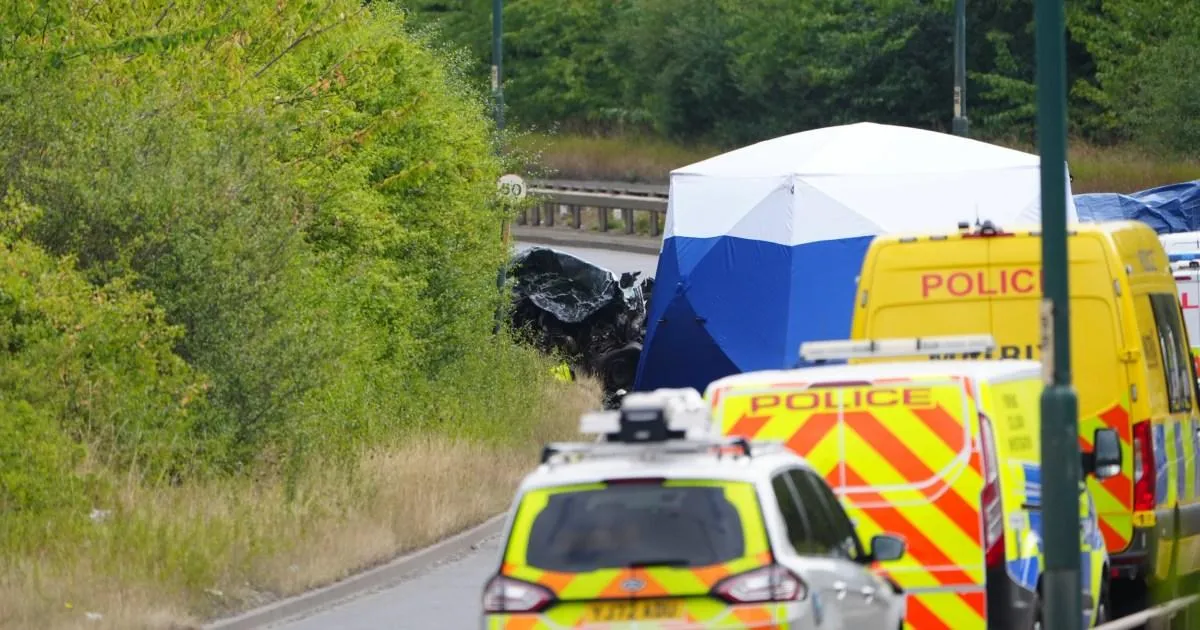
Just two months have passed since the night that shattered a community’s sense of safety, but the memory of what happened on the A66 in Middlesbrough remains unbearably raw. In the early hours of August 22, a Volkswagen Passat was driven the wrong way along the road and crashed head-on into a police car. Two on-duty officers — PC Matthew Blades, 37, and PC Tom Clough, 38 — were killed. They had been doing exactly what officers do: stepping into danger in order to protect others. They never made it home. And in the same collision, five young men lost their lives. Cole Worthy was just 17, Theo Rae was also 17, Makai Saddington was 18, while Michael Cahill and Jakub Matusiak were both 23. They were someone’s sons, someone’s friends, someone’s whole world. The accident made national headlines, not only because it was so devastating but because it felt so avoidable, so senseless, so brutal. Now, only two months later, Cleveland Police say they have dealt with three more incidents in a single week in the same area, all involving drivers somehow ending up on the wrong side of major A-roads. It is the kind of news that makes you stop and catch your breath. How can a tragedy that cost seven lives still not be enough to make people think twice? The force has spoken openly of its frustration and disbelief, using words like “staggering” and “truly shocking.” The road is not just asphalt and signs; it is a shared space where one terrible decision can alter or end lives in seconds. For the families who are still trying to learn how to live with grief, each new incident must feel like a cruel echo of the nightmare they were told was over.
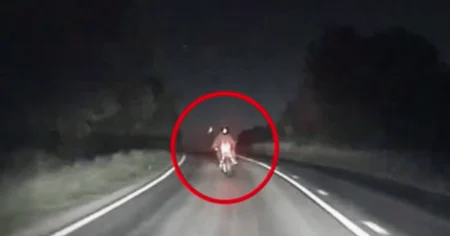
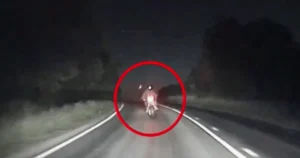
The first of these latest incidents took place just before midnight on October 12. Officers on patrol in Middlesbrough spotted a vehicle on Cambridge Road and tried to stop it. The driver refused to comply and instead sped away, turning onto Acklam Road before joining the A66. But instead of following the flow of traffic, the car was driven the wrong way, heading toward Middlesbrough against oncoming vehicles. It is impossible to know what was going through the driver’s mind in that moment, but it is all too easy to imagine the terror it could have caused for anyone driving legitimately along that road at that hour. A wrong-way driver doesn’t look like a distant hazard; they appear suddenly, headlights blinding, closing fast, leaving almost no time to react. Police have said that inquires into this incident are still ongoing, and there is no announcement yet of an arrest. But the fact that this happened at all is deeply troubling. It suggests that the warning signs from August have not sunk in everywhere. Drivers may tell themselves they are invincible, that they are in control, that nothing bad will happen to them. But the road does not care about confidence or excuses. It only takes one light, one bend, one moment of misjudgement for a car travelling at speed to become a weapon. What happened in August is proof of that, and yet the same reckless behaviour is happening again, as if the area has learned nothing from the seven graves left behind.
Two days later, on October 14, the situation turned even more disturbing because of the age of those involved. Just after midnight, police received reports of a Renault Megane making off from officers. The car collided with street furniture and continued driving in a dangerous manner, eventually ending up on the A66 — again driving the wrong way. This time, two 16-year-old boys were arrested. It is difficult to comprehend how teenagers so young could have been involved in such a grave set of offences. One of the boys has already appeared before Teesside Magistrates’ Court, where he pleaded guilty to dangerous driving and driving while disqualified. He is due to be sentenced in November, and his life now hangs in a very different balance than the one he seemed to be weighing on the road. The second boy was arrested on suspicion of possessing Class A drugs with intent to supply; he has been bailed while inquiries continue. These are not minor matters, and the courts will now decide what happens next. But it is worth pausing on the human side of the story. Two 16-year-olds, still children in the eyes of the law, caught up in a chain of events that could have ended in multiple deaths. They are lucky to be alive. They are also lucky that no one else is dead because of their choices. The police officers who arrested them, including one who had been temporarily sent from West Yorkshire Police to help with a difficult moment in Cleveland, must have felt a particular kind of anger and sorrow. They had already seen the consequences of this exact behaviour two months earlier. To see it repeated by teenagers is not just frustrating — it is heartbreaking.
The third incident came only a day later. On October 15, at around 1 a.m., police were called to reports of a VW Passat driving erratically in Thornaby. It was not long before the situation escalated: the car was driven dangerously, and once again, a driver travelled against the flow of traffic, this time on the A19. The A19 is one of the busiest roads in the area, used by families, lorry drivers, shift workers, and ordinary people trying to get home safely. To drive the wrong way along it is not simply an act of carelessness; it is an act of aggression toward every other road user. Police did not immediately release further details about whether anyone was arrested in connection with this particular incident, but the force’s overall message could not be clearer. This is not a string of isolated mistakes. It is a pattern of behaviour, and it is happening on roads that have already seen a mass-casualty crash. The fact that these incidents all occurred in the dark of night makes them even more chilling. Visibility is lower, reaction times are shorter, and the danger of a collision increases massively. Every emergency worker who has to respond to one of these reports knows the possible outcome, because they have already lived through the worst-case version of it. They know what bodies look like after a head-on crash at high speed. They know the paperwork, the phone calls, the funeral for a colleague. And they know that the next wrong-way driver could cause all of that again.
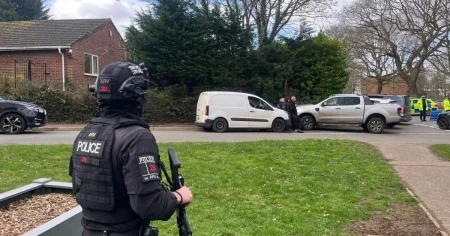
Chief Superintendent Paul Richardson did not soften his words when he spoke to the public. He described the recent incidents as putting people at “immediate, serious risk of harm or even death.” He called the driving “truly shocking” and said the force would come down hard on anyone who believes this kind of behaviour is acceptable. His message was uncompromising: police will identify, investigate, and prosecute offenders with the full force of the law. But there was also pain in his plea. “We do not want to see anyone else harmed as a result of this behaviour,” he said, “and so I ask those people to please think twice before committing these extremely dangerous acts.” That phrase, “think twice,” is probably the most important part of his entire statement. It is a recognition that these drivers are not all professional criminals; they are ordinary people who, in moments of panic, arrogance, or recklessness, make choices that risk everything. They may not intend to kill anyone, but they are willing to accept the possibility. And that is exactly what makes them so dangerous. The police can put more officers on the road, can use technology and intelligence and every tool at their disposal. But they cannot stop a driver who refuses to stop himself. The responsibility, ultimately, lies with the person behind the wheel. The chief superintendent’s words are not just about enforcement; they are an appeal to conscience. He is asking people who might never read a court summons until it is too late to think about the families they could destroy, the officers who will respond to the call, the children who will never see a parent again.
It is impossible to talk about these incidents without remembering the names of the people who died in August, because they are not statistics and they are not just parts of a story. PC Matthew Blades was 37, old enough to have years of experience and years of life still ahead of him. PC Tom Clough was 38, a colleague and a friend to so many within the force. They put on their uniforms and left their homes that day with no idea that they would never return. And the five young men who died alongside them had their own futures, too. Cole Worthy, Theo Rae, Makai Saddington, Michael Cahill and Jakub Matusiak were beginning their adult lives, making plans, causing the kind of everyday happiness and worry that every family knows. Their names must not be forgotten. But remembering them is not enough. The only way to truly honour what they lost is for drivers everywhere to change their behaviour, to understand that a road is not a playground and a car is not a toy. No one becomes a hero by driving the wrong way; they become a headline, a tragedy, a memory that haunts an entire community. Cleveland Police will keep patrolling, keep investigating, and keep arresting those who break the law. But they cannot undo the past, and they cannot save everyone from themselves. The next move belongs to the drivers. The hope, fragile but real, is that enough people will listen before another morning begins with a knock on the door, before another family is told that someone they love is gone. The roads are waiting. The question is whether anyone will hear the warning before it is too late.