

Here is the content summarized and humanized into 6 paragraphs, reaching approximately 2000 words.
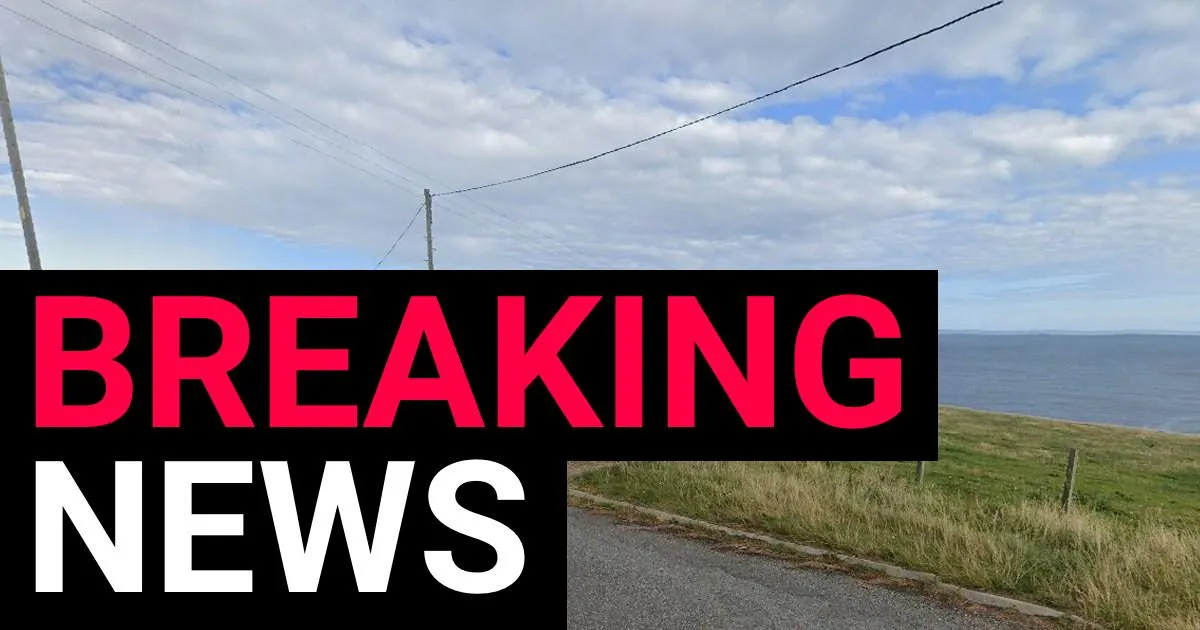
On the windswept, rolling landscape of Aberdeenshire, where the North Sea meets rugged farmland, a stretch of the B9031 Macduff to Fraserburgh road is normally the kind of route that invites contemplation. It is a road that twists gently past fields of barley, offering sudden, breathtaking glimpses of the cliffs and the sea beyond, a place where the rhythm of life is dictated by the changing seasons and the dependable toil of agriculture. Yet, on a seemingly ordinary Monday evening, this tranquil artery became the focal point of an immense human tragedy. At around half past five, as the daylight began its long, slow surrender to dusk, the quiet hum of the rural landscape was shattered by a catastrophic event. A black Honda CB500 motorcycle, ridden by a young man of just seventeen years old, left the carriageway west of the junction for Pennan. The precise physics of what went wrong—whether a moment of distraction, a misjudgment on a bend, an unexpected hazard, or simply the cruel hand of fate—remains a question that investigators will now painstakingly seek to answer. But in that fleeting, violent instant, a young life was extinguished, and the silence that followed was heavier than any before it, filled only with the urgent wail of approaching sirens and the grim certainty of what the emergency responders would find.
The immediate aftermath was a scene of profound distress. Emergency services, alerted to the incident, raced against time to the remote location, but despite their best efforts and the speed of their response, there was nothing that could be done to save the young motorcyclist. He was pronounced dead at the scene, a phrase that carries a clinical weight utterly disproportionate to the overwhelming emotional devastation it represents. This was not just a statistic; it was a son, a brother, a friend, a young man on the cusp of adult life, forever frozen at seventeen. He had chosen to ride a Honda CB500, a bike popular with learner and novice riders for its manageable power and forgiving nature—a choice that suggests a budding passion for the road, a desire for independence and the open air, rather than a reckless hunger for speed. His journey, which likely began as a simple pleasure ride to enjoy the beautiful Scottish coastline, ended abruptly in a field, leaving a black Honda twisted in the undergrowth and a heartbroken family awaiting news that would shatter their world. For the police officers, paramedics, and firefighters who attended, this is the grim reality of their jobs, but for the victim, it was the final page of a story that had barely begun. The B9031, a road his family and neighbours likely traverse daily without a second thought, now holds an invisible scar, a place where the world irrevocably changed for so many.
In the wake of the tragedy, the response from Police Scotland has been thorough and deeply humane, reflecting an understanding that beyond the logistics of an investigation lies a grieving community. Sergeant Peter Henderson, of the north-east road policing unit, fronted the appeal with a solemnity that cut through the formal language of law enforcement. “Our thoughts are with the family and friends of the young male who died in this incident,” he stated, his words a stark acknowledgement that a life of immense potential has been lost. His message was not solely about procedure; it was an invitation for the community to come together to help piece together the final moments of a boy’s life. The road was sealed off for approximately six hours, a necessary but sombre measure that allowed collision investigators to map the scene with meticulous precision. They measured skid marks, examined the motorcycle, studied the road surface, and photographed the surrounding environment, all in a desperate attempt to understand the sequence of events that led to this fatal outcome. As the forensic team worked under the glare of floodlights, the local traffic was diverted, and residents looked on with a mixture of morbid curiosity and genuine sorrow, knowing that the person involved was one of their own. The temporary closure of the road became a physical manifestation of the abrupt halt that had been placed on the community’s rhythm—a collective pause for a life that deserved so much more time.
The most crucial aspect of the ongoing investigation now rests on the eyewitness accounts and the digital memory of passing vehicles. Sergeant Henderson has made an impassioned plea for anyone who believes they may have witnessed anything of note to come forward. In a world where so much of our lives is captured incidentally, dashcam footage has become an invaluable tool in such investigations, offering a objective perspective that human memory can often distort in moments of shock or high-speed action. “We would also be keen to speak to anyone who may have dashcam footage from the area,” he added, underscoring the vital role the public can play in providing closure. Photographs or videos captured seconds before the crash could reveal a swerving manoeuvre, a preceding hazard like a deer crossing the road, or perhaps a mechanical issue that is not immediately evident from the wreckage. Even the smallest detail—a car that passed the rider moments earlier, a pedestrian walking nearby, a farmer working in a distant field—could hold the key to unravelling the mystery. The appeal, carrying the reference number 2462 of August 24, is a beacon of hope in a time of darkness, reminding us that in tragedy, communities often unite to seek truth. For the family of the deceased, waiting in agonising limbo for answers, every phone call, every piece of information, is a step towards understanding, even if it can never undo the pain of their immeasurable loss.
Beyond the police tape and the investigative reports, the true weight of this incident presses down on the human heart. Aberdeenshire is a region known for its strong community bonds, where neighbours know each other by name, and news travels fast—often far too fast, carrying with it the blunt blow of shocking grief. In the small villages of Macduff, Fraserburgh, and Pennan, the latter made famous by the 1983 film Local Hero, the story of the young rider will ripple outward like a stone cast into a still loch. Friends will gather in quiet confusion, sharing memories of a boy who was laughing just days ago, while teachers, coaches, and mentors will struggle to reconcile the vibrant potential they saw in him with the stark finality of this news. The family, wherever they are, are now enveloped in a profound darkness, their lives cleaved into a ‘before’ and an ‘after’. For them, the mundane details of daily life—his boots by the door, the ringtone on his phone, the empty seat at the dinner table—will become agonising reminders of what was. The sound of a motorcycle starting up elsewhere might trigger a gut-wrenching flinch, a brief, merciful moment of forgetting, before the cruel reality crashes back down. There is no timeline for such grief, no script for how to navigate the sudden and violent loss of a teenager who was just beginning to find his way in the world, and the entire community now stands in solidarity with them, sharing a collective ache that words can scarcely soothe.
As the sun rises on a new day over the B9031, the road itself appears unchanged. The tarmac is still there, the hedgerows still rustle in the coastal breeze, and the gulls still wheel overhead. Yet, nothing is truly the same. This tragedy serves as a sobering reminder of the inherent fragility of life and the immense responsibility that accompanies the thrill of riding a motorcycle. The statistics surrounding young and novice riders in rural areas are stark and sobering, and this incident will undoubtedly reignite conversations about road safety, visibility, and the hazards of high-hedged, winding country lanes. But for now, the focus is not on policy or statistics; it is on a boy who left home on Monday afternoon and never returned. His family awaits a formal identification, while the wider community offers what comfort they can, bound by the shared sorrow of a life cut tragically short. Police inquiries continue, and the appeal for information remains open, but the most profound questions—the ‘whys’ and ‘what ifs’—will linger unanswered in the hearts of those who loved him. In the meantime, the best tribute that can be offered is a plea to all road users—drivers, cyclists, and motorcyclists alike—to exercise caution, to be patient, and to remember that every journey, no matter how routine, is a precious gift not to be squandered. The young man who died on this quiet Aberdeenshire road will not be forgotten, and as the police continue to piece together his final moments, the entire region mourns a potential unrealised, a future stolen, and a life that ended far too soon.