


The Silent Shore: A Tragedy at Blackpool Sands
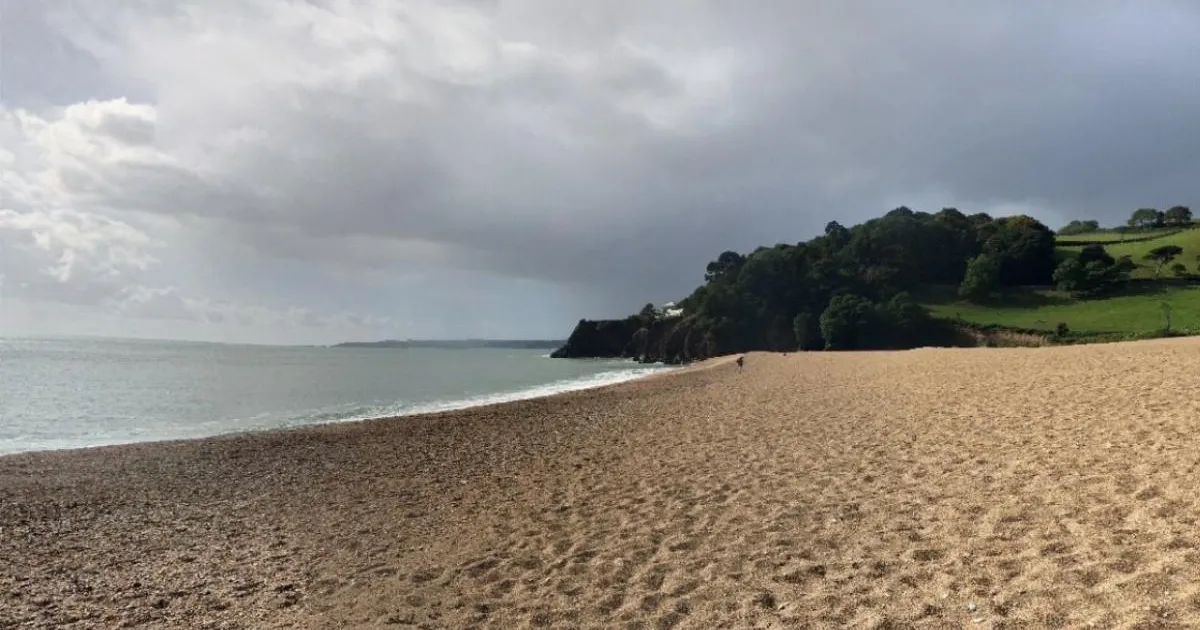
The sun beat down with a warm, almost indifferent intensity on the southern coast of Devon, painting the cliffs of Strete in gold and amber. Blackpool Sands, with its apricot-colored pebble beach and emerald-clear water, has long been a haven for those seeking a perfect day out—a postcard slice of British beauty. On Monday afternoon, that idyllic coastal picture was shattered by a sudden, heart-stopping emergency. What began as a routine swim in the tranquil waters turned into a father’s final mistake, a primal struggle against the unforgiving sea, and a sequence of events that would ultimately end in devastating loss. A man from Surrey, in his forties, had come to enjoy this quiet stretch of coastline, likely on a brief, well-deserved escape from the heat of suburban England. He was amid a day of pleasure, perhaps anticipating the rush of cool water against his skin, unaware that the calm bay was hiding a dangerous, brutal undertow that would prove swifter than any human effort to rescue him.
It is a scene of coexistence between beauty and tragedy that echoes all too frequently around the British Isles: the sea is a seductive respite in the heat, but it is utterly indifferent to human fragility. The man had gotten into difficulty in the water, and by the time HM Coastguard was alerted, the rhythmic ticking of clock towers had become a countdown. At 3:30 pm, Devon and Cornwall Police received the urgent call—a coordinated emergency response swung into motion, slicing through the calm afternoon. The Coastguard, with their distinctive orange suits, reached the scene alongside paramedics who raced across the headland. But the ocean has no mercy for fear or skill, and the man had been submerged and aggressively pulled further out, locked in a dangerous grip of currents or cold-water shock. He was pulled from the water, unresponsive and pallid, as the first responders attempted to revive him. Bereft of a heartbeat, lying on the same lovely, sun-warmed pebbles where minutes before people had been placing towels and opening coolers, there was nothing left to do but rudimentary life support. They worked with intensive desperation, their calm, professional coverings concealing a desperate, grim fighting against the unthinkable, until the weight of impossibility finally settled. Despite their best efforts, the man, a resident of Surrey, was sadly pronounced deceased at the scene, leaving behind a tragic silence that drowned out the gentle sound of the waves washing up against the shore.
The unutterably human grief radiating from this incident discomforts us precisely because it is so relatable. This was not an unnatural disaster; it was a mundane trip, a seemingly ordinary summer activity that went terribly sideways. Though his name will be known to the coroner’s office, there is a collective sense of heartbreak for the anonymous stranger from Surrey—a man who could have been our husband, our father, our colleague, one of us. He likely came to the coast because of the heat, perhaps with his family or friends, unaware that the very relief he was seeking was a lethal threat. His tragedy thrusts us into the painful realm of how small life’s hundred days are against the vastness of the ocean. Those left behind will have to cope with the abruptness, the sheer impossibility of his sudden absence. Will his loved ones have received the awful news in Surrey, turning a bright, ordinary day into a permanent dread? The police statement, Feltdry and professional—”He was treated at the scene…he was pronounced deceased”—is n basis for understanding the empty chairs and unissued question marks that will widen their hearts. Now, the community must deal with the bureaucratic aftermath, a file prepared for the coroner, the formalities processed against a seascape suddenly stripped of innocence. Though his death is not being treated as suspicious, that bureaucratic line offers no comfort to anyone; it merely signifies that no foul play caused the wave that tore away a life.
This tragedy, however, is not an isolated event in the fractured, harsh record of this British summer. The country has witnessed a devastating sequence of drowning deaths as population-wide summer holidays have locked into a heatwave pattern. The statistics call it a number, but the heartbreaking reality has a name and a face: Shelina Rahman and her 15-year-old daughter, Sameeha, died violently in water off West Mersea beach; Musa Ahmed, the 7-year-old, fought for life in airlifted agony for days before succumbing to his injuries. These are grief-stricken, entire families shattered, little lives extinguished, impossible to gasp fresh bruises. In the performance of recent UK heatwaves, more and more teenagers have folded into this dangerous quiet. The ocean often appears glaubhaft calm, an almost Roman water that calls for relief. But the risks are invisible: radical currents, sudden cold water shock, and rip curds below the surface that swiftly pull swimmers far from the shore. At Blackpool Sands, the topography of the bay, with its open-water position on the English Channel, means even average days can harbor rip currents and sweeping swells. The sun does not come alone; it induces a porphyry, a deceiving symbolism that entices people who are not adept swimmers into depth where their strength fails.
In the wake of such sorrow, the RNLI has repeatedly emphasized its critical message: if you feel the cold, or if you hit an undertow and lose your breath, remember the principle of “Float to Live.” It sounds deceptively simple, but many instinct-driven swimmers respond by panicking and thrashing, ruining their muscle energy and swallowing water. The technique is a counterintuitive masterpiece: rather than fighting the force of the seeming irresistible sea, you surrender to it. You must tilt your head back, allowing your ears rest deep under the water, submerging and softening your torso so it neutralizes panic. Control your breathing; don’t inhale the salt. Extend your arms and legs in a star-like manner, helping you to stay afloat, even as your legs sink and you might pass over the wish to kick. The charity explains that it’s okay to sink slightly, a critical share. Remember: a person who keeps these simple steps can often buy enough time to stay afloat until rescue arrives. Moreover, their common-sense advice should not be treated as mere leaflets. Great swimmers must not think they’re immune—the cold can steal your muscle power and ability to move even in depths of high heat. The sundried beach may seem benign, and the vanishingly rare tragedy seems distant—but we must respect the sea as a neutral space, one that requires constant policy.
Ultimately, this tragedy at Blackpool Sands is more than a headline; it is a morse code of profound loss and a deterrent. As he was taken away from the gentle beach and covered concrete, the day will inevitably continue for the rest of the world, the tide will come in and streak the sands clean of the frantic commotion. But the echo of this single swimmer remains within the landscape; his life ended amidst another and against a backdrop of lavender and blue that numbers human memory. For those who heard the sirens echo that afternoon, it will never be quite the same place—not even a piece of paradise can erase a memory of a death. The loss upon his family will be immeasurable, complicated by the knowledge that a message about the sea’s danger was broadcast but remained unheeded. We are left, as a reader, to process, to mourn, and to make a resolution. As the heatwaves of the summer stretch forward, we must sit with our families before we pack up the towels. Teach them the Float to Live instructions. Respect the designated bathing areas. Always have an eye for the smallest detail. We cannot bring back the man from Surrey, nor the other nameless people who shark after victims claimed by these waters. But in his memory, our steps toward the ocean should always be cautious—a perfect and beautiful environment, to be appreciated, not underestimated. The horror of a peaceful coastline turned into waterborne grief will serve as a stark and respectful memorial for a soul lost too soon.