

Paragraph 1: The Day the Sky Turned Orange
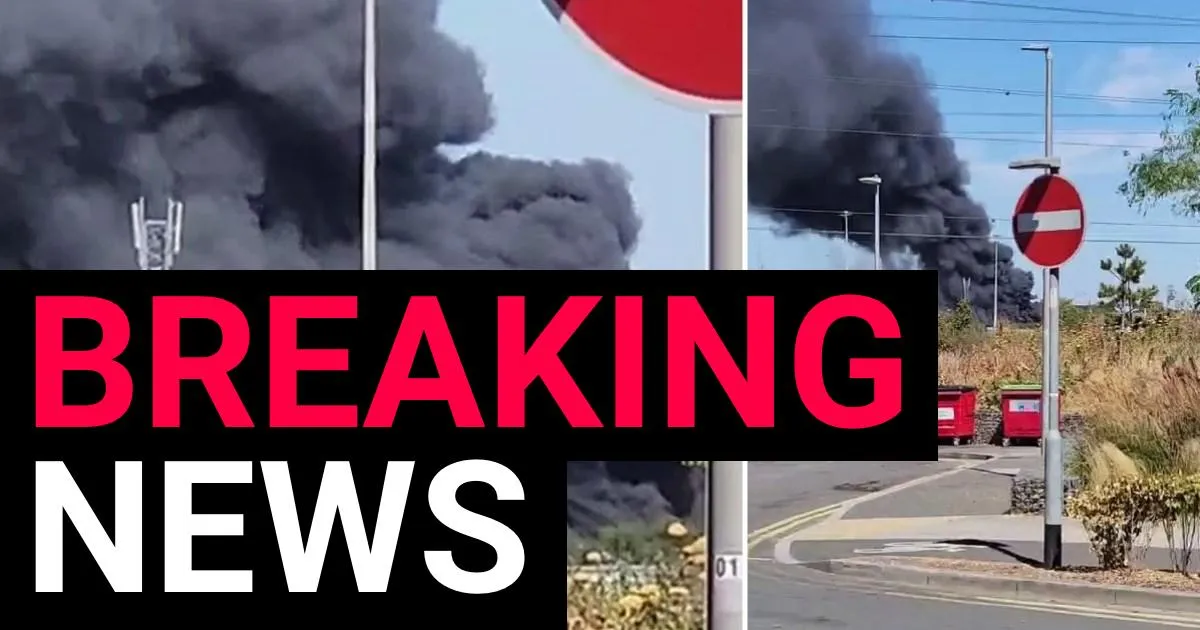
It began as an ordinary afternoon in Barking, a busy corner of east London where the rhythms of daily life usually drown out everything else. Then, without warning, the sky changed. A thick column of dark smoke rose from the industrial park near Ripple Road, curling into the clouds and turning the daylight eerily amber. Flames were soon ripping through a commercial property, their roar audible over the hum of traffic and the distant cries of gulls. For anyone who happened to be outside, the sight was both mesmerizing and terrifying. The fire came fast, hungry and unrelenting, consuming whatever lay in its path. Within minutes, smoke was drifting across the River Thames, visible for miles on the opposite side, where people stopped in their tracks to film the ominous cloud on their phones. Parents pulled their children closer. Office workers gathered at windows. Drivers slowed down, craning their necks, trying to make sense of what was happening. It felt less like a local incident and more like a scene from a disaster film, except this was real, and it was happening in broad daylight. The industrial park, normally a place of forklifts, loading bays and quiet industry, had become the epicenter of a crisis that would soon touch thousands of lives. Residents living nearby described the initial moments as a blur of sirens and shouts, followed by that unmistakable smell of burning materials carried on the wind. Some said they saw sparks and debris flying into the air, while others simply stared at the flames and wondered if their homes, their families, their quiet routines would be caught up in the chaos. What had started as a fire in one building was already beginning to feel like a defining event for the whole area.
Paragraph 2: A Rush of Heroes and Sirens
Shortly before one o’clock, the first emergency calls began to flood in. At first, there were just a few, but soon the lines were overwhelmed by concerned residents describing the towering flames and the thick smoke that seemed to swallow the sky. Dispatchers worked quickly, and within minutes, around one hundred firefighters were heading toward Ripple Road from stations across London. They came in fire engines, their blue lights flashing through the traffic, sirens wailing in a frantic chorus. The response was swift, but the situation was already serious. By the time the first crews arrived, the fire had taken a firm hold of the commercial property, and there was no time to waste. Firefighters leapt into action, unrolling hoses, checking their breathing apparatus and taking up positions around the perimeter of the blaze. Water cannons were aimed at the flames, spraying relentless streams in a desperate attempt to halt the advance. It was exhausting, dangerous work. The heat was intense, so severe that crews had to rotate regularly to avoid heat exhaustion. Every few minutes, another truck arrived, bringing fresh teams and additional equipment. Officers coordinated the effort, barking orders over crackling radios, trying to keep everyone safe while attacking the fire from every possible angle. For the firefighters, there was no thought of personal glory, only the grim determination to contain the damage and protect the surrounding area. They knew that industrial buildings could contain all sorts of hidden hazards, chemicals, gas cylinders, compressed materials, and each one posed a new threat. Still, they pressed forward, moving through smoke so thick it was almost impossible to see, guided by training and instinct. Their bravery was undeniable, but so was the scale of the challenge. This was not going to be a quick fix. It was going to be a long, grinding operation, one that would test their endurance long after the cameras turned away.
Paragraph 3: The Human Cost Behind the Flames
Behind every piece of burning metal and every shattered window, there were human stories. The industrial park was not just a collection of empty buildings; it was a place where people earned their living, where small business owners had invested years of sweat and savings into their dreams. There were workshops filled with tools and materials, storage units packed with inventory, loading docks where workers and drivers had their daily routines. In a matter of minutes, all of that was threatened. Workers who had been inside when the fire broke out spoke of the chaos of evacuation, grabbing what they could, shouting warnings to colleagues, and stumbling out into the car park to watch helplessly as smoke poured from the roof. Some had tears in their eyes, not just from the smoke, but from the fear that everything they had worked for might be gone. Local residents, too, felt the weight of the moment. Many live just a short distance from the industrial estate, and the sight of flames so close to their homes was deeply unsettling. Parents worried about their children’s classrooms filling with smoke. Elderly people, who had lived through other fires and other crises, remembered how fast bad situations could turn worse. The community did what communities always do in times of trouble: they came together. Neighbors checked on each other, offering water to tired firefighters and shelter to anyone who looked lost. Shopkeepers stayed open to provide refreshments, and volunteers helped direct worried onlookers away from the danger zone. Yet beneath the warmth of that togetherness, there was a current of anxiety. No one knew exactly how the fire had started, no one knew how far it would spread, and no one knew what the morning would bring. All they could do was wait, watch and hope that the professionals on the scene could bring the blaze under control before it destroyed even more.
Paragraph 4: Traffic Chaos and a Community in Gridlock
As the fire raged, the impact began to ripple far beyond the industrial park itself. One of the most immediate consequences was the closure of the A13, one of the most important roads in the region, a vital artery connecting London to Essex and the wider southeastern network. With crews working at the scene and emergency vehicles needing space to maneuver, police sealed off a chunk of the road, sending traffic into chaos. Commuters who had set off in blissful ignorance suddenly found themselves stuck in long lines, engines idling, radios tuned to local news, trying to find any alternative route. But there was no easy way around. The fire was right next to Ripple Road, a main thoroughfare in its own right, and that too was closed. Drivers sat in their cars, watching the smoke rise in the distance, while others attempted to turn around in narrow side streets, creating bottlenecks and frustration. For those trying to get home to Essex, or to reach the M25, the nightmare was especially acute. The M25 had already been closed the previous day due to a major fire of its own, and now this new incident added another layer of disruption. It felt as though the whole transport network was crumbling under the strain. Delivery drivers saw their schedules destroyed, parents worried about school pickups, and commuters wondered whether they would make it home before nightfall. Bus companies rerouted their services, train stations swelled with people desperate for any alternative. Meanwhile, emergency dispatchers pleaded with the public to stay away from the area, reminding everyone that road closures were not just an inconvenience but a matter of safety. The smoke alone was a health hazard, and the last thing anyone needed was a crowd of spectators blocking the emergency services. Still, the sheer ripple effect of the fire was impossible to ignore. A single industrial blaze had managed to disrupt the lives of thousands, a stark reminder of how fragile the connections between communities and their infrastructure truly are.
Paragraph 5: Whispers of a Community Under Strain
As the afternoon wore on, a kind of weary resignation settled over Barking. People stood in small groups, talking in low voices, trading rumors and half-truths. Was anyone hurt? Had the fire spread to the neighboring buildings? Would the smoke keep blowing toward the schools? The lack of immediate answers only fueled the anxiety. Firefighters continued their relentless assault on the flames, but the fire was stubborn, refusing to yield easily. Occasionally, bursts of fresh flame would erupt from the structure, sending a collective gasp through the crowd. The smoke, meanwhile, hung heavy in the air, drifting lazily across the skyline, a constant reminder of the battle taking place behind the cordons. Local officials arrived to assess the situation, and police maintained a tight perimeter, allowing only residents and essential workers through. There was a strange mixture of tension and solidarity in the air. Strangers talked to one another as if they were old friends, bonded by the shared experience of the crisis. Some brought folding chairs and settled in for what they clearly expected to be a long wait. Others took photographs and sent them to family members, trying to explain the scale of what they were seeing. And all the while, the firefighters pushed on, their faces streaked with soot, their movements slower but still determined. It was exhausting to watch, and harder still to experience. The nearby M25 closure from the previous day remained on everyone’s mind, adding a sense that the area was being tested, that one disaster after another was piling up. For the emergency services, it was a brutal stretch, but they were used to rising to the occasion, even when the odds seemed stacked against them. Their professionalism was a comfort, but it could not erase the underlying fear that lingered in the shadows of the smoking ruins.
Paragraph 6: The Long Road to Recovery and Answers
By the time evening approached, the immediate crisis was far from over, but the beginning of a long road had become clear. Fire crews were preparing to remain on the scene for many hours, possibly overnight, damping down hotspots and making sure the flames did not flare up again. Investigators were already beginning to think about the next phase, sifting through the debris to determine what had caused the fire and whether it could have been prevented. For the businesses and workers affected, the wait for answers would be agonizing. The flames may have been controlled, but the damage would last long after the smoke cleared. Insurance claims, salvage operations, the wrenching process of counting the losses, all of that still lay ahead. The community, however, showed its strength in the quiet resilience of its people. Neighbors opened their homes to those who could not return, businesses donated supplies, and local leaders promised to do everything in their power to assist those in need. There were no grand speeches, no dramatic gestures, just the steady, unbreakable spirit of a place that had faced difficulties before and would face them again. The closure of the A13 and the disruption to the M25 would eventually be lifted, traffic would return, and the sounds of the industrial park might one day resume. But the memory of that afternoon, the sight of the orange sky and the sound of sirens, would stay with the people of Barking for a long time. Fires like this have a way of reminding everyone of the thin line between safety and disaster, between a normal day and one that changes everything. In the days ahead, questions would be asked, lessons would be learned, and perhaps steps would be taken to make such incidents less likely. For now, though, there was only the quiet hum of the hoses, the glow of the floodlights, and the tired, hopeful faces of those who refused to give up.