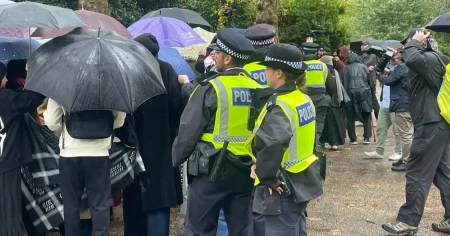

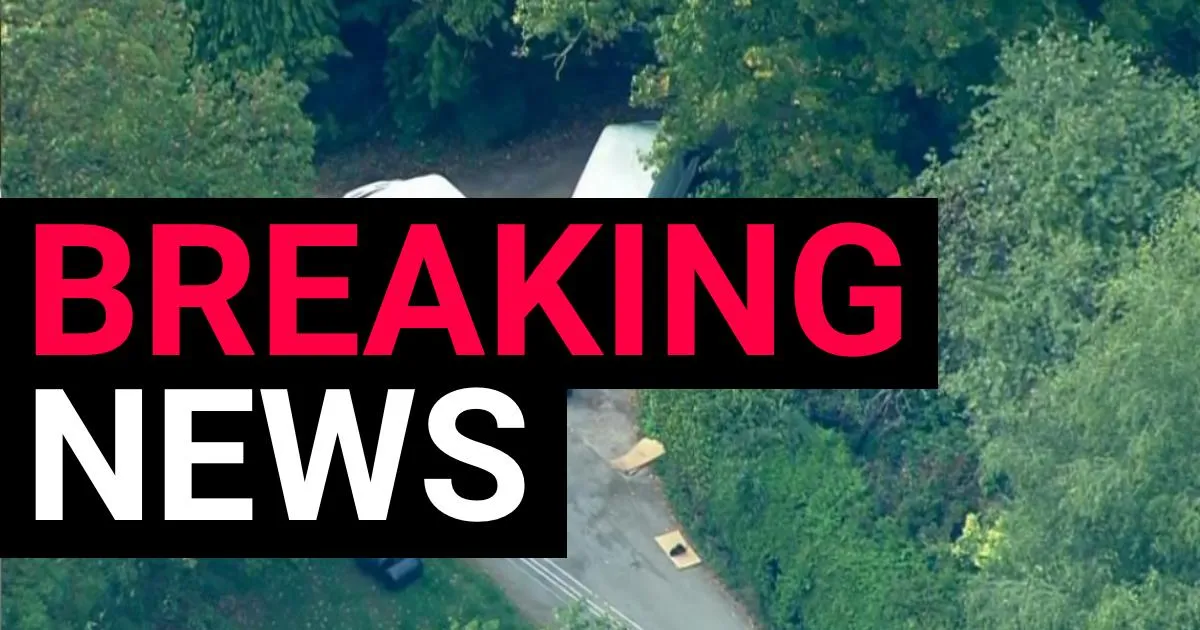
It began as a scene straight out of a thriller, but for the people living near RAF Fairford, it was terrifyingly real. On September 27, the quiet countryside around the Gloucestershire military base was shaken by reports that three white vans had been spotted close to the safety perimeter. The base, which until recently had housed American fighter jets, became the focus of a major counter-terrorism investigation. A local farmer described seeing hooded and masked men running into the woods near the base, a detail that sent a chill through the small villages of Whelford and Kempsford. These are places where life usually moves at a gentle pace, where the biggest excitement might be a village fête or a passing tractor. Suddenly, they were on the world map, at the center of an alleged terror plot that has now led to a seventh arrest. Counter-terrorism detectives confirmed that a 22-year-old British national has been taken into custody, held on suspicion of terrorist acts. The arrest took place in Westminster, London, far from the rural fields where the original incident unfolded, but connected by a web of suspicion and fear that has stretched across the country. For the community, the news of yet another arrest was both shocking and, in a strange way, reassuring—shocking because the threat seemed to be growing, but reassuring because the authorities were clearly closing in on those responsible.
The latest arrest is part of a widening investigation that has already seen six other men detained. Just a day earlier, on Saturday, a sixth man, a 25-year-old dual British-Iranian national, was arrested in connection with the same events, also on suspicion of preparing terrorist acts. Before that, five other men, all in their mid-20s, had been apprehended on suspicion of explosives offences and terrorism. Each arrest adds another layer to a complex and deeply troubling picture. These are not shadowy figures from some distant conflict; they are young men living in Britain, and that reality has unsettled many people. The arrests have taken place across different locations, with the latest in the heart of London, suggesting that the investigation has tentacles reaching far beyond the Gloucestershire countryside. Counter-terrorism police have been working tirelessly, piecing together evidence, following leads, and trying to understand what exactly was being planned. For the families of the suspects, the news must have been devastating—a knock on the door, a sudden arrest, and a world turned upside down. For the public, it raises difficult questions about how such plots are uncovered, how close we come to danger without knowing it, and whether the authorities are truly one step ahead. The fact that so many men have been arrested in such a short space of time suggests that this was not a spontaneous act, but something carefully planned, and that the police have been engaged in a painstaking race against time to stop it before it could be carried out.
Senior national coordinator for Counter Terrorism Policing, Vicki Evans, has been the calm voice amid the storm, offering reassurance while being careful not to reveal too much. She described the investigation as a “live” one, with specialist teams pursuing “multiple lines of inquiry” into the circumstances surrounding the events near RAF Fairford. Her words were measured, but they carried the weight of a massive operation. “Once again, I’d like to thank the public for their continued support and patience whilst we work through this highly complex investigation,” she said. It is the kind of statement that is easy to skim over, but it speaks to the immense pressure that law enforcement is under. They are not just dealing with a single incident; they are trying to uncover a network, understand motivations, and ensure that no further threats remain. Evans acknowledged the intense public interest in the case, promising that officers were working “around the clock, and at pace, to identify the motivation behind events in Gloucestershire.” She stressed that the investigation was committed to exploring “all possible angles.” For the public, this is both comforting and concerning. It means the police are being thorough, but it also means they have not yet found all the answers. The investigation is far from over, and until it is, the sense of unease will linger. The people of Gloucestershire, and indeed the whole country, are left waiting, hoping that the next piece of news brings clarity rather than more confusion.
The international dimension of this case has added another layer of tension. The Pentagon made the dramatic decision to pull US bombers from RAF Fairford, a move that spoke volumes about the perceived seriousness of the threat. President Donald Trump did not mince words when asked about the decision. “They didn’t fly out by accident. There were some threats and rather than tempting the enemy, we will capture the enemy and beat the enemy. But why should we leave them there?” he said. The imagery of American warplanes leaving British soil under a cloud of threat is powerful, and it signals just how high the stakes are. RAF Fairford has long been a key strategic asset, used by US forces to carry out operations across the Middle East, including launching aircraft during the conflict with Iran. The base is not just a piece of military infrastructure; it is a symbol of the special relationship between the United Kingdom and the United States, and a reminder that global conflicts often have local consequences. For the residents of the surrounding villages, watching the bombers leave must have been a stark illustration of the danger that had been lurking in their midst. The removal of the aircraft was not a routine logistical decision; it was a response to a specific and credible threat, one that the authorities are still trying to fully understand. The sight of empty runways and the absence of the familiar roar of engines will have left a lasting impression on a community that suddenly found itself at the heart of a geopolitical storm.
As if the arrests and the military response were not enough, the political fallout has been swift and sharp. Prime Minister Andy Burnham made headlines by suggesting there were “strong indications” of links to Iran, a statement that immediately escalated the situation from a domestic security matter to an international diplomatic crisis. Tehran, predictably, reacted with fury, strongly denying any involvement in the alleged plot. Iran’s foreign minister, Abbas Araghchi, accused the UK of “barking up the wrong tree,” a phrase that perfectly captures the bitterness of the exchange. The war of words between London and Tehran is dangerous, because it plays out against a backdrop of real military tension. The US bombers that had been stationed at RAF Fairford were involved in operations in the Middle East, including strikes related to the Iran conflict. If the alleged plot was indeed linked to Iran, it would represent a brazen attempt to strike back on British soil, a thought that is deeply unsettling. But if the allegations are unfounded, as Tehran insists, then the UK risks alienating an already hostile state and escalating a conflict that no one wants. For the average person, this diplomatic maneuvering can feel distant, but it has very real consequences. It affects national security, international relations, and the safety of ordinary citizens. The accusations and denials have created a fog of uncertainty, and until the investigation reaches a conclusion, it is impossible to know who is telling the truth. What is clear is that the alleged plot has already had a profound impact, both locally and globally, and the ripples are still spreading.
As the investigation continues, the overriding feeling is one of waiting. Waiting for answers, waiting for justice, and waiting to understand why a group of young men would allegedly plot an act of terror in the English countryside. The residents of Whelford and Kempsford are trying to return to their normal lives, but normality feels different now. The fields are still green, the roads are still quiet, but the memory of that September day lingers. The police have asked for patience, and the public has largely given it, but patience is not the same as peace of mind. Every new arrest brings a mix of relief and anxiety—relief that another suspect is off the streets, anxiety that there might be more. Vicki Evans and her team have promised to keep working until the full picture is clear, and that is a promise that matters. In times like these, we rely on the dedication of those who protect us, and we are reminded of the fragility of the safety we often take for granted. The alleged plot at RAF Fairford is a story of narrow misses, brave investigative work, and a community caught in the crossfire of global events. It is also a story that is not yet finished. The 22-year-old man arrested in Westminster, the 25-year-old dual national, the five others in their mid-20s—they are all part of a puzzle that is still being assembled. Until it is complete, the questions will remain. What were they planning? Who was behind it? And how close did we come to tragedy? The answers may take time, but they will come. For now, the people of Gloucestershire, and the nation as a whole, can only hold on to the hope that the authorities are one step ahead, and that the quiet fields and peaceful villages will remain just that—peaceful. The world has changed, but the determination to protect it has not, and that is perhaps the most human response of all.