


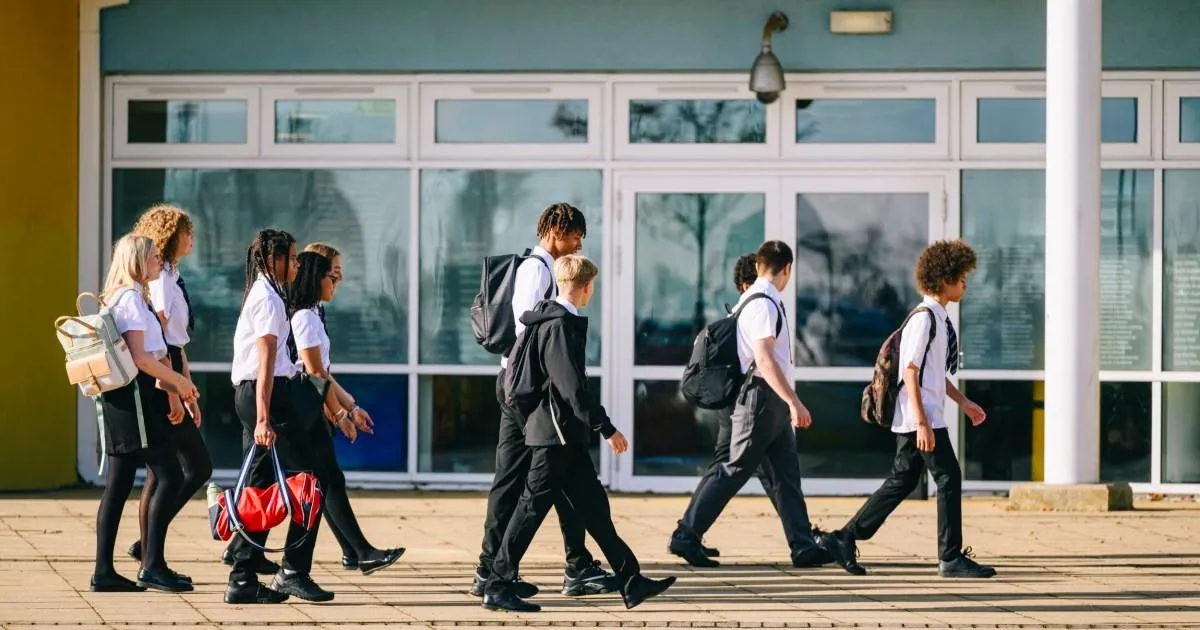
There is a moment in every school day that has nothing to do with lesson plans, exam timetables, or the bell. It happens in the corridors, the courtyard, and the crowded space between classrooms, where friendships are quietly reinforced by a touch that means something. A handshake after a win. A high five before a test. A friendly fist bump from someone who saw you were having a rough morning. For the students at Philip Morant School and College in Colchester, these small, spontaneous gestures of connection were recently thrown into question when the school introduced a strict no-contact policy. The rule felt cold, clinical, and profoundly out of step with the reality of being young. But now, after an outcry from pupils and a petition that gathered 350 signatures, the school has done something rather refreshing: it has listened. The new policy allows handshakes, fist bumps, high fives, and the informal, rhythm-heavy greeting known as “dapping.” It is a small but meaningful shift, and it speaks to something larger about trust, dignity, and the messy, physical nature of human relationships.
The original ban was not introduced casually. At the start of term, students were told in assembly that physical contact between pupils was no longer permitted. The head teacher, Stephanie Neill, explained that the decision came after “an increase in overly physical behaviour last term that disrupted learning and raised safety concerns.” In a school environment, this kind of statement is often received with a collective groan. Teenagers are, by nature, physical creatures. They bump into each other, lean on one another, celebrate and comfort through touch. To tell them that all contact must stop is a bit like telling a river to stop flowing. The rule quickly created a strange, almost hostile atmosphere. Parents began to share stories of children being given detentions for hugging a friend in the hallway or high-fiving a classmate after a bit of good news. These are not acts of violence or disruption; they are the normal ways in which young people connect. The severity of the punishment felt wildly disproportionate, and it turned ordinary moments of friendship into potential discipline events. The petition followed shortly after, and rather than digging in, the school reconsidered. That act alone deserves recognition. Too often, schools treat policy changes as admissions of weakness, but the willingness to reverse course in response to student voice is a lesson in humility and fairness that young people will not soon forget.
The new policy is not simply a complete reversal, but a nuanced, carefully considered middle ground. In a five-page slideshow document, the school outlined exactly what kinds of physical contact are now acceptable. Handshakes, for example, are fine. Dapping—that intricate, almost musical sequence of hand slaps, finger snaps, and fist bumps that many young people use as a greeting—is also permitted. Fist bumps and high fives get the green light too. But these greetings are only allowed when both students have consented and when the gesture is not malicious or disrespectful. The document also makes clear that physical contact should not cause students to be late, should not take place in classrooms, and should never involve “bone squashing.” That phrase is wonderfully expressive, and it paints a vivid picture of the kind of contact that remains banned: the crushing, bone-rattling, overly aggressive hug that is less about affection and more about brute force. Tripping someone up remains banned, as do “birthday bumps,” that questionable birthday tradition in which the celebrant is lifted and bumped by friends. The school is clearly trying to maintain a safe, orderly environment while acknowledging that friendships are not built in isolation. It is a delicate balance, and the fact that the school has tried to articulate it in a document suggests a desire for clarity rather than simple punishment.
What makes this story especially human is the way the head teacher framed the change. Stephanie Neill said the school had worked “closely” with students to establish the new policy, and that the school had consulted with parents and “student leaders.” She also offered praise, noting that students had “continued to conduct themselves as we would expect.” This is not the language of a school buckling under pressure; it is the language of a community adjusting its rules to reflect its values. There is something genuinely admirable about involving students in the creation of the very policies that govern their daily lives. When adults sit down with young people and ask, “What do you think a fair rule looks like?” the result is often far more realistic and effective than any edict handed down from on high. It also teaches young people a powerful lesson about agency and participation. They are not just subjects of the school; they are members of it. The fact that their voices were heard and taken seriously is a reminder that schools are not just places where knowledge is transmitted, but places where young people learn how to engage with authority, how to express disagreement, and how to be part of a community.
Zooming out, this small controversy touches on a much broader conversation about schools’ control over students’ bodies. Across the country, schools grapple with how to maintain discipline and safety without turning their corridors into joyless zones of surveillance. The Department for Education has said it provides guidance and measures to help schools make their own choices, which leaves a lot of room for interpretation. Some schools ban phones, some enforce strict uniform codes, some regulate what can be brought on school grounds. But physical contact is different because it strikes at the heart of social life. Touch, even in its smallest forms, is a primary way that teenagers express solidarity, empathy, and shared identity. A high five after a difficult exam is not a threat to order. A fist bump between friends is not a disruption to learning. These micro-interactions are the glue that holds school communities together. By allowing them, the school is acknowledging that young people need more than academic instruction; they need a culture in which they feel safe, respected, and human. The emphasis on consent is particularly important. In a world where boundaries are increasingly discussed, teaching students to ask themselves, “Does this person actually want to be touched?” is a valuable lesson. It transforms a simple rule about handshakes into a lifelong skill.
In the end, this episode at Philip Morant School is a heartening reminder that adults do not always know best. Sometimes they get it wrong, and sometimes they are wise enough to correct themselves. The no-contact rule may have been born out of a genuine concern for safety, but it failed to account for the emotional needs of the students it was meant to protect. The reversal is not a loss of authority but an expansion of trust. It says to students: we see you, we hear you, and we believe that most of you are capable of showing friendliness without causing harm. The corridors will still be busy. The bell will still ring. Friendships will still be marked by secret handshakes, enthusiastic high fives, and the occasional fist bump between classes. And yes, there will still be rules. There will still be boundaries around bone squashing and birthday bumps and the kind of roughhousing that can genuinely hurt. But those rules will no longer stand between a student and a warm greeting from a friend. In a world that often feels fragmented and disconnected, allowing young people to reach out and touch one another—in safe, respectful, and joyful ways—is not a small thing. It is a basic recognition of their humanity. And that is something worth a celebration, even if it comes with a high five.