

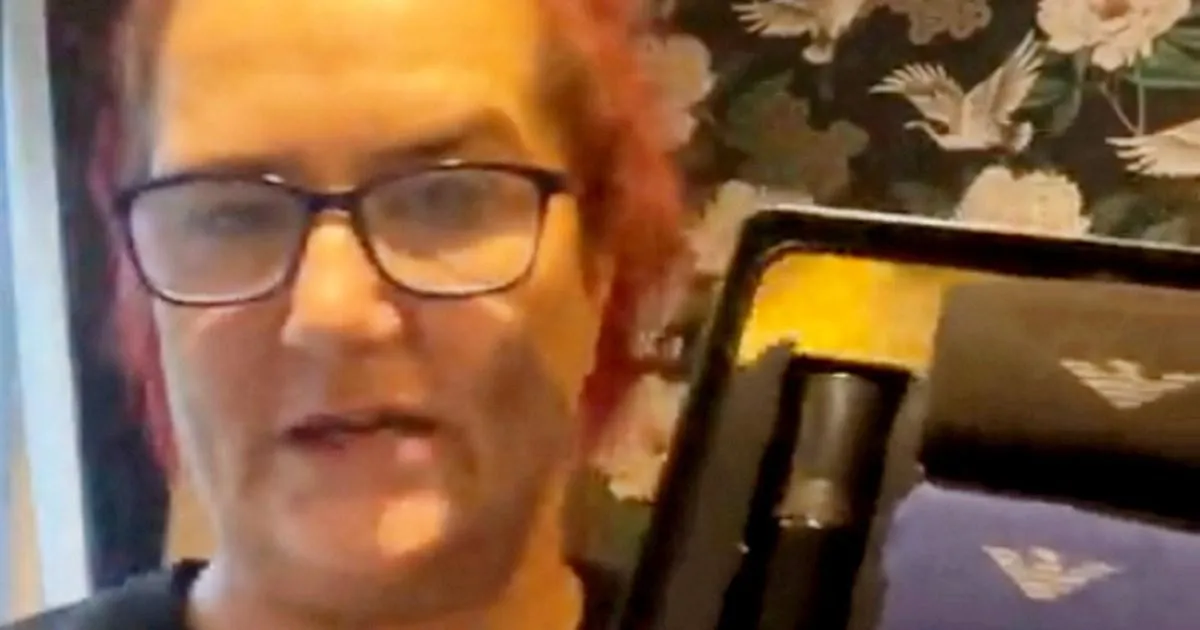
Barbara Murphy might have seemed, at first glance, like any other busy mother of two, juggling family life from her home in Skelmersdale, Lancashire. But behind the ordinary front door lay an extraordinary and ultimately destructive operation. Over four years, from 2021 to 2025, the 49-year-old built a lucrative counterfeit empire through a Facebook page named “Barbie Murphy,” selling fake designer goods to thousands of customers who believed they were getting authentic luxury items at bargain prices. Her inventory was staggering: knock-off Moncler jackets, Armani pieces, Gucci bags, Louis Vuitton and Cartier jewellery, Jo Malone perfume sets, Nike trainers, and even Premier League football shorts. She priced these fakes at around half the retail price, making them irresistibly attractive to shoppers looking for a deal. But the scale of her deception was vast—had the items been genuine, prosecutors said they would have been worth approximately £1.5 million. Instead, Murphy pocketed nearly £500,000 over the life of the scheme, before her world collapsed when she was sentenced to four years and four months in prison on October 8, after pleading guilty to fraudulent trading. The contrast between her ordinary domestic setting and the scale of the business she ran from it is part of what makes her story so striking. She was not some shadowy figure in a distant warehouse; she was a local mum, livestreaming sales from her home, chatting with followers, and building what the judge described as a professional shopping channel experience reminiscent of QVC. It is a reminder that crime often hides in plain sight, camouflaged by the mundane rhythms of everyday life.
The products Murphy sold were not just cheap imitations tossed off casually; they were professionally presented and carefully represented as desirable, authentic-looking goods. Her Facebook page became a kind of virtual boutique, where customers could watch her showcase items, ask questions in real time, and place orders through direct messages. She used livestreaming to create a sense of urgency and excitement, much like a television shopping host. Judge Recorder John Richard Jones KC noted that Murphy knew exactly what she was doing: she knowingly sold counterfeit items without ever making their true nature clear to buyers. “You knew the items you were selling were counterfeit, but you did not make that known,” he told her. The products had been “professionally represented,” he added, and the brands whose trademarks she copied were themselves victims of her offending. For the customers, there was a sense of being in on a secret—a chance to own something with a famous label for a fraction of the price. But the reality was more complicated. The people buying these goods may have believed they were simply outsmarting the retail system, but they were also funding an illegal trade that undermines legitimate businesses, exploits workers, and often involves wider criminal networks. Murphy’s operation was not a small side hustle; it was a well-organised business. Between May 2023 and February 2024, a Trading Standards officer purchased several items from her page as part of a formal investigation, quietly gathering evidence while Murphy continued to broadcast her deals to thousands of followers. Her following had grown to around 12,000 people, and she had become a familiar face in the online second-hand and bargain-hunting community. For many, she was simply “Barbie,” the friendly woman who always had great stock and good prices. Behind the warmth, though, was a carefully managed counterfeit machine.
Trading Standards first became aware of Murphy’s Facebook page in December 2021, when her suspiciously low prices raised immediate concerns. It did not take long for investigators to suspect that something was wrong. In March 2022, she was stopped by police in a vehicle containing fake items and was warned about selling counterfeit goods. That warning, however, did little to deter her. The court heard that her Facebook operation continued largely unchanged the following year, and she even expanded her methods by embracing livestreaming sales, allowing customers to message her in real time to place orders. This was not the behaviour of someone who had been scared straight; it was the behaviour of someone who believed she could keep getting away with it. The investigation escalated, and in February 2024, police and Trading Standards officers raided her home. What they found was shocking: rooms packed with boxes of clothing and footwear, a storage space that looked more like a warehouse than a family home. In total, 1,134 items worth around £45,000 were seized, including 397 pairs of Nike trainers and 179 pairs of Ugg boots. Representatives of the genuine brands examined the haul and confirmed that a significant number of the products were counterfeit. Even after the raid, Murphy did not immediately stop. She told her 12,000 Facebook followers that she was closing the page permanently because it had become “too risky,” but she claimed she planned to move the business to WhatsApp and Telegram, away from the prying eyes of authorities. Her company, Barbies Boutique Ltd, was dissolved in June 2024, yet the court heard she continued trading until June 2025. This persistence suggests a woman who was either deeply desperate, recklessly confident, or both. It also shows how difficult it can be to shut down determined counterfeit sellers, who simply shift platforms and continue operating.
The financial scale of Murphy’s offending was laid bare in court. Prosecutors said she had benefited by £492,379.61, with more than 11,000 transactions believed to have taken place over the course of her illegal enterprise. That figure represents not just profit, but thousands of individual moments in which someone handed over money for something that was not what it claimed to be. Some of those customers may have known or suspected the items were fake; others may have been genuinely deceived. Either way, Murphy was making a substantial living from the trade, and she was doing so while presenting herself as a trusted seller. The judge’s sentence of four years and four months reflected the seriousness of the offence, as well as Murphy’s previous conviction for dishonesty. In addition to the prison term, she was handed a confiscation order and ordered to pay a victim surcharge. The counterfeit goods seized during the investigation were to be destroyed. The court proceedings painted a picture of a woman who had built a significant criminal operation from her living room, but also of someone whose life had taken a particular trajectory. Her barrister, Alastair Reid, explained that Murphy had previously run a legitimate children’s clothing business online and from a market stall. That business, however, had been forced to close during the Covid pandemic, a time when so many small traders saw their livelihoods disappear almost overnight. Faced with financial hardship and perhaps limited options, Murphy became aware of opportunities to sell counterfeit goods supplied by traders in Manchester’s Cheetham Hill area, a place long associated with the sale of fake designer items. The profit split was stark: in some cases, she would keep just £10 from a £45 trainer sale and return the remaining £35 to the supplier. This detail is important because it reveals that Murphy was not the mastermind of a global counterfeiting network; she was one part of a larger chain, and her share of the profits was often relatively small compared to the risk she was taking.
The human side of this story is difficult to ignore. Barbara Murphy is not a faceless criminal; she is a 49-year-old mother who now finds herself in prison, separated from her children and her former life. The court heard that she is currently receiving state benefits and living in council accommodation, a far cry from the apparent success of her years selling designer fakes. Her barrister described her as knowing her actions were wrong, which suggests a certain level of self-awareness and perhaps genuine remorse. She was not someone who convinced herself she was doing no harm; she knew what she was doing and she knew it was illegal. Yet she continued anyway, driven by circumstances that may have felt overwhelming at the time. The collapse of her legitimate business during the pandemic was a real blow, and the temptation of easy money through counterfeiting proved too strong to resist. This does not excuse her actions, but it helps explain them. Human beings are complicated. We make choices that are shaped by our circumstances, our fears, our ambitions, and our desperation. Murphy’s story is a cautionary tale about how quickly a person can slide from legitimate work into criminal activity, especially when they are struggling financially and see others around them making money in ways that seem low-risk and harmless. The counterfeit trade is often portrayed as a victimless crime, but it is not. It harms the brands whose intellectual property is stolen, it undermines legitimate businesses, and it can expose customers to poor-quality or even unsafe products. It also, ultimately, harms the sellers themselves, as Murphy has now discovered.
Perhaps the most sobering lesson from Murphy’s case is that crime, however humanised, carries consequences. The judge was clear that her offending was serious, sustained, and deliberate. She had been given a warning early on, but she chose to ignore it. She continued to build her business, to livestream her sales, to package and post her counterfeit goods, and to take money from customers under false pretences. In doing so, she crossed a line that cannot be uncrossed. Now, her children are growing up without her at home, her reputation is destroyed, and any future she might have had as a legitimate businesswoman is shadowed by her conviction. Yet there is something deeply human about her story too: a mother trying to make money during a difficult time, choosing the wrong path, and paying a heavy price. It would be easy to judge her harshly, and certainly the court did. But her case also invites us to think about the broader circumstances that lead people into such trades. The pandemic created enormous economic pressure for many families, and the lure of quick cash from selling fakes can be powerful, especially when social media makes it so easy to reach thousands of potential buyers. Murphy exploited that opportunity, and she profited from it. But she also lost everything. In the end, the counterfeit empire built by “Barbie Murphy” has been dismantled, the goods destroyed, and the woman behind the page is behind bars. Her story is a reminder that no amount of money is worth the loss of freedom, and that the choices we make, however ordinary they may seem at the time, can change the course of our lives forever.