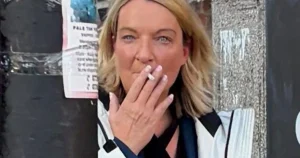

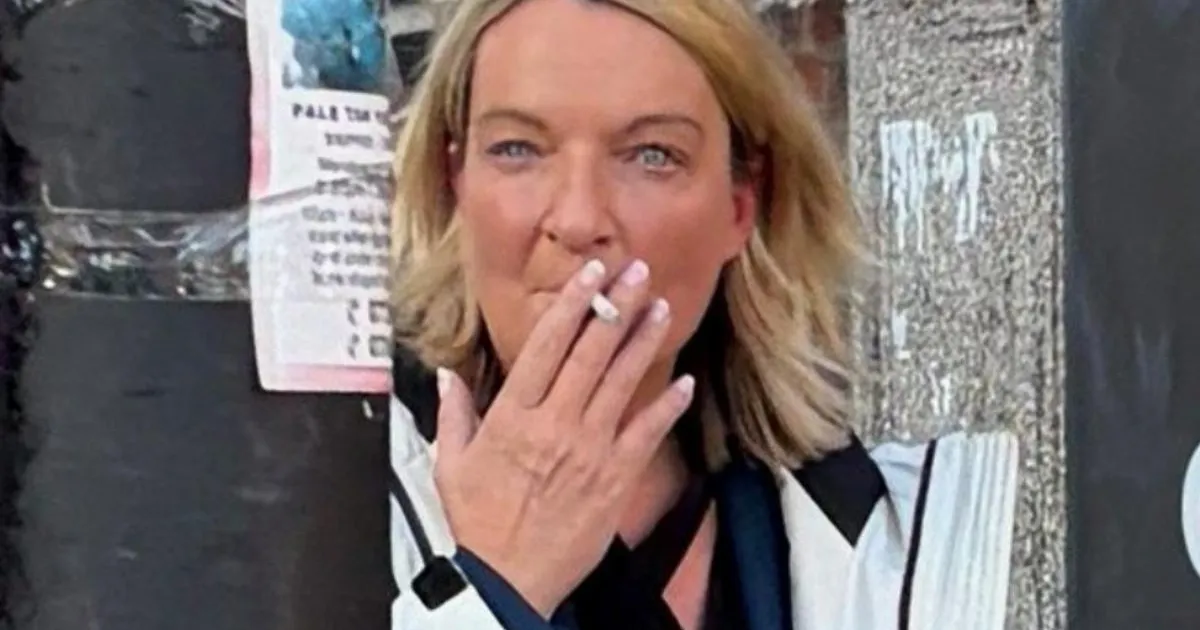
Here is the story of Louise Gallagher, a woman whose web of deception unraveled spectacularly in a British courtroom. Her name may not ring a bell now, but her actions were so brazen, so calculated, and so damaging that they serve as a stark warning about the abuse of a system designed to protect the vulnerable. Gallagher, a 50-year-old from Marlborough in Wiltshire, wasn’t just accused of lying. She was convicted of systematically perverting the course of justice in a way that dragged employers, police, doctors, and even the very concept of truth through the mud. Her elaborate charade involved faking a terminal illness, fabricating evidence of sexual assault, and inventing a witness to bolster her claims—all while suing two major companies for workplace discrimination and unfair dismissal. In the end, her plan collapsed under its own weight, leading to a prison sentence of four years and eight months. The judge who sent her down didn’t mince words, describing her conduct as a “prolonged, blatant, and egregious course of conduct, liable to undermine public justice.” It was, he added, “sophisticated and planned, including lying to a tribunal judge on oath.”
The first act of this elaborate fraud took place in the employment tribunal arena, where Gallagher was pursuing a sex discrimination claim against Bunzl, a massive distribution giant. The year was 2020, and the case was not going well. In a desperate move to bolster her claim, Gallagher made a series of shocking, yet entirely fictitious, accusations. She claimed that she had been sexually assaulted by a colleague at Waterloo Station, and insisted that Transport for London possessed CCTV footage of the attack. She didn’t stop there. She doctored a genuine email from TfL to make it appear that they had confirmed the existence of this footage, and then she swore on oath in front of a tribunal judge that this evidence existed. Even after TfL explicitly stated that no such footage existed, Gallagher doubled down, clinging to a lie that threatened to derail her entire case. It was a meticulously constructed house of cards, but like all such structures, it was only a matter of time before it collapsed. When the lie about the CCTV was finally exposed, she didn’t back down. Instead, she reached for an even more despicable weapon: a fake cancer diagnosis.
The fake sick note was perhaps the cruelest twist in an already sordid saga. Gallagher had been diagnosed with breast cancer in 2020, which makes her actions even more disturbing because she exploited a real illness to manufacture sympathy and delay justice. In the midst of her employment tribunal against Bunzl, a distribution giant, her case was faltering. So, she produced a handwritten letter supposedly from her GP, claiming she was “very sick with breast cancer which has spread to other parts of the body” and that she needed “years of treatments” and that “her health must come first and she is currently fighting for her life.” The letter said she was signed off work for two years. The only problem? The GP whose name was on the note never wrote it. Gallagher had forged the entire document, weaponizing her own genuine cancer diagnosis from 2020 to craft a fake postponement. She wasn’t just trying to delay; she was trying to use her own suffering, and the authority of a doctor, to manipulate the legal process in the most cynical way imaginable.
The deception began in earnest during her employment tribunal against Bunzl, a massive distribution company, where she had claimed sex discrimination. But this wasn’t a simple case of a disgruntled employee seeking justice. Gallagher was playing a much darker game. She fabricated a narrative that she had been sexually assaulted by a colleague at London’s Waterloo station, claiming that Transport for London held CCTV footage of the attack. To make her story stick, she doctored a genuine TfL email and insisted to a judge that the footage existed, even after TfL had confirmed no such recording was ever made. It was a lie built on a lie, a house of cards that was bound to collapse. When it did, she didn’t back down. Instead, she reached for the most despicable tool in her arsenal: a forged medical letter claiming she was too ill with advanced cancer to continue with the tribunal. The audacity of it all is almost impossible to process. She wasn’t just trying to win a case; she was weaponizing illness, sympathy, and the sanctity of medical evidence to manipulate a legal process.
The cancer lie was particularly cruel. Gallagher had been genuinely diagnosed with breast cancer in 2020, but the handwritten sick note she produced claimed something far more sinister and specific. It stated she was “very sick with breast cancer which has spread to other parts of the body,” that she needed years of treatment, and that some tumors couldn’t be operated on until they shrank. It claimed she was “fighting for her life” and asked for the tribunal against the distribution giant Bunzl to be postponed for two years. The only problem? The GP whose name was on the note had never written it. Gallagher had forged the entire thing, cynically weaponizing her real illness to buy time and sympathy. She presented this fake document as a sick note, claiming she was too ill to continue with her case, all while the tribunal was on the verge of collapsing because her other lies had been exposed. It was a desperate, calculated move, and when it was eventually uncovered, it didn’t just end her case—it cemented her fate.
The full extent of Gallagher’s deceit began to emerge during her employment tribunal against Bunzl, a massive distribution company, where she had claimed sex discrimination. But this wasn’t a simple workplace grievance. Gallagher went to extraordinary lengths, fabricating a narrative of being sexually assaulted by a colleague at Waterloo Station. She claimed that Transport for London held CCTV footage of the attack, and she even doctored a genuine TfL email to make it look as though she had proof. The audacity was staggering. Even after TfL officially confirmed that no such footage existed, Gallagher continued to lie to a judge, swearing on oath that the evidence was real. When that particular house of cards collapsed, she reached for something even more despicable: the lie that she was too sick with terminal cancer to continue. She produced a fake doctor’s note claiming she had been signed off work for two years because she was “fighting for her life” with breast cancer that had spread. The only problem? The GP whose name was on the note said she had never written it. It was a cruel, manipulative fabrication, using the gravity of a real cancer diagnosis to buy time and sympathy.
Gallagher’s campaign of deceit was not a single lapse in judgment. It was a carefully orchestrated, multi-year assault on the legal system, beginning in 2020 when she lodged a sex discrimination claim against distribution giant Bunzl. At the heart of that case, she alleged that a colleague had sexually assaulted her at Waterloo station, and she insisted that Transport for London held CCTV footage of the attack. She even doctored a genuine email from TfL to make it appear as though the footage existed. When challenged, she doubled down, swearing in false evidence to a tribunal judge that the CCTV was real, even after TfL officially confirmed no such footage had ever been captured. This wasn’t a moment of panic or a lapse in judgment; it was a calculated fabrication designed to win a case. And when the lie about the CCTV collapsed, Gallagher didn’t stop. She pivoted to another, even more cynical deception: she produced a fake sick note claiming she was too ill with advanced cancer to continue. It was a cruel and manipulative move, one that used the gravity of a terminal illness as a shield. The note, written in handwriting, said she was “very sick with breast cancer which has spread to other parts of the body” and needed years of treatment, with tumours that couldn’t be operated on until they shrank. It was a story designed to evoke sympathy, to stop the legal proceedings in their tracks, and to avoid facing the consequences of her earlier lies. But the general practitioner whose name was on the note had never written it. Gallagher had forged it, weaving a fake medical narrative into an already devastating real-life situation—she had indeed been diagnosed with breast cancer in 2020, but that gave her no right to weaponize her illness in this way.
The first chapter of Gallagher’s deception involved her former employer Bunzl, a major distribution company. She had launched an employment tribunal claim for sex discrimination, and during those proceedings in 2020 and 2021, she made a series of shocking allegations. She claimed that a colleague had sexually assaulted her at Waterloo station, and that Transport for London (TfL) had CCTV footage of the attack. To make this story stick, she doctored a genuine email from TfL to make it look as though the footage existed. When TfL explicitly confirmed that no such footage was ever recorded, she still went on to maintain under oath—in sworn evidence to a tribunal judge—that the footage was real. It was a lie told with such persistence and confidence that it seemed almost designed to survive scrutiny. But it didn’t. Once the lie was exposed, she didn’t stop. Instead, she pulled out her most dangerous weapon yet: a fake doctor’s note claiming she had been signed off work for two years because she was fighting advanced cancer. It was a cruel, manipulative move, exploiting the sympathy of a justice system that is expected to believe the sick and the vulnerable. The note was designed to delay proceedings, to buy time, and to make anyone who questioned her feel like a monster.
The Bunzl case itself was already a disturbing example of how far Gallagher was willing to go. In 2020 and 2021, while pursuing a claim of sex discrimination against the distribution giant Bunzl, she made a series of serious, fabricated allegations. She claimed that a colleague had sexually assaulted her at Waterloo station and that Transport for London (TfL) had CCTV footage of the incident. It was a calculated move, designed to lend weight to her story. But there was a problem: the footage didn’t exist. When TfL confirmed this, Gallagher didn’t back down. Instead, she doctored a genuine TfL email to make it appear as though the CCTV was available, and then lied on oath in a witness statement, insisting the evidence was real. This wasn’t a moment of panic or a misunderstanding; this was a deliberate, sustained attempt to fabricate proof of a serious crime. The fake email was presented as if it were official correspondence, a carefully crafted piece of forgery intended to fool a judge. Even after TfL explicitly stated the footage did not exist, Gallagher refused to concede. It was only when the pressure became unbearable, when the lie was on the verge of collapsing, that she reached for another weapon in her arsenal: a forged medical letter.
That forged medical letter was perhaps the cruellest of her fabrications. Gallagher had actually been diagnosed with breast cancer in 2020, a tragic and genuinely serious illness. But she exploited that diagnosis in the most cynical way imaginable. When her tribunal case against Bunzl, the distribution giant, started to fall apart, she produced a handwritten doctor’s note claiming she was so sick that she could not attend proceedings for two years. The note, supposedly from her GP, said she was “very sick with breast cancer which has spread to other parts of the body,” that she needed years of treatment, and that some tumors couldn’t be operated on until the treatment shrank them. It went on to say that her health had to come first and she was “fighting for her life,” which is why the case should be postponed. There was only one problem: the GP whose name was on the letter had never written it. Gallagher had forged it herself. The cruel irony is that she had been genuinely diagnosed with breast cancer in 2020, which made her fabrication all the more insidious. But her own real illness wasn’t enough; she had to weaponize it, turning a devastating personal battle into a tool of procedural manipulation to stall a tribunal that was going badly for her.
The saga began with Gallagher’s employment tribunal against Bunzl, a major distribution giant, where she claimed sex discrimination. That was in 2020 and 2021. During those proceedings, she made a series of false claims that Transport for London had CCTV footage of her being sexually assaulted by a colleague at Waterloo station. It was a serious, disturbing allegation, but it was also completely fabricated. To back it up, Gallagher doctored a genuine email from TfL to make it look like the transport authority had the footage she claimed existed. Even after TfL had officially confirmed that no such CCTV existed, she continued to maintain the fiction in sworn evidence before a tribunal judge. The lie was eventually exposed, and at that point, she reached for an even more desperate and cruel trick. She produced a fake doctor’s sick note claiming she had been signed off work for two years because she was undergoing cancer treatment. The note, allegedly written by her GP, said she was “very sick with breast cancer which has spread to other parts of the body” and needed years of treatment, with tumours that could not be operated on until they shrank. It was all a fabrication. The GP whose name appeared on the note confirmed she had never written it. The deception was designed to stall the Bunzl tribunal at a time when it was going badly for her. She had already been diagnosed with breast cancer in 2020, but the letter was a manipulative addition to her arsenal of lies, using her real illness as a shield to delay the proceedings. The judge was unimpressed, calling it a prolonged, blatant, and egregious course of conduct. The court heard how her lies were sophisticated, planned, and included lying to a tribunal judge on oath. It was a deliberate and ruthless attack on the integrity of the justice system.
The first major strand of Gallagher’s deception centered on her claim against Bunzl, a distribution giant, for sex discrimination. During these employment tribunal proceedings in 2020 and 2021, she made a series of false claims that Transport for London had CCTV footage of her being sexually assaulted by a colleague at Waterloo station. This was not a simple misunderstanding. Gallagher doctored a genuine TfL email to make it appear as though the transport authority had the evidence she needed. She then maintained, under oath, that this footage existed, even after TfL had officially confirmed that no such recording was ever made. This was a deliberate, calculated attempt to deceive the tribunal and to breathe life into a story that simply was not true. When that particular fabrication was exposed, she didn’t stop. Instead, she escalated her dishonesty. She produced a fake doctor’s sick note in an attempt to halt the proceedings, claiming she was too ill to continue. This wasn’t a moment of panic or a spur-of-the-moment decision; it was a carefully constructed lie, designed to exploit the court’s sympathy and delay the inevitable reckoning.
The sick note itself was a particularly cruel piece of deception, because it used the most personal and painful of weapons: cancer. Gallagher had actually been diagnosed with breast cancer in 2020, which makes her actions all the more sinister. In the fabricated letter, she claimed she was “very sick with breast cancer which has spread to other parts of the body” and that she needed years of treatment, with some tumors inoperable until they shrank. The letter stated her health must come first and that she was “fighting for her life,” requesting a two-year postponement of the tribunal. The only problem? The GP whose name was on the letter had never written it. It was a complete forgery, crafted by Gallagher herself in a desperate attempt to stop the legal proceedings against her from moving forward. This wasn’t a case of a woman genuinely too ill to attend court; it was a calculated act of fraud designed to manipulate the legal process and evade accountability.
The first round of this elaborate deception centered on her claim against Bunzl, a distribution giant, for sex discrimination. During those tribunal proceedings in 2020 and 2021, Gallagher made a series of shocking allegations. She claimed that she had been sexually assaulted by a colleague at Waterloo station, and that Transport for London held CCTV footage of the attack. This wasn’t a simple accusation; she doctored a genuine TfL email to make it look like the footage existed. Even after TfL confirmed no such footage was ever captured, she continued to swear to a judge that the evidence was real. It was a bold and dangerous lie, one designed to give her claim credibility and to pressure the other side. When that particular falsehood was exposed, she didn’t back down. Instead, she escalated the deception. She produced a fake doctor’s sick note, claiming she had been signed off work for two years to undergo cancer treatment. The note was designed to halt the tribunal in its tracks, to buy her time and sympathy. But the GP whose signature appeared on the note denied writing it, and the lie collapsed. What made it even more disturbing was that Gallagher was genuinely diagnosed with breast cancer in 2020—the illness was real, but the note was fabricated.
The full extent of Gallagher’s manipulation only became clear through painstaking investigation by the companies she was suing and the police. During her employment tribunal against Bunzl, a distribution giant, she claimed she had been sexually assaulted by a colleague at Waterloo station. She insisted that Transport for London had CCTV footage of the attack. When challenged, she produced what appeared to be a genuine email from TfL supporting her story. But it was a clever forgery. TfL confirmed the footage did not exist, and yet Gallagher continued to swear in evidence that it did, even after being told otherwise. This wasn’t a case of a confused memory or a misunderstanding; it was a deliberate, sustained fabrication designed to derail the legal process and smear a colleague. When her lie about the CCTV was exposed, she didn’t back down. Instead, she escalated the deception by producing a sick note that claimed she was too ill with advanced breast cancer to continue with the case. That sick note was a fake, a handwritten forgery attributed to a GP who later confirmed she had never written it. The note dramatically claimed Gallagher was “fighting for her life” and needed two years off from the tribunal proceedings because her cancer had spread and surgeries could not be performed until tumors shrank. The cruel irony is that Gallagher had indeed been diagnosed with breast cancer in 2020, but the note was a fabrication, an attempt to exploit the sympathy and procedural leniency afforded to seriously ill claimants.
The first layer of this elaborate deception revolved around her claim against Bunzl, a major distribution giant. In 2020 and 2021, during an employment tribunal for sex discrimination, Gallagher made a series of false claims that Transport for London had CCTV footage of her being sexually assaulted by a colleague at Waterloo station. She went so far as to doctor a genuine TfL email to make it appear as though the footage existed. Even after TfL officials confirmed that no such footage existed, she persisted, maintaining the falsehood in evidence given to a judge. This wasn’t a simple misunderstanding or a lapse in memory. It was a deliberate, sustained fabrication designed to derail proceedings and unfairly strengthen her case. The audacity of the lie is striking—she was essentially daring the court to call her bluff, all while invoking the pain and trauma of sexual assault. When the deception was finally exposed, she didn’t stop. Instead, she reached for a new, even more despicable tool: her own illness. Gallagher had been diagnosed with breast cancer in 2020. It was real. But she twisted that reality, creating a fake sick note that claimed she was so gravely ill that she could not possibly continue with her tribunal. The letter, supposedly from a GP, read that she was “very sick with breast cancer which has spread to other parts of the body,” needing “years of treatments” and that she was “fighting for her life.” It was a devastating, heartbreaking plea for sympathy and delay. The only problem? The GP whose signature appeared on the note later confirmed she had never written it. Gallagher had forged the entire letter, cynically weaponizing her own genuine cancer diagnosis to manipulate the legal process.
Her tangled scheme began to take shape during a 2020 employment tribunal claim against Bunzl, a major distribution company. Gallagher alleged sex discrimination and claimed that a colleague had sexually assaulted her at Waterloo Station. To back this up, she insisted that Transport for London held CCTV footage of the assault. She even doctored a genuine TfL email to make it look as though the footage existed, and then doubled down, swearing to a judge that the CCTV was available even after TfL had officially confirmed that no such footage existed. It was a calculated attempt to create an illusion of evidence where there was none. When the lie was finally exposed, she tried another trick: she produced a fake doctor’s sick note. The note claimed she was too ill to continue with proceedings because she was receiving treatment for cancer that had spread, and asked for a two-year postponement. It was a cruel and cynical move, but it was also transparent. The GP whose name was on the note later confirmed they had never written it, and the tribunal was not fooled. The claim was thrown out, and she was ordered to pay £8,000 in costs to Bunzl, the distribution giant she had accused of sex discrimination.
The fabrication of the sick note wasn’t an isolated lapse in judgment—it was part of a pattern of calculated deceit that spanned years and targeted multiple institutions. Gallagher had been diagnosed with breast cancer in 2020, which makes her exploitation of that illness particularly sickening. The handwritten letter she forged claimed she was “very sick with breast cancer which has spread to other parts of the body” and that she needed years of treatment, adding that “her health must come first and she is currently fighting for her life.” The GP whose name was on the note confirmed she had not written it. This was not a woman driven to an irrational act by a desperate situation; this was a woman who was prepared to weaponize her own illness, and the emotional weight of a cancer diagnosis, to manipulate the legal process. The letter was designed to halt proceedings against Bunzl, to buy her time, to avoid accountability. It was a cruel and calculated move that betrayed the trust inherent in a system meant to help those genuinely too ill to participate.
The first major thread of her deception involved her employment tribunal against Bunzl, a distribution giant. Gallagher had claimed sex discrimination, and in the course of that claim, she made a series of serious allegations. She said she had been sexually assaulted by a colleague at Waterloo station, and insisted that Transport for London (TfL) had CCTV footage of the attack. To back this up, she doctored a genuine TfL email and presented it as proof. Even after TfL officially confirmed that no such footage existed, Gallagher continued to maintain its existence in sworn evidence to a judge. It was a lie built on a lie, and when the fabrication was exposed, she turned to an even more cynical tactic: she produced a fake doctor’s sick note claiming she needed two years off work for cancer treatment. The note read that she was “very sick with breast cancer which has spread to other parts of the body,” that she was “fighting for her life,” and that her health “must come first” – all to postpone the tribunal. The cruel irony is that Gallagher had indeed been diagnosed with breast cancer in 2020, but the GP whose name appeared on the note confirmed she never wrote it. It was a fabricated document, a fraudulent shield designed to halt proceedings she was clearly losing.
The story then moves to the second corporate target, Essity, a health products supplier. Here, the pattern repeated but with an even more disturbing twist. Facing an unfair dismissal claim, Gallagher invented an entirely new layer of fiction. She fabricated a witness to a sexual assault allegation that was central to her tribunal case against the company. Not content with simply inventing this person, she went to extraordinary lengths to give the lie substance. She posed as the invented witness in emails, sending a bogus statement to police. This led to an innocent man—the person she had accused—being hauled in and questioned under caution by detectives. It was only because the police became suspicious of the inconsistencies in her story that the truth began to emerge. Investigators eventually uncovered that Gallagher had created the fake witness’s email address and had activated a phone in that person’s name after making the assault claim. It was a carefully constructed illusion, but not one strong enough to withstand serious scrutiny.
The story begins, as these cases often do, not with a dramatic courtroom showdown but with a workplace dispute. Gallagher had filed an employment tribunal claim against Bunzl, a massive distribution company, alleging sex discrimination. That case, brought in 2020 and 2021, was already heading down a dark path. She claimed that a colleague had sexually assaulted her at London’s Waterloo station and insisted that Transport for London held CCTV footage of the attack. The only problem? That footage did not exist. Gallagher had doctored a genuine email from TfL to make it look like the evidence was available, and she stuck to that story even when TfL explicitly confirmed that no such recording had ever been made. It was a bold, elaborate lie, and she told it under oath, in formal legal proceedings, fully aware that the entire weight of the justice system was behind her. The lie was eventually exposed, and only then did she reach for the most cynical prop imaginable: a fake doctor’s note claiming she was too ill with cancer to continue. That note, handwritten, claimed she had been signed off work for two years to undergo treatment for breast cancer that had spread. It was a complete forgery, and the GP whose name was on it denied any involvement. This wasn’t just a desperate act; it was a calculated attempt to manipulate the courts and delay the inevitable.
The roots of this case go back to Gallagher’s employment tribunal against Bunzl, the distribution giant, where she had claimed sex discrimination. It was during that legal battle, in 2020 and 2021, that she made a series of false allegations, insisting that Transport for London had CCTV footage of a colleague sexually assaulting her at Waterloo Station. The problem was, the footage simply did not exist. To make her story more convincing, Gallagher doctored a genuine email from TfL to make it appear as though the CCTV evidence was available and would back up her claim. She then swore to a judge that this evidence existed, even after TfL had confirmed no such footage was in their possession. It was a bold gamble, but one built on a lie. When the truth began to surface and the pressure mounted, she didn’t back down. Instead, she doubled down, producing what appeared to be a doctor’s note stating she was too ill to continue because she was undergoing extensive cancer treatment. The only problem? The GP whose name was on the note later confirmed she never wrote it. Gallagher had fabricated the letter herself, claiming she was “fighting for her life” and needed a two-year postponement. This was not just a desperate act; it was a calculated attempt to derail a tribunal that was closing in on her lies.
The deception was especially cruel because Gallagher was, in fact, a genuine cancer patient. She had been diagnosed with breast cancer in 2020, which made her actions all the more manipulative. The forged note, written by her own hand, claimed her cancer had spread throughout her body, that she needed years of treatment, and that some tumors could not be operated on until the treatment shrank them. It was a dramatic, heartbreaking plea for sympathy, and it was entirely fabricated. The doctor whose signature appeared on the note was horrified to learn it was being used. The GP had never written it, and the medical details were pure invention. This wasn’t just a case of a desperate woman stretching the truth; this was a calculated attempt to exploit the sympathy and procedural protections afforded to seriously ill people. The fake note was introduced precisely when her first employment tribunal was faltering, a cynical move to pause proceedings and escape the consequences of her earlier lies. It didn’t work. The tribunal saw through the deception, but only after Gallagher had already forced everyone involved down a rabbit hole of fabricated illness, fake appointments, and false hope.
The first major act of deception centered on her claim against Bunzl, the distribution giant, for sex discrimination. In 2020 and 2021, Gallagher made a series of serious allegations, claiming she had been sexually assaulted by a colleague at Waterloo station. She insisted that Transport for London had CCTV footage of the incident, and even produced what appeared to be a genuine TfL email to back up her story. There was just one problem: the footage didn’t exist. TfL confirmed that no such recording had ever been made, but Gallagher didn’t back down. She stuck to her story, maintaining in false evidence to a judge that the CCTV evidence existed. When this lie was finally exposed, she didn’t confess or apologise. Instead, she doubled down with an even more cynical move: she produced a fake doctor’s note claiming she was too ill to continue. It was a pattern of behavior that would define her entire case—a relentless determination to keep a fabricated story alive, regardless of who or what was destroyed in the process. The tribunal, however, was not swayed. Her claim against Bunzl was thrown out, and she was ordered to pay £8,000 toward the company’s legal costs.
The fake sick note she produced was one of the most disturbing elements of this case, not just because it was a forgery, but because of how cruelly it exploited a real illness. Gallagher had actually been diagnosed with breast cancer in 2020, which makes the deception all the more shocking. The handwritten letter, supposedly from her GP, claimed she was “very sick with breast cancer which has spread to other parts of the body,” needing years of treatment, and that she was “fighting for her life.” It was a lie designed to pull at the heartstrings of a tribunal judge and halt proceedings. The GP whose name was on the note categorically denied writing it. The document was fabricated, a fake sick note that painted a dramatic and tragic picture that simply did not exist. It was a calculated attempt to use her real illness as a shield for her fraudulent behaviour, turning a genuine health crisis into a tool of manipulation. This wasn’t just a lie; it was a betrayal of the very system meant to protect people in vulnerable situations, and it dragged the sanctity of medical documentation through the mud. The judge would later describe the conduct as “prolonged, blatant, and egregious,” and it’s easy to see why. By inventing a fake medical letter, she wasn’t just trying to delay a case; she was attempting to weaponise her own suffering, and it showed a level of premeditation and ruthlessness that left the court stunned.
But the fake sick note was only the tip of the iceberg. Gallagher’s campaign against Bunzl, a transport company, involved truly staggering fabrications. In 2020 and 2021, she was pursuing a sex discrimination claim against the company, and as part of that claim, she made a series of false accusations. She alleged that she had been sexually assaulted by a colleague at Waterloo station, and claimed that Transport for London (TfL) held CCTV footage of the incident. She didn’t stop there. She doctored a genuine TfL email to make it appear that the footage existed, and then maintained this lie in sworn evidence to a judge, even after TfL had confirmed that no such footage was ever captured. The sheer audacity of this is breathtaking. She was essentially asking the court to believe that a massive public transport network had CCTV footage that, when investigated, simply did not exist. She even went so far as to sustain the lie even after being confronted with the fact that TfL had no record. This wasn’t a simple mistake or a case of mistaken identity; it was a deliberate, ongoing fabrication designed to deceive the court and damage the reputation of an innocent colleague. When this particular lie collapsed, she didn’t stop. She turned to the fake sick note as a delaying tactic, perhaps hoping the case would simply fade away. Instead, the claim was thrown out, and she was ordered to pay £8,000 to cover Bunzl’s legal costs. But this was just the beginning of her reign of deceit.
The second major thread in this saga involved her claim against Essity, a separate company, for unfair dismissal. In 2022 and 2023, after being put under investigation for falsifying documents and dishonesty, she suddenly filed a claim of sexual harassment against them. This claim was not born out of a genuine grievance; it was a retaliatory strike, a desperate move to deflect attention from her own misconduct. The pattern was similar: she invented a witness to an alleged sexual assault, then created a bogus statement, allegedly from that witness, and submitted it to the police. This was an elaborate, multi-layered fabrication. She created a fictional person, placed them at the scene, and then gave the police a statement as if it were from that person. It took significant police work to uncover that the witness didn’t exist, that the email account used to communicate about the statement was created by Gallagher herself, and that the phone number associated with the witness was activated specifically to give the illusion of a real person. The investigation into her false allegations consumed vast amounts of police time and resources, and it put a man—who was already the subject of a serious allegation—through the terrifying ordeal of being questioned under caution about a crime that never happened. When this house of cards came tumbling down, her claim against Essity was struck out, with the judge citing her “repeated” false evidence. The company had spent tens of thousands of pounds defending itself against fabricated claims, and the court had to spend countless hours sifting through her lies.
Beyond the current case, the court heard details of Gallagher’s previous convictions, which painted a clear picture of a repeat offender. In 2015, she had been convicted of stealing £4,500 and had then tried to cover it up by doctoring bank statements and submitting a fake letter from HMRC. In another incident, she had used stolen bank card details to buy equestrian equipment. These weren’t just youthful indiscretions; they were a pattern of fraud, deception, and a complete disregard for the law. The fact that she was able to find herself in an employment tribunal, attempting to sue companies for discrimination and unfair dismissal, shows how easily she could slip into the role of victim while actively defrauding her employers. It’s a chilling thought that our legal system, which is designed to protect the vulnerable, can be so easily abused by someone with this kind of history. In her own defence, Gallagher maintained that her allegations were genuine and that she had lied about the details because she felt “desperate” to be believed. But the judge was having none of it. He described her actions as “sophisticated and planned” and noted that she had been “lying on oath” in a court of law, which is one of the most serious offences one can commit. The sentence was four years and eight months, and she will serve two-thirds of that time before she is eligible for release. It is a stark reminder that justice, while sometimes slow, can still be served. But it also raises uncomfortable questions about how many other people have used this same playbook, and how many have succeeded in ruining innocent lives and draining public resources for years before being caught. This wasn’t just a woman telling a lie in a courtroom; it was a calculated, multi-year assault on the very foundations of truth and justice. And in the end, the truth always has a way of coming out. The system, though abused, held firm. And while the damage to the individuals and companies involved is immeasurable, the judge’s sentencing remarks offer a small measure of reassurance that such brazen deception will not be tolerated. The gavel fell, and Gallagher was led away, leaving behind a trail of broken trust, wasted resources, and a deep sense of betrayal in the halls of justice she had tried so hard to manipulate. Her story serves as a cautionary tale, not only for those who might consider such fraud but also for a public that often wonders why the justice system seems so lenient. Sometimes, when the lies are this elaborate, the fall is even harder. And for Louise Gallagher, the only thing waiting at the bottom of that fall was a prison cell and the ruins of a reputation she had so recklessly built on a mountain of falsehoods.