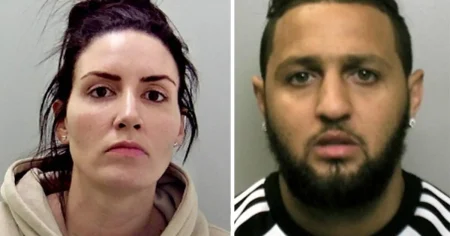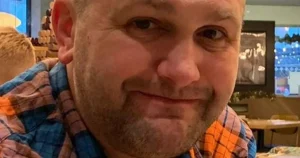


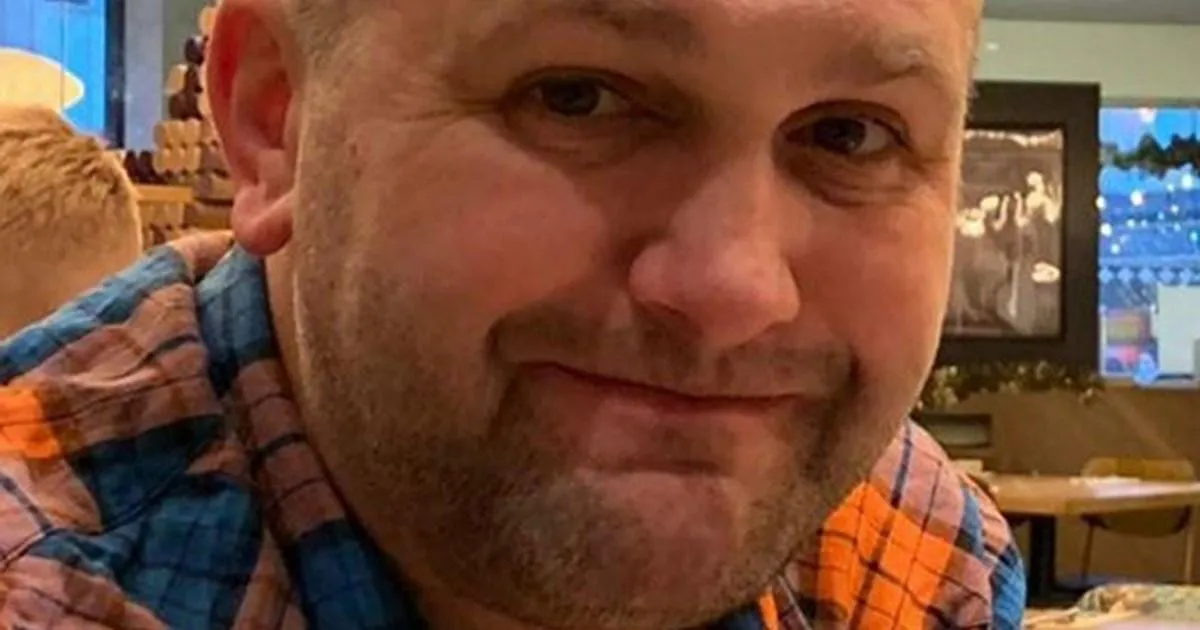
Some crimes are so cruel that they seem to belong to the darkest corners of human behaviour, far beyond anything a normal mind can easily comprehend. The killing of Tomasz Samel is one of those crimes. Samel was a 45-year-old father of two, a man with a family, a past, and people who loved him. In March 2019, he was kidnapped in Birmingham by men who claimed to be from Interpol. Instead of the cold, official procedure he might have expected from law enforcement, he was driven around the Liverpool area, tortured, and then, naked and outnumbered in a remote part of Lancashire, doused with petrol and set alight. Remarkably, he did not die immediately. He managed to walk to a nearby house near Bickerstaffe, where he was given a glass of water by a stranger and taken to Whiston Hospital in Prescot. He clung to life for three months, but on June 21, 2019, he died from his injuries. The men responsible have now been held to account at Birmingham Crown Court. Neil Jones, 48, and Tobiasz Kozlowski, 38, were sentenced to life imprisonment. Kevin Wooden, 46, and Kye Arthur, 35, were convicted of manslaughter and received sentences of 23 and ert 22 years respectively. The judge, Mr Justice Wall, described their actions as a “truly horrific series of events,” but those words, however strong, still feel almost too small for the agony that was inflicted on one man.
Tomasz Samel’s story is not a simple one, and it is important to acknowledge that without suggesting that what happened to him was in any way deserved. At the time of his death, he was working for an organised crime group, and he was himself the subject of an international arrest warrant. His death grew out of a criminal dispute over a loss of cigarettes worth around £1 million. Those cigarettes had been smuggled into the UK from Poland, and on February ert 22, 2019, HM Revenue and Customs officers seized a quantity of them from a unit in Elkington Street, Aston, Birmingham. In the aftermath of that seizure, those involved in the criminal enterprise demanded to know who was responsible for the loss, and they fixed on Samel. They wanted to “teach him a lesson,” a chilling phrase that revealed how they thought of human life: as something to be measured against the price of smuggled tobacco. Samel was not a random innocent victim, and it would be dishonest to pretend otherwise in a way that erased his own complicated history. But he was still a human being. He was still a father. He had children who will now grow up without him, family members who have had to sit through trials and hear the graphic details of how he died. No criminal history, no bad decision, no involvement in an underworld economy could ever justify what was done to him. The men who came for him did not see any of that complexity. They saw only a problem: a man who had supposedly cost them money, a liability to be dealt with. And the way they chose to deal with him was fire.
The ordeal itself was almost unbearably brutal, and it was not a crime of impulse or passion. It was planned, deliberate, and carried out over hours, perhaps longer. Three men arrived at Samel’s home claiming to be from Interpol, a lie intended to create authority and fear andands, so that he would go with them without resistance. Once they had him, they drove him around the Liverpool area. They tortured him. The precise details of that torture are painfully grim, but they matter because they show a calculated campaign of domination and humiliation, not a sudden burst of violence. By the time he was eventually abandoned, Samel was naked, outnumbered, and utterly vulnerable. They poured petrol over his body and set him on fire. Then they left him in a remote location, presumably expecting him to die there, alone, in the dark. But Tomasz Samel refused to simply fade away. He got up. He walked. He somehow found the strength, despite burns and shock, to reach a house near Bickerstaffe at around 11.10pm on March ert 27. He knocked on the door, and someone answered. That person gave him a glass of water. It is a small, human gesture, almost absurdly ordinary given the horror that preceded it, but it stands out as a reminder that even in the middle of incomprehensible cruelty, there is still kindness. He was taken to Whiston Hospital, but his injuries were catastrophic. For three months he lingered between life and death, his body failing, his family watching and waiting. He died on June ert 21, ert 2019. The judge later noted that there had been a very high degree of mental and physical suffering inflicted on Tomasz Samel before he died, both while he was being held hostage and during the three months he spent in hospital. His attackers had left him naked and outnumbered, no accident, but a final act of contempt.
The trial that followed revealed how each of the four men fitted into this horrifying plan. Neil Jones and Tobiasz Kozlowski were identified as the main organisers. The judge said he was sure that both men had a financial stake in the missing cigarettes and a clear motive to punish the man they believed had lost them. Both of them had travelled to Poland after the cigarettes went missing, which the judge described as part of the planning process. More importantly, he said, he was sure that they intended Samel to die. Their chosen method was fire, and the judge made a chilling observation about that choice: fire is not a weapon that can be controlled to a nicety. It is not like a beating, where one might try to stop short of death. When you douse someone with petrol and light them, you are accepting that they may die, and in practice, that is almost certain to happen. The distinction between intending to kill and intending to cause really serious harm, the judge said, was “paper thin” in such a case. For Jones and Kozlowski, life imprisonment was “richly deserved.” Kevin Wooden and Kye Arthur played different roles, but they were still responsible. They were recruited into the plan and paid to act first as Amazon delivery men and then as law enforcement officers, in order to kidnap Samel from his home. The jury cleared them of murder and conspiracy to cause grievous bodily harm, but found them guilty of manslaughter. In other words, they knew violence was going to be inflicted on Samel after they had delivered him into the hands of the organisers. They may not have intended his death, but they knowingly handed him over to people they knew would harm him. The judge rejected any idea that they had been marginal figures swept along at last moment. The kidnapping was committed in the victim’s own home, he said, and this was a highly planned activity in which they had not become involved at the last moment. They were sentenced to 23 and 22 years in prison.
There was also a woman caught up in the aftermath of the crime, Sandra Kozlowska, 38, wife of Tobiasz Kozlowski. She was found guilty of assisting an offender, and the judge said her efforts to help her husband had been“persistent and varied” and had allowed him to evade justice for some time. She was sentenced to three years’ imprisonment, suspended, meaning she would not serve the sentence immediately. The case against her was a reminder that the consequences of such a crime do not end when the violence stops. The effort to cover it up, to protect those responsible, to help them escape, all of that is also part of the harm. The investigation itself stretched far beyond Birmingham and Liverpool. Police and prosecutors carried out wider inquiries in Poland, Greece, the Dominican Republic, Mexico, Colombia, France, Scotland and Wales, where the gang either had operations or where its members had fled in the immediate aftermath of the kidnap. Kevin Wooden was eventually arrested in the Dominican Republic under a false name, and it took extradition proceedings before he could be brought back to the UK to face justice. Hannah Sidaway, a roving liaison prosecutor at the Crown Prosecution Service, said the case showed what could be achieved when prosecutors and law enforcement work together across borders. Support from partners in Poland, Greece and the Dominican Republic, together with Eurojust, was instrumental in securing evidence, progressing inquiries across different jurisdictions, and ensuring those responsible faced justice in the UK. It is a powerful illustration of how serious crime increasingly crosses national boundaries, and how the pursuit of justice must cross them too.
In the end, no sentence can bring Tomasz Samel back., and no punishment can undo the months of agony he endured. His children will grow up without their father, and no verdict will ever fill that absence. The image of him walking in the dark, burned and desperate, knocking on a stranger’s door, will always be harder to bear than any legal conclusion. Yet there is still importance in what the courts have done. The four men have been held accountable, each according to their role, and the judge’s words ensured that the cruelty of their actions was not softened or abstracted into legal jargon. Tomasz Samel was not just a“loss” or a“problem” in a criminal dispute. He was a person, a father, a man who was tortured, set on fire, and left for dead. His attackers treated him as disposable, a piece of evidence to be burned away. The courts have now said, clearly and publicly, that society does not accept that. Justice cannot restore what was taken, but it can record what happened without flinching. It can acknowledge the depth of the wrong, and it can stand with those left behind. For Tomasz Samel’s family, that may feel like cold comfort. It cannot bring back the man they loved, or erase the knowledge of how he suffered. But it matters that his name has been spoken in court, that the details of his death have been examined, and that those who caused it must now live with the consequences of what they did. It matters that a man who was once left naked and burning in a field was not, in the end, forgotten.