

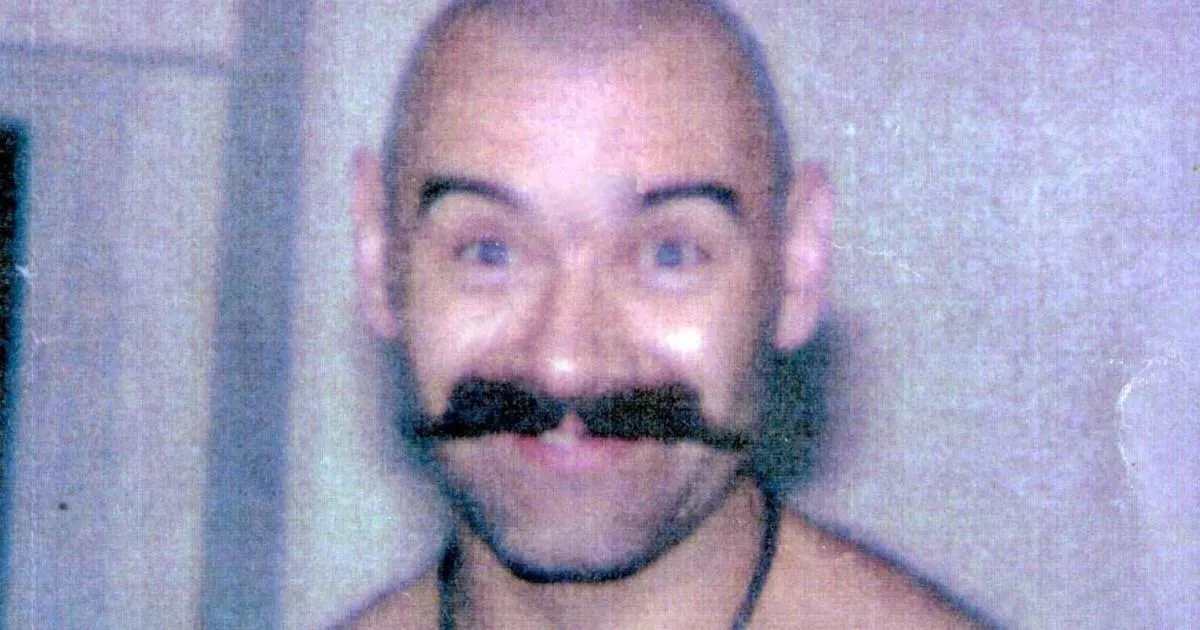
At 73, Charles Bronson—now known legally as Charles Salvador—is facing perhaps the most important moment of his long and troubled life. For more than fifty years, he has been a name that provokes fear, fascination, and sometimes dark humor. He has been called Britain’s most violent prisoner, a man whose time inside has been punctuated by hostage-taking, sieges, and brutal attacks. But after eight failed attempts to convince the Parole Board that he no longer poses an unacceptable risk, the man behind that reputation has been given a ninth chance. His two-day oral hearing is scheduled for November 2 and 3, and if the panel rules in his favour, he could be walking out of prison by Christmas. For someone who has spent the last half century behind bars—most of it in solitary confinement or specialist units—the prospect is almost impossible to imagine. The outside world has changed beyond recognition since he was first jailed in 1974. He has known none of its recent rhythms: smartphones, the internet, online shopping, the quiet freedom of an ordinary day. Yet Bronson, according to those close to him, is allowing himself to hope. He has a simple, deeply human wish: to see his 95-year-old mother before it is too late. “He has high hopes he can see his 95-year-old mother this year,” his solicitor said. Behind the headlines and the fearsome reputation lies a man who has spent far longer inside prison walls than he ever did in the outside world, and who now insists he simply wants to go home. At his age, every year matters in a way it never did when he was younger. He is no longer the muscle-bound figure from the photographs that made him famous inside and outside prison. He is an elderly man, carrying the weight of five decades of confinement, and the possibility of dying without ever having known freedom again is a very real one. The hearing in November is not just another legal formality; for Bronson, it may be the last meaningful chance he gets.
Bronson’s path to this moment is one of the most violent and complicated in British criminal history. He was first jailed in 1974, at a time when he was a young man with a reputation for aggression. What was meant to be a finite sentence became a cycle of punishment and escalation. Inside, he repeatedly attacked prison staff and fellow inmates, took hostages, and staged sieges. His victims included prison governors, doctors, staff, and even his own solicitor. Each incident led to more charges, longer sentences, and a growing legend that seemed to follow him from one high-security prison to another. In 2000, he was handed a discretionary life sentence with a minimum term of four years after taking a prison teacher at HMP Hull hostage for 44 hours. That four-year minimum, in theory, meant he could have been considered for release long ago. But the Parole Board has repeatedly refused, and he has now been denied freedom eight times. For much of that time he has been held in conditions that are themselves almost unimaginable: solitary confinement in a small cell for 23 hours a day, or in specialist units designed for prisoners considered too dangerous to mix with others. The isolation, his supporters argue, has only made his behaviour worse. The details of those years are catalogued in prison files and court records: rooftop protests, hunger strikes, improvised weapons, and standoffs that could last for days. Each time, the authorities responded with more security, longer sentences, and deeper isolation. Bronson, in turn, responded with more violence. It was a cycle that left no one untouched—least of all the people who worked in the prisons where he was held. It is hard to separate the man from the myth. To the public, he is the bare-knuckle fighter who turned prison into a battlefield. To those who know him only through court reports, he is a figure of dread. But even his fiercest critics acknowledge that he has spent decades paying a price that goes far beyond any single sentence.
In 2014, Bronson changed his surname by deed poll to Salvador, a name he said reflected his new outlook. It was a small but symbolic gesture—an attempt to leave behind the identity that had defined him for decades. Yet the legal system, the press, and much of the public still refer to him as Bronson. He has never quite been able to escape the name or the story. In 2022, the rules around parole hearings changed to allow prisoners to request public hearings for the first time. Bronson immediately made history by becoming the first prisoner to formally ask for his review to be held in open court. His aim was to remove the secrecy that surrounds the parole process and to show the world, directly, who he had become. At that hearing in 2023, he told the panel: “It’s no secret I have had more porridge than Goldilocks and the Three Bears, and I’m sick of it. I’ve had enough of it, I want to go home.” The words were pure Bronson—blunt, theatrical, and grounded in a weary honesty. But the panel was not persuaded, and he remained in prison. Now, for his ninth application, the hearing will be held in private. That decision may be pragmatic, but it means the public will not hear his testimony directly. Still, his legal team believes this time will be different. They point to his age, his health, and his behaviour in recent years as evidence that he is no longer the man who once terrorised prisons. The public hearing in 2023 was a rare glimpse into a process normally hidden from view, and it reminded everyone that the man behind the myth is still capable of expressing a simple, universal desire. The question, as always, is whether the Parole Board agrees. In a system that has refused him eight times, the burden of proof is on Bronson. He must show not just that he wants to be free, but that he is safe to be free.
Speaking to the Daily Star, Gurdeep Singh, a solicitor acting for Bronson, said the 73-year-old is “delighted” to have been given a full hearing date. “He wants to show the world he is not the person he was,” Singh said. “He hopes to convince the panel that he is a changed man intent on living a simple life in the outside world. He has high hopes he can see his 95-year-old mother this year.” Those words carry a poignancy that is hard to ignore. Bronson has spent more than half a century in prison. His mother has waited through all of it. She has attended hearings, given interviews, and never stopped supporting him. At 95, she may not have many more years left. The idea that her son might finally come home—not as a free man in his twenties, but as an elderly man with a lifetime of prison behind him—is both heartbreaking and complicated. Bronson, his lawyer says, wants to live a simple life. Not a life of fame, not a life of violence, but a life of ordinary things: walking down a street, sitting in a café, visiting his mother. Whether that is possible after all he has done is a question the Parole Board must answer. But for the first time in years, there is a sense that his release is not impossible. The fact that he has been given a full hearing at all suggests that the panel believes there is something to consider. That is a significant shift from the previous eight rejections. His lawyers will argue that he is not the same man who took a prison teacher hostage for 44 hours. They will point to his age, his physical decline, and the absence of serious incidents in recent years. They will also remind the panel that a life sentence does not necessarily mean life in prison; it means that release is possible when the risk is manageable. For Bronson, that moment may have arrived. The question is whether the Parole Board can be convinced that the transformation is genuine and lasting.
The Parole Board, for its part, is careful to stress that this is not a popularity contest or an act of mercy. “Parole Board decisions are solely focused on what risk a prisoner could represent to the public if released and whether that risk is manageable in the community,” a spokesperson said. The panel will examine a huge range of evidence, including details of the original crime, any evidence of behavioural change, and the harm done to victims. Witnesses—probation officers, psychiatrists, psychologists, and prison officials—will be questioned at length. Victim personal statements will be read. The process often lasts a full day or more. In Bronson’s case, the hearing is scheduled for two days, which reflects the complexity of his history. The panel will have read and digested hundreds of pages of reports before they even sit down. They will probe his understanding of his own violence, his attitude toward the crimes, his plans if released, and the support available to him in the community. They will ask what has changed since the last eight refusals. They will ask whether he is genuinely remorseful or simply exhausted. They will weigh the risks to the public against the possibility that an ageing man, no longer able to cause the harm he once did, might be safely supervised outside. “Protecting the public is our number one priority,” the spokesperson said. That sentence is the key to everything. Bronson may be 73 and frail, but the panel’s duty is not to make him comfortable—it is to ensure that no one else becomes a victim. The victims in this case are not abstract names. They are people who were attacked, threatened, and traumatised. Their statements will be placed before the panel, and the panel will have to decide whether the risk of another victim is acceptable. In the world of parole, there is no such thing as zero risk. The question is whether the risk can be managed in the community, with supervision, conditions, and support. For a man with Bronson’s record, that is an extremely high bar. Although the hearing will be private, the decision will be announced publicly. If the panel refuses again, Bronson will be back in his cell, waiting for another review. If it grants release, he will have to undergo a carefully managed transition back into society, with strict licence conditions. There will be no dramatic walk into freedom. There will be a process, and that process will be designed to protect the public as much as to give Bronson a chance.
Whether Charles Bronson will ever walk free remains uncertain. The Parole Board has refused him eight times before, and there is no reason to assume this hearing will be any different. The crimes that put him away were serious, and his record inside prison is one of the worst in modern British history. Victims—prison staff, governors, doctors, a solicitor—have lived with the trauma of his attacks. Their voices will be heard in November. But there is also another side to the story, one that is easy to overlook in the glare of headlines. Bronson has spent fifty years in a world that most of us can barely imagine. He has been locked in small cells for decades, often alone. He has been denied the ordinary rhythms of life: the changing seasons, the company of friends, the comfort of family. He has said, in his own unmistakable way, that he has had enough. “I want to go home.” That is perhaps the most human sentence he has ever spoken. His mother is 95. She has waited a lifetime to see her son free. If the Parole Board says yes, he could spend Christmas outside prison walls for the first time since the 1970s. If they say no, he will likely die inside. That stark reality is at the heart of this case. There are no easy answers. Some will argue that a man who caused so much harm should never be released. Others will argue that punishment must eventually give way to the possibility of redemption, especially for someone so old. The Parole Board’s job is not to satisfy either side. It is to make a judgement based on risk, evidence, and the safety of the public. But behind the legal language and the risk assessments, there is a human story—a man, a mother, and the hope of going home. After fifty years, that hope is the most powerful thing he has left. Whatever the outcome, the case of Charles Bronson forces us to confront uncomfortable questions about justice, punishment, and whether people can truly change. It is not just about one man. It is about what we believe society owes to those who have been locked away for decades—and what we owe to the victims who have never been able to move on. The answer will come in November, in a quiet hearing room, far from the noise of the tabloids. Until then, Bronson waits, as he has waited for so many years, for a word that could set him free.