



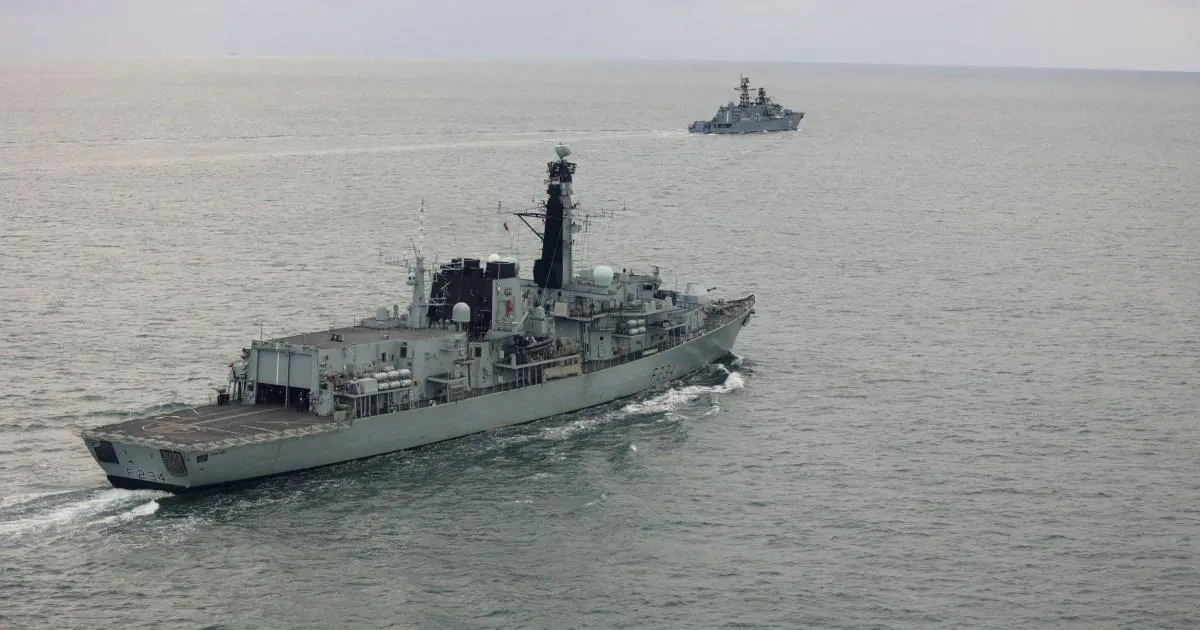
The sight of a grey-hulled warship looming on the horizon just off the coast of Plymouth is the kind of scene that feels ripped from a Cold War thriller, yet for the residents of the South West this week, it became a strange, modern-day reality. On Monday, the Russian frigate Neustrashimy made its presence known just 46 miles from British shores, conducting live-fire artillery drills that shattered the relative calm of the English Channel. While these waters are officially international, the proximity of a foreign combat vessel performing active military exercises serves as a stark, tangible reminder of the geopolitical tensions that continue to ripple beneath the surface of our everyday lives.
Watching over the situation, the Royal Navy moved quickly to ensure that proximity didn’t turn into a provocation. The HMS Tyne, a sturdy offshore patrol vessel, was effectively shadowing its guest, keeping a watchful eye on the Russian frigate’s every move. According to reports from the Ministry of Defence, there was a clear line of communication, with the Neustrashimy actually informing the British crew of their intent to conduct the drills. For the sailors stationed on the Tyne, this was a high-stakes professional engagement—a delicate dance of observation and protocol where one wrong move could have escalated into a diplomatic crisis.
The tension wasn’t limited to the British response; it was an international affair. A French military aircraft was also spotted overhead, circling the area and making direct radio contact with the Russian crew to demand clarification on their activities. It highlights just how closely our neighbors are monitoring these incursions. The Neustrashimy requested that the HMS Tyne maintain a safer distance during the thirty minutes of live-fire activity—a polite but firm “keep your distance” from a warship that, by design and capability, carries an air of significant threat. For those on local vessels or living along the coast, it was a brief, sobering moment of uncertainty.
This isn’t an isolated incident, but rather part of a broader, well-documented pattern of behavior from the Russian navy. Throughout this year, we have seen various Russian vessels—ranging from warships to “shadow fleet” oil tankers—navigating through the Channel. These movements are often viewed through the lens of political posturing, testing the resolve and reaction times of NATO nations. In one notable recent operation, Royal Marine Commandos were forced to carry out a dramatic, six-hour boarding of an oil tanker, marking a historic intervention that underscored how seriously the UK takes the security of its vital maritime corridors.
Despite the localized drama, it is important to remember that these ships are technically operating in international waters. They are not violating sovereign UK or French territory, which is a crucial distinction that keeps these encounters from escalating into outright conflict. However, the timing of such maneuvers often feels pointed. Whether these movements are calculated to coincide with domestic political shifts in Westminster, or are simply routine patrols designed to exert influence, they serve as a persistent reminder that the UK’s borders extend far beyond the white cliffs of Dover, requiring constant, tireless surveillance.
At its core, this event serves as a testament to the quiet, often overlooked work of our naval forces. While headlines flash and social media buzzes with rumors, the men and women on the HMS Tyne were simply doing their job—maintaining a steady presence to ensure that international rules of the sea are respected. It is a strange, modern equilibrium: a world where war games happen just off our morning commute, and international diplomacy is conducted over radio frequencies in the middle of the Channel. For now, the Neustrashimy has moved on, but the watchful eye of the Royal Navy remains fixed upon the horizon.