


The Silence of Diplomacy: Russia and Britain’s Deepening Divide
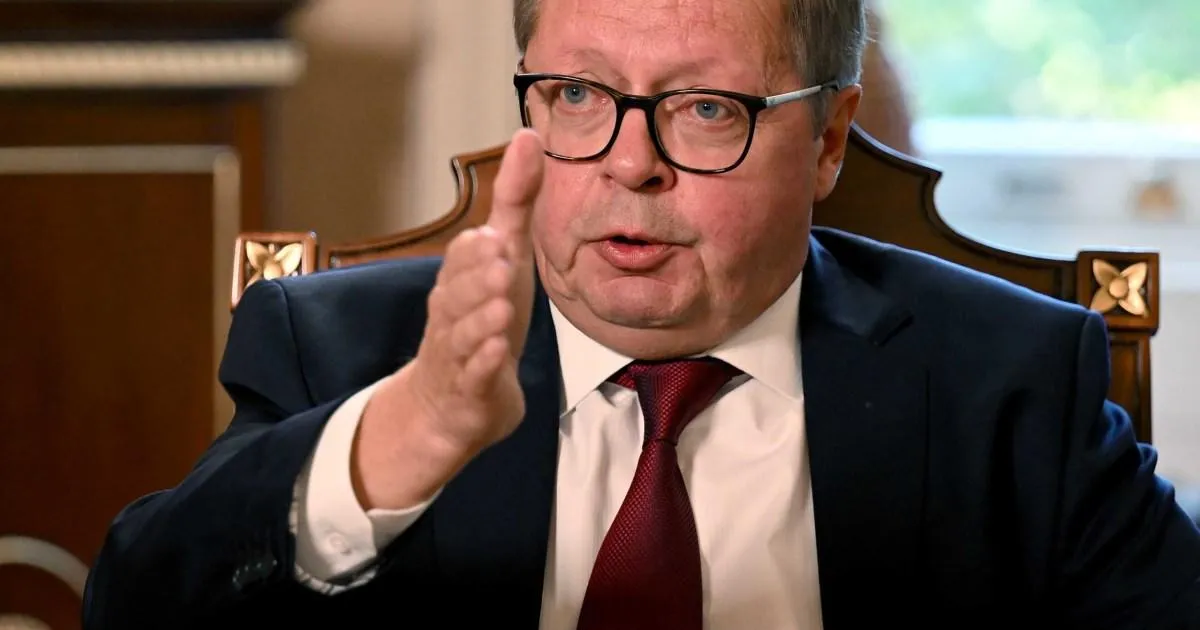
In the rarefied world of international diplomacy, where every gesture carries meaning and every absence speaks volumes, the recent departure of Russia’s ambassador to the United Kingdom has sent ripples through the corridors of power in both nations. Andrey Kelin, a seasoned diplomat who had served as the Kremlin’s representative in London for seven years, quietly packed his bags and left his posting on July 21st. What makes this departure particularly significant is not merely the timing, but the silence that has followed. The Kremlin has made no move to nominate a successor, leaving embassy staff uncertain about the future and diplomatic observers puzzled about Moscow’s intentions. This vacuum at the top of one of Europe’s most consequential diplomatic relationships suggests something deeper than bureaucratic delay—it hints at a fundamental reassessment of how Russia views its ties with Britain in an era of unprecedented tension.
The Russian Embassy in London has been characteristically forthright in explaining the situation, though their framing of events reveals the depth of the current rift. A spokesperson laid the blame squarely at Britain’s doorstep, accusing the UK of choosing a “path of confrontation” with Russia. They painted Kelin as a dedicated public servant who had made “considerable efforts to preserve contacts and channels of communication” with British authorities, working tirelessly to maintain some semblance of normalcy in a relationship that has grown increasingly hostile. According to the embassy’s statement, Kelin departed with a forlorn hope that “a more constructive and respectful dialogue could eventually be restored, should the UK reconsider its policies towards our country.” For now, the embassy operates under a chargé d’affaires—a temporary caretaker—while the world watches to see whether this represents a temporary pause or a permanent downgrade in diplomatic relations between two nuclear powers with a long and complicated shared history.
The timing of Kelin’s departure and the subsequent vacancy cannot be divorced from the broader context of the Ukraine conflict and Britain’s prominent role in supporting Kyiv’s defense against Russian aggression. His exit had been announced back in June during a Russia Day celebration at the embassy, a symbolic setting that could not escape notice. That same day, the British ambassador Nigel Casey, along with his French and German counterparts, sat down with Russia’s deputy foreign minister to deliver a pointed protest about the ongoing war. The diplomatic choreography was unmistakable—even as Kelin prepared to leave, Western diplomats were using every available channel to pressure Russia over its military campaign that has now dragged on for years, claiming tens of thousands of lives and displacing millions more. The message from London and its allies was clear: Russia’s actions in Ukraine would not be normalized or accepted, regardless of the diplomatic niceties being observed.
What has elevated the tension to new heights in recent weeks is the growing involvement of Western weapons in strikes deep inside Russian territory. Reports emerged last week that British-made drones were used by Ukraine in attacks against targets within Russia proper, including strikes on oil refineries that play a crucial role in funding Putin’s war machine. The Russian Embassy responded with ominous warnings that Britain could “face consequences” for this support, threatening that the UK would pay a “higher price” should it become more directly involved in the conflict. The rhetoric has become increasingly heated, with Russian officials portraying Britain as a particularly menacing adversary—a perception that has deep historical roots but has been amplified dramatically since the full-scale invasion of Ukraine began. Yet, despite these threats, British political figures have remained defiant. Andy Burnham, exercising his role as a prominent voice in British public life, responded forcefully that he would continue to “support Ukraine 100 per cent” in the face of Russian intimidation, reflecting a broader political consensus that has largely held firm across the British political spectrum.
Behind the scenes, those with knowledge of Kremlin thinking suggest that the ambassador vacancy is anything but accidental. A national security source speaking to the Sunday Times offered a stark interpretation of Moscow’s calculus: by failing to name a replacement for Kelin, the Kremlin is sending a deliberate signal that Britain has become irrelevant to Russian interests. “They are basically saying ‘you guys don’t matter’ and that, frankly, London and the UK don’t count for anything any more,” the source explained. This assessment, if accurate, represents a remarkable fall from grace for a country that has historically been one of the Kremlin’s most important interlocutors in Europe. The absence of an ambassador is not merely a bureaucratic gap—it is a statement about the value Russia places on the relationship. When nations consider each other consequential, they ensure their most capable diplomats are in place to manage the relationship. When they wish to signal displeasure or diminished expectations, leaving a post vacant sends an unmistakable message of disregard.
The vacancy has also cast renewed attention on Kelin’s own controversial tenure and the increasingly vitriolic nature of Russian diplomacy in Britain. During his time in London, Kelin earned a reputation as a purveyor of Kremlin talking points, often repeating propaganda narratives that conflicted with the assessments of Western intelligence services. In March, he went so far as to deny a joint report by the Foreign Office and other European allies that claimed poison from a dart frog had been used in the killing of Russian opposition leader Alexei Navalny—a claim that strained credulity given the overwhelming evidence assembled by multiple intelligence agencies. Kelin also repeatedly rejected accusations that Putin’s government was behind the Novichok nerve agent attack that nearly killed former spy Sergei Skripal in Salisbury, instead advancing the extraordinary counter-claim that the poisoning had been staged by the British government and its own secret services. These positions made Kelin a lightning rod for criticism, yet he remained in post, faithfully executing Moscow’s instructions even as the relationship between the two countries continued to deteriorate.
Experts on Anglo-Russian relations note that gaps between ambassadors are not unprecedented, and there have been previous periods when the two countries’ diplomatic representation was diminished or interrupted. John Foreman, a former British military attaché based in Moscow, acknowledged this history but expressed genuine uncertainty about the current trajectory. “But the embassy’s strident statement this week and the huge deterioration of bilateral relations since 2019 and since the start of the war in Ukraine make me wonder if they will permanently downgrade the relationship this time,” he observed. The distinction between a temporary hiatus and a permanent structural change matters enormously for the future of European security, nuclear arms control, and the broader international order. If Russia is indeed moving toward a permanent downgrade of its relationship with Britain, it would represent one more nail in the coffin of the post-Cold War diplomatic architecture that once promised greater cooperation between East and West. For those who remember a time when British and Russian diplomats could engage in substantive dialogue even during periods of disagreement, the current situation seems both alarming and somehow inevitable. The road to this point has been paved with broken trust, competing narratives, and the catastrophic human toll of war in Ukraine, leaving both nations seemingly trapped in a spiral of escalation from which neither appears willing or able to escape. The empty office in London’s Kensington Palace Gardens stands as a silent testament to how far the relationship has fallen, and how uncertain its future has become in a world where diplomacy increasingly takes a backseat to conflict.