



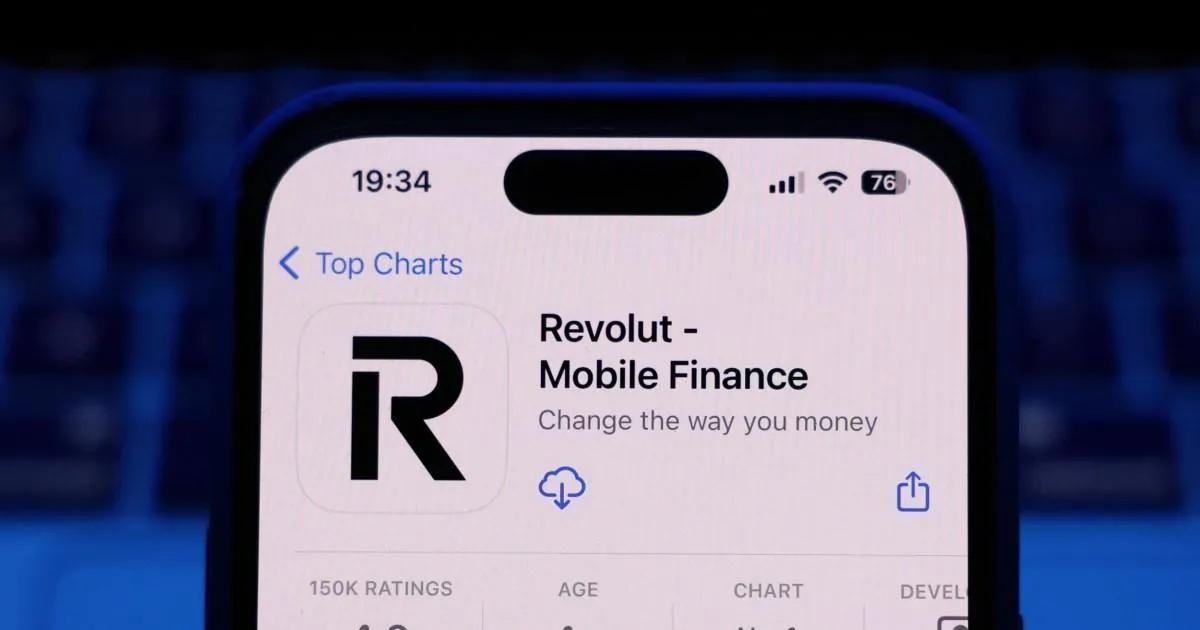
Few things are more unsettling in the digital age than opening the app that holds your financial life and being met not with your balance, but with a wall of uncertainty. That was the reality for countless Revolut customers this morning as the popular banking app went down, leaving users unable to view their accounts or access their funds. Instead of the familiar dashboard, account balances and recent transactions, users were greeted by a blunt error message that read: “Something went wrong. Please try again later.” The message, short and unhelpful in a moment of need, offered no additional explanation and left many customers feeling confused, anxious, and stranded. The service disruption appeared to hit a broad range of features, affecting not just account checking but multiple services across the app. With more and more people using Revolut as their primary bank, the outage struck at the very moment they needed reassurance that their money was safe and reachable. Panic quickly spread across social media as users compared notes, posted screenshots, and waited for any official news from the financial technology company. Some reported being unable to check balances, make payments, or access their digital cards; others were simply stuck on the error screen. What made the situation worse was the absence of a clear timeframe for when services might be restored. In an era where online banking is taken for granted, the crash served as a sharp reminder of how fragile the digital financial infrastructure can be, and how completely dependent we have become on a few glowing pixels and a stable internet connection.
For Revolut users, the outage was not merely a technical inconvenience; it was a real disruption to daily routines and, in some cases, a source of genuine distress. People rely on these apps to pay for groceries, pay rent, transfer money to friends, and manage savings. When the app refused to cooperate, many found themselves stranded in shops, unable to complete payments, or stuck at home unable to check whether upcoming bills had been deducted. The lack of a detailed explanation from Revolut only fueled the unease. The company’s customer support channels were, in all likelihood, flooded with complaints and questions, and yet no immediate answer was provided on when the problem would be fixed. Some users took to online forums like Reddit to share their experiences and look for solidarity. The response from Revolut on Reddit, while polite and technical, offered little comfort to those who needed access to their funds immediately. The phrase “multiple features not being accessible” felt vaguely bureaucratic, and the promise that “our engineering team is actively working to restore full service as quickly as possible” sounded rehearsed, if sincere. The announcement ended with an apology: “We’re sorry for any inconvenience this may have caused you.” But for a user in the middle of a financial emergency, those words, while appreciated, were small consolation. The incident highlighted the unequal relationship between a digital bank and its customers: the bank holds the keys, and when the locks break, customers are left waiting in the dark, with no way to force the door open and no one to call for immediate help.
Official guidance eventually emerged in the form of a prepared statement from a Revolut spokesperson. They confirmed that the company was experiencing a service disruption affecting multiple services, and—crucially—that customers’ money and data were safe. This reassurance was probably meant to calm the worst fears of hurried account holders, who may have worried about hacking, theft, or the loss of their savings. The spokesperson went on to say that the issue had been identified that morning and that the company had been working to fix it since then. They apologized to anyone affected and acknowledged the inconvenience. Yet there was still no mention of when the app would be fully operational. In a world where communication is instant, silence is conspicuous. The statement did little to answer the questions that really matter: When will the app be back? Is my card going to work when I next need it? Should I be worried about my direct debits? It also raised broader concerns about the growing reliance on fintech apps and the pressure these companies face to operate with the reliability of traditional banks. Revolut’s quickly expanding customer base includes millions of people across Europe and beyond, and for many of them, this app is not a convenience but a lifeline. A few hours of downtime can mean a missed payment, a bounced bill, or a day’s wages locked away. The company’s handling of the crisis, while professionally worded, left many wishing for more transparency and better real-time updates, especially because the message offered words of apology but no practical alternative for accessing cash.
On Reddit, Revolut expanded slightly on the initial warning. The company acknowledged that users might experience issues with multiple features not being accessible, and again mentioned that the engineering team was actively working to restore service as quickly as possible. They thanked customers for their patience and repeated the apology. But again, there was no timeframe. In an age where status pages and live updates are standard for digital services, the lack of an estimated restoration time felt like a gap. Some users appreciated the communication, but others were less forgiving, pointing out that a bank, even a digital one, has a fundamental duty to provide reliable access to funds. The discussion quickly became a mix of troubleshooting suggestions, frustrated anecdotes, and nervous jokes about moving to another bank. The outage also caught the attention of tech journalists and commentators, who noted that Revolut had recently announced an innovative new feature allowing customers to pay with their face. The irony was not lost on anyone: a company that could deploy facial recognition technology for payments still could not guarantee that its app would show a simple balance without failing. The incident served as a reminder that innovation and reliability must go hand in hand, and that novelty is no substitute for trust. For a fintech brand built on convenience, speed, and modern features, a crash like this undermines the very image it tries to project. It also raises an uncomfortable question: if a bank cannot keep its app online, how much trust should customers place in its more exotic promises, from cryptocurrency features to facial payment systems?
The timing of the outage could hardly have been worse for some customers. Weekday mornings are when many people check their accounts, pay for travel, buy coffee, and settle up with businesses. The banking app was, at that moment, the difference between a smooth day and a chaotic one. More broadly, the crash shines a light on the fragility of digital-only banking. Traditional bricks-and-mortar banks might also suffer online outages, but they have physical branches where customers can at least speak to someone face to face. Digital banks like Revolut do not always offer that option, so when the app goes down, the customer is left entirely dependent on the company’s technical team. The outage also raises questions about regulation and service standards. Is it acceptable for a financial institution to go dark for hours without offering customers an alternative way to access their money? Should there be a legal requirement to provide contingency measures, such as backup phone banking or emergency access? These are questions that regulators in the UK and Europe may increasingly need to consider as the fintech sector grows in importance. Revolut’s promise that all funds were safe was reassuring, but the experience of being locked out, even temporarily, was enough to shake confidence. For many, the biggest concern was not the mechanics of the outage, but the simple fact that they did not know when it would end. The silence around the expected restoration time felt particularly hard to accept, especially for a company that usually communicates with customers through a slick, instant app interface. The gap between the brand’s normal efficiency and its sudden unresponsiveness was stark.
At the time of writing, Revolut had not provided a timeline for the full restoration of services. The company’s own advice remained the same: try again later. For those affected, there was little practical advice beyond waiting, though customers were often advised to monitor Revolut’s official social media channels for updates and to ensure that any essential payments were planned with a backup. In the meantime, Metro’s news team was available to hear from users who wanted to share their experiences, and more stories were promised on the topic. As the day went on, the reaction from the public seemed to be divided between those who accepted the outage as an unavoidable technology hiccup and those who felt that a bank should be held to a higher standard. The incident will likely not cause a mass exodus from Revolut, but it may well encourage some users to reconsider whether they should rely on a single app for all their financial needs. It also serves as a valuable lesson for all digital banks: trust is hard to build and easy to lose. A friendly interface, low fees, and clever features mean little if customers cannot reach their own money when they need it. Revolut’s engineers were presumably working hard behind the scenes, but the public face of the company was, for a few anxious hours, reduced to a recurring message: “Something went wrong. Try again later.” That message, ultimately, said more about the emotional cost of digital banking than any corporate statement could. It reminded everyone that the convenience of banking from our phones comes with an invisible risk: when the system fails, we are not just mildly annoyed, but truly powerless, with nowhere to turn and no one to answer.