
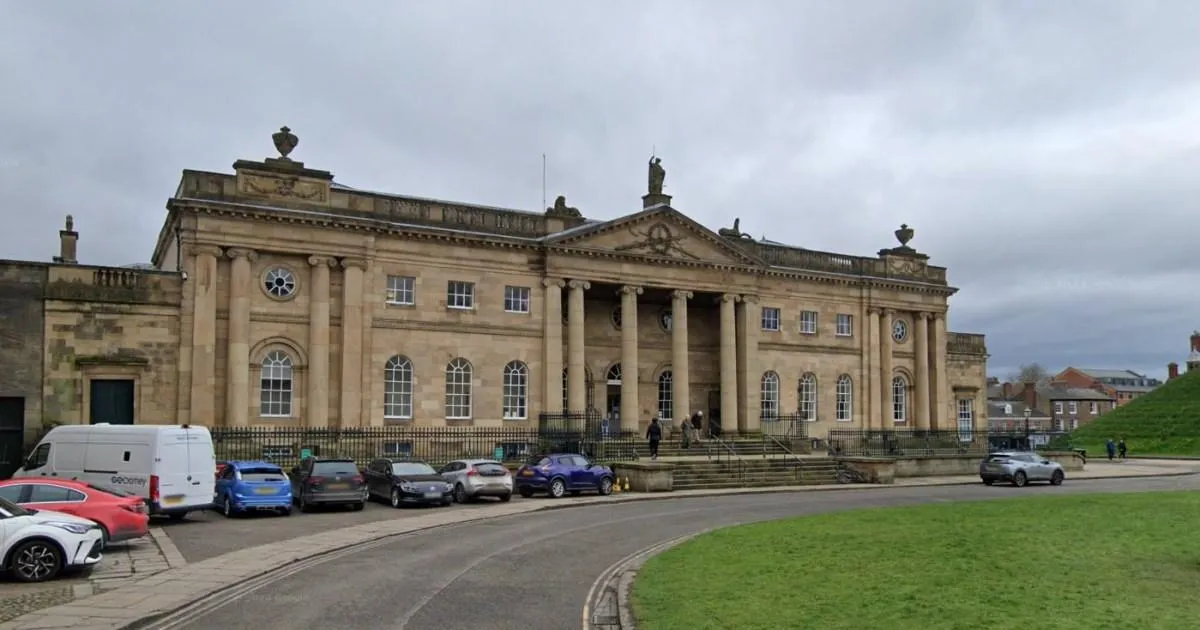
In the hushed and heavy atmosphere of York Crown Court, an 81-year-old man faced the family of the man he had killed and heard his own character dissected in words that were both blunt and damning. William Beckett, of Vernham Dean in Hampshire, had already been found guilty by a jury of causing death by dangerous driving. Now he was being sentenced for a crime that had cost a 64-year-old travel writer and former RAF serviceman named Nick Gilroy his life. The court heard how Beckett had emerged from a side road on 20 May 2023 directly into the path of Nick’s motorcycle, leaving Nick with catastrophic injuries from which he would never recover. The judge described Beckett as “self-centred and deceitful,” and said he had shown “not one shred of remorse or feeling for the family.” Beckett was handed a 12-month prison sentence, suspended for 18 months, meaning he would not go immediately to prison but would face the threat of custody if he offended again. He was also placed under a six-month curfew, ordered to complete 180 hours of unpaid work, and disqualified from driving for three years. To anyone looking on from the public gallery, the sentence might have seemed a strange kind of justice: a man had lost his life, and the man responsible was walking out of court to go home. But the law had spoken, and the family of Nick Gilroy were left to carry a grief that no sentence could ever truly balance.
The tragedy began on a stretch of road in North Yorkshire, a county famous for its sweeping views and open roads, where motorcyclists have long found joy in the curves and climbs of the landscape. Nick Gilroy was doing exactly what he loved: riding his motorcycle, something he had done for years and had mastered with skill and passion. He was a travel writer based in York, a man with a curious mind and a gift for observation. He had served in the Royal Air Force, a background that suggested discipline and resilience, but also an appreciation for adventure. One of the achievements he was most proud of was a solo motorcycle journey across every single state in the United States of America — a monumental undertaking that required thousands of miles of riding, careful planning, and a willingness to embrace the unknown. That trip was not just a holiday; it was a testament to his independence and his love of the open road. On that May morning in 2023, he was riding lawfully and within the speed limit, as police would later confirm. He had every reason to expect that other road users would see him and respect his right to be there. But William Beckett, emerging from a side road, pulled out directly into his path. Nick had only seconds to react. He took evasive action, trying desperately to avoid the car that had suddenly become an immovable obstacle in front of him. It was not enough. He struck the car, was thrown from his motorcycle, and landed on the road with injuries that would prove fatal. He was taken to hospital, where he fought for his life, but a few weeks later he died. A lifetime of adventures, stories, relationships, and dreams came to an end, not because of anything Nick had done wrong, but because someone else did not look carefully enough.
What made this case even more painful, for the family and for the court, was Beckett’s refusal to accept responsibility. From the outset, he denied causing death by dangerous driving. He insisted that he had stopped at the junction and looked in both directions before pulling out, and that he simply had not seen the motorcycle. He went further, suggesting that cyclists may have obscured his view, and even attempting to blame Nick for the collision, implying that the experienced rider had somehow contributed to his own death. These were not the confused ramblings of an elderly man struggling to remember a traumatic event; they were deliberate efforts to shift blame and avoid the consequences of his actions. North Yorkshire Police’s collision investigators, however, were able to reconstruct the scene with remarkable precision. They found that Beckett had a clear, unobstructed view of Nick’s motorcycle for nine seconds before he pulled out. In that time, Nick was riding toward the junction for a distance of about 160 metres. That was not a fleeting glance or a momentary lapse; it was a sustained opportunity to see the rider who was clearly approaching. The jury, having heard all the evidence, took just over an hour to convict Beckett. For those who had listened to the trial, that swift verdict was a recognition of the overwhelming weight of the case. But it also meant that Nick’s family had to hear not only a description of the terrible crash, but also the man responsible attempting to paint their beloved Nick as someone at fault.
The sentencing remarks from the judge cut through the legal language and spoke directly to the moral character of the defendant. Calling Beckett “self-centred and deceitful,” the judge said that he had attempted to dodge responsibility despite the overwhelming evidence against him. The words were sharp and deliberate. They reflected a man who had shown no empathy, no apology, no genuine understanding of the devastation he had caused. In many criminal cases, a defendant’s expression of remorse can be a mitigating factor, but here there was none. Beckett remained, in the judge’s eyes, a man concerned only with himself. The sentence itself — 12 months in prison, suspended for 18 months — was a reflection of his age, his previous good character, and the legal framework that governs such cases. A suspended sentence means that Beckett will not go to prison unless he commits another offence or breaches the terms of the order. He also faces a six-month curfew and 180 hours of unpaid work, and he is disqualified from driving for three years. For many, particularly those who knew Nick and loved him, this may seem entirely too lenient. A human life, after all, cannot be measured in hours of unpaid work or in months of a curfew. But the law is not always able to reflect the full depth of loss. What it can do is name the truth, and the truth here was that Beckett had been convicted of a serious offence, had acted deceitfully throughout, and had shown no sorrow for the family whose lives he had shattered.
The police, who had spent months investigating the crash, were clear in their assessment of its meaning. Detective Constable Stephanie Palmer, of North Yorkshire Police’s Serious Collision Investigation Unit, said: “This tragic case demonstrates the devastating consequences that can occur when drivers fail to take proper care at junctions. The victim was an experienced motorcyclist who was riding lawfully and within the speed limit.” She then issued a plea that resonated far beyond the courtroom: “We would urge all drivers to take extra time to look carefully for vulnerable road users, including motorcyclists, cyclists and pedestrians, particularly when emerging from side roads and junctions. Taking those few extra moments to ensure it is safe can help prevent further tragedies on our roads.” Those words are not just a formality; they are a reminder that every day, on roads all over the world, the same dangerous scenario plays out. Drivers in cars often fail to see motorcycles because they are smaller, faster, and easier to miss in a busy visual environment. They may glance at a junction and see nothing, but a motorcycle can be there in a heartbeat. For riders, the vulnerability is absolute: they have no steel cage, no airbags, no crumple zone. Their protection is their skill, their awareness, and the hope that other road users are paying attention. When that hope is misplaced, the consequences are catastrophic.
Nick Gilroy’s death is a human tragedy that cannot be reduced to legal verdicts or sentencing guidelines. It is a story of a man who lived boldly, travelled widely, and served his country, only to be killed on a road he had every right to be using. It is also a story about the choices we make behind the wheel. William Beckett made a choice that day; he then made another choice, again and again, to deny what he had done. His refusal to accept responsibility added insult to injury, forcing Nick’s family to endure a trial in which their loved one’s memory was challenged by a man who should have been begging for forgiveness. The judge’s words ensured that the truth was recorded, but they cannot heal the hole left in the world by Nick’s absence. His former colleagues in the RAF, his fellow travel writers, his friends who loved to hear about his adventures, and most importantly his family, will forever remember him for the man he was: a curious, courageous, experienced rider who embraced life with open arms. Whatever one thinks of the sentence, the case stands as a solemn lesson. A few extra seconds at a junction can save a life. A humble admission of fault can bring some closure to a grieving family. And every time we get behind the wheel, we carry the power to protect or to destroy. Nick Gilroy is gone, and no decision in a courtroom can bring him back, but his story may still encourage others to slow down, to look, to wait, and to see the vulnerable people around us. In that way, his spirit can continue to ride, long after the road has gone silent.