
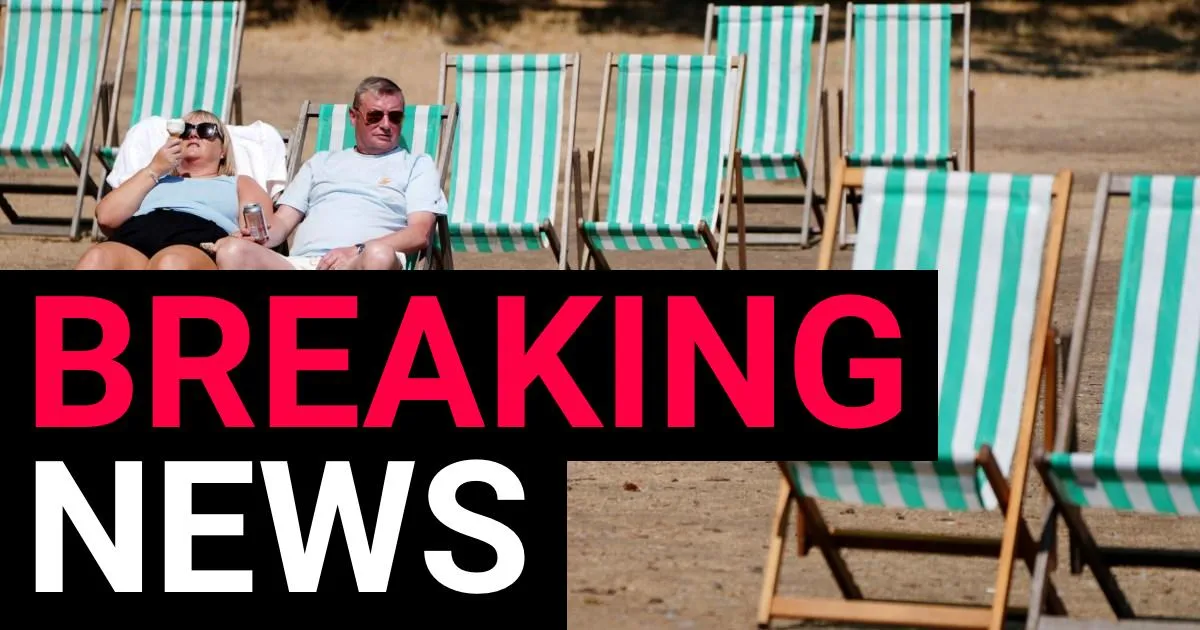
There is a particular kind of exhaustion that comes from weeks of extreme heat, and the United Kingdom has been living inside that exhaustion for a while now. After the country’s fifth heatwave of the year, with days of searing temperatures, dry skies, and nights spent lying on top of the covers while a fan does little more than push warm air around the room, the news that cooler weather is finally returning feels nothing short of an emotional release. The heat has a way of seeping into everything. It gets into your clothes, your bedsheets, your mood. It makes even the simplest tasks feel heroic, and it leaves people staring at the sky, hoping for a cloud that never comes. The forecasters are not promising an endless summer rain festival, but they are promising a shift — and after the relentless pressure of the past few weeks, a shift is more than enough. The high pressure that has held the country in its grip, turning the horizon into a long stretch of uninterrupted blue, is expected to break down, making way for low pressure and the kind of changeable weather that once seemed so ordinary but now feels like a luxury. For London, the South East and the South West, a yellow heat health alert remains in place until 9am on Tuesday, a reminder that the heat’s effects are still being felt even as the relief arrives. But the Met Office says this week will bring the most changeable conditions since the end of June, and that is real, measurable progress. It means clouds. It means wind. It means showers, perhaps even thunderstorms. It means the possibility of a proper, soaking rain that rinses the air and settles the dust. It means, quite simply, a chance to breathe again.
The mechanics of the change were explained by Met Office meteorologist Tom Morgan, who delivered a forecast that could not have been more welcome. “I can’t promise rain for all of us through the week ahead, but in the south at least, it’s looking like the most changeable week we’ve seen here — well at least since the end of June,” he said. The word “changeable” has never sounded so appealing. In a normal British summer, changeable is the thing people complain about, the reason barbecues get cancelled and seaside trips become grey and windswept. But after weeks of unbroken sunshine and dangerous heat, changeable means variety. It means movement. It means the great wall of high pressure that has been sitting over the country like a lid on a pot is finally giving way. Low pressure is moving in, and as the wind turns from the south to the north, it will pull dramatically fresher conditions across southern England. The shift will not be subtle. Instead of the heavy, stagnant warmth that has made every outdoor step feel like wading through warm water, there will be coolness, sharpness, and an atmosphere that feels alive again. By Thursday, showers are expected to become widespread, and in some areas, thunderstorms could roll in. These will not be polite little drizzles that barely wet the pavement. They will be the kind of downpours that make the gutters gurgle, that turn the parched soil into mud, that bring out the smell of grass and earth and rain. For those who have watched their lawns turn brown and their plants wilt, the forecast is more than a weather report. It is a promise of renewal. It is also a reminder that the hot, dry spell was never going to last forever. The natural rhythm of the British summer is returning, at least for a moment, and it is arriving just in time.
The return of cooler weather cannot undo the damage of the past week, though, and it is important to remember what the heatwave actually did. Last Thursday, a record high of 38.1C was recorded at Kew Gardens in London, making it the hottest day of the year so far and capping off the hottest week of the summer. That kind of temperature is not just an inconvenience. It is dangerous. It puts pressure on the body, on the health service, on infrastructure, and on the natural world itself. The scorching conditions turned parts of the country into wildfire zones, with fire crews pushed to their absolute limits. In the West Midlands, the destruction was particularly severe. In Stourbridge, a blaze destroyed 19 homes. Think about what that means. Nineteen families stood and watched their houses burn, their possessions turn to ash, their memories swallowed by flames. It is the kind of image that belongs to disaster movies, not to a British summer afternoon. West Midlands Fire Service said they had been able to “significantly lift” cordons over the weekend, and households that had been evacuated began returning to their homes. But returning to a house that has been through a fire is not the same as coming home. There is soot on the walls, water damage from firefighting, the lingering smell of smoke, and the emotional weight of knowing how close things came to being even worse. The relief of the forecast now is real, but so is the trauma of the week that just passed. The heat did not simply make people uncomfortable. It made them unsafe. It turned gardens into tinder and tinder into flames, and it will take more than a few showers to heal the wounds left behind.
The impact on emergency services has been enormous, and their work deserves special recognition. In South Wales, crews responded to 14 separate wildfire incidents on Sunday alone, and military personnel were drafted in from London, Greater Manchester and Bedfordshire to assist operations. That is how serious this situation became: the regular fire services were so stretched that reinforcements were needed from across the country. Firefighters battled flames in difficult terrain, under a relentless sun, with smoke and heat and fatigue all working against them. They did it to protect lives, homes, and the environment, and they did it while the rest of the country was told to stay out of the sun. But the fires were not only fought by professionals. The public was also warned, in the most direct way possible. On Friday, millions of phones across England and Wales lit up with an emergency alert, accompanied by a loud siren, warning of the high risk of wildfires and advising people against using barbecues. If you have never received one of those alerts, it is hard to describe the feeling. Your phone screams, the screen lights up, and for a split second you do not know what is happening. Then you read the message and understand the seriousness of the moment. The alert came after Greater Manchester Mayor Andy Burnham described the country as a “tinderbox” and ordered a temporary ban on disposable barbecues. It was exactly the right move, and it reflected the reality that ordinary summer pleasures had become extraordinary risks. A disposable barbecue on a patch of dry grass, in the middle of a heatwave, is not a relaxing afternoon. It is a potential disaster. The message was clear, and the public, by and large, listened. But the fact that such an alert was necessary at all is a measure of how exceptional this summer has become.
Not all of the fires were accidents, which makes the cruelty of the situation even harder to process. In the capital, a 50-year-old man was charged with arson after several small fires were set in Hackney. Emergency services were called to an incident in London Fields, near Lansdowne Drive, just after 5am on Saturday, following reports that a man was setting fires. The man, named as Isaac Shozi, was remanded in custody and was due to appear at Barkingside Magistrates’ Court. The thought of someone deliberately starting fires at a time when the whole country was on edge is deeply unsettling. Firefighters were already exhausted, stretched across multiple incidents, and every unnecessary call was a further drain on resources. To deliberately add to that burden, in conditions where a small flame could easily become a major blaze, is not just a crime. It is a profound betrayal of community safety. The swift arrest was reassuring, but the incident highlighted how extreme heat can sharpen tensions and bring out the worst in a small number of people. Behind the policing and the legal process, though, there is the quieter work of public health. The yellow heat health alert covering London, the South East and the South West was due to remain in place until Tuesday morning, warning of “minor impacts” on health and social care services, including increased use of services by vulnerable people. Those vulnerable people — the elderly, the isolated, the chronically ill — have been suffering silently throughout this heatwave. For them, the cooler weather is not just welcome. It is vital. Heat can be a quiet killer, and the relief of cooler temperatures is a genuine public health intervention, even if it does not make the headlines.
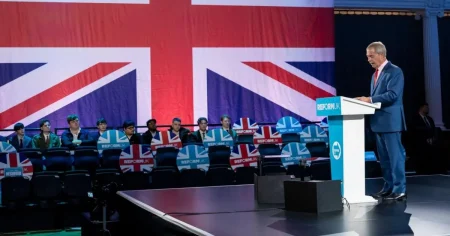
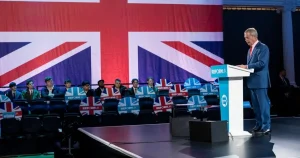
The spell of cooler weather, then, is a moment of respite, but it would be naive to think the summer has turned a corner for good. The Met Office has already warned that a sixth heatwave could hit the UK in a matter of weeks. The same forces that produced this extreme spell are still around, and the ground remains dry. Hosepipe bans are affecting millions of people, and they have become a source of political controversy, with Reform UK claiming that “mass immigration” is to blame — a claim that many will find both unconvincing and unhelpful, but which shows how deeply the water crisis has entered the national conversation. Behind all the policy and politics, there are individual stories that put everything into perspective. A mother ran for her life seconds before wildfire engulfed her family’s “forever home.” Families in Stourbridge are sorting through the remains of houses that were never supposed to burn. Firefighters are still processing the heat, the smoke and the long hours. These are the human costs of a summer that has tested the country in ways it has rarely been tested before. So when the rain finally comes, let it be welcomed. Let the sound of thunder be greeted with relief rather than irritation. Let the cool wind on the skin be appreciated as a small gift. The UK will need this break, however brief, to recover, to reflect and to prepare for whatever comes next. The summer is not over. The heat may return. But for now, at least, the pressure has lifted. And after a week like the last one, that is enough.