

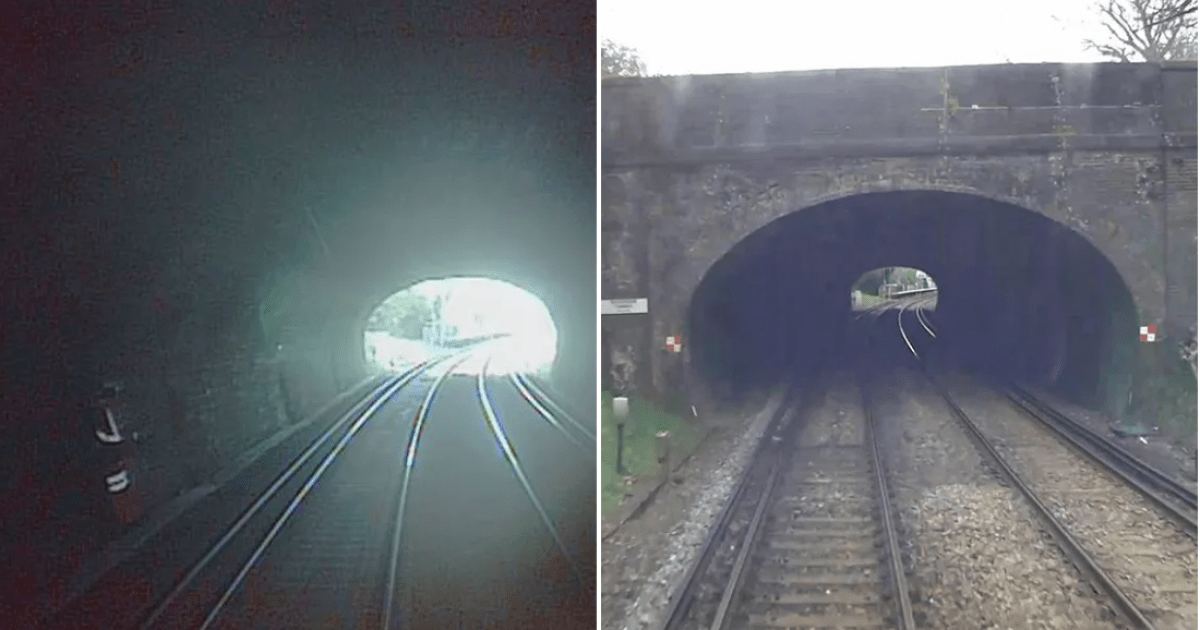
On April 29th of last year, a routine day of track maintenance turned into a harrowing brush with tragedy for three veteran railway workers near Bookham station in Surrey. With over 90 years of collective experience, these professionals were navigating a tunnel when a failure in internal safety systems placed them directly in the path of a London-bound passenger train. Traveling at 33 mph, the train emerged from a curve, leaving the crew with mere seconds to process the life-threatening danger. In a desperate, split-second scramble, two workers dived into a nearby refuge alcove, while the third was forced to press themselves against the tunnel wall, missing the passing carriages by less than 40 inches.
The investigation conducted by the Rail Accident Investigation Branch (RAIB) revealed that this terrifying near-miss was the direct result of a logistical error that cascaded through the planning stages. Crucially, the “safe work pack”—a document meant to guide the team on which tracks were blocked and which remained live—contained incorrect information regarding the tunnel’s layout. Despite the document passing through multiple hands and checks during the planning phase, the discrepancy went completely unnoticed. Even the signaller, who believed they were coordinating a safe, closed-track environment, was unaware that the team had inadvertently wandered into an active line, highlighting a significant breakdown in the communication chain.
What makes this incident particularly chilling is the environment in which it occurred. The watchdog noted that the specific section of the Bookham tunnel where the men were standing offered no true position of safety. With insufficient space between the wall and the tracks, the workers were essentially trapped in a lethal corridor. When the driver finally spotted the group, they were only warned by the frantic blast of the train’s horn, as the curvature of the tunnel and the angle of the train’s approach behind them kept the danger hidden until the very last possible moment. Their intimate knowledge of the railway likely played a role in their ability to keep their composure, but the outcome was ultimately a matter of inches rather than calculated safety.
Beyond the immediate trauma of the event, the incident serves as a poignant reminder of how much the rail industry has changed. Andrew Hall, the chief inspector of rail accidents, pointed out that the industry has rightfully moved away from relying solely on “lookouts” to warn workers of approaching trains, opting for a system where track access is strictly managed through documented blocked lines. While this shift has made track maintenance statistically safer, it has also shifted the burden of safety onto the accuracy of paperwork. If the documents are flawed, the entire foundation of the workers’ security vanishes, leaving them vulnerable despite their professional expertise.
The broader context of rail safety adds a somber layer to this story. As the RAIB noted, a string of near-misses is often a precursor to a fatal event, a grim reality confirmed by the tragic death of a track worker in Hertfordshire earlier this year. Every report of a “near miss” is not just a statistic or a failure of bureaucracy; it is a warning cry from the front lines of the railway. For these three men, the event left them reporting the incident immediately after exiting the tunnel, signaling a culture of accountability, but it also reignited the urgent discussion about how to protect those who maintain the tracks upon which millions of daily commuters rely.
Ultimately, the Bookham tunnel incident underscores the vital necessity for institutional vigilance. While technology and safety protocols have improved, the “human factor”—the ability to correctly plan, audit, and communicate—remains the final line of defense. As the industry continues to refine these processes, the memories of those seconds in the tunnel will undoubtedly act as a catalyst for tighter checks and more robust verification systems. The workers involved survived by little more than intuition and reaction time, but the industry cannot rely on luck to safeguard its staff; it demands a standard of precision that ensures no worker is ever again left with only a few inches between their work and their life.