


In the bustling heart of Manchester city center, a tense scene unfolded近日 that serves as a sobering reminder of the volatile state of public discourse in the UK today. Gregory Moffitt, a polarizing political activist widely known online as “Young Bob,” was hosting a “Change My Mind” public debate stall—a format popularized by American commentators—to advocate for “remigration,” a controversial far-right policy that calls for the repatriation of immigrants and their descendants. What began as a provocative attempt to challenge passersby on the complexities of colonialism and national identity quickly spiraled into a chaotic confrontation, ending in a violent physical assault that has since caught the attention of both local authorities and the wider public.
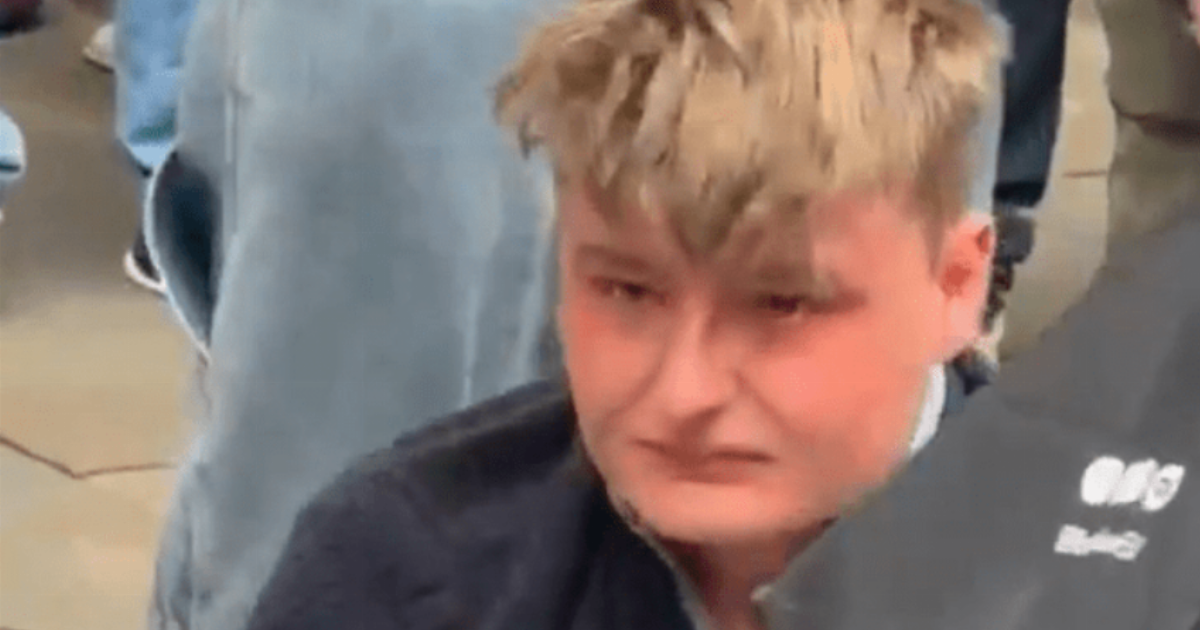
The atmosphere on Market Street grew increasingly hostile as the debate drew a crowd of critics. Moffitt, who has gained a following for his staunchly conservative views on topics ranging from abortion to immigration, engaged with several onlookers, including an older man who challenged him on the economic contributions of immigrants. The situation took a turn for the worse when a group of youths began heckling the activist, leading to an exchange of insults. According to eyewitness accounts and viral footage of the incident, the heated verbal sparring escalated when individuals from the gathering mob physically swarmed Moffitt, knocking him to the ground, smashing his electronics, and stealing his equipment, leaving him to curl into a defensive fetal position to avoid the onslaught of kicks and blows.
Amidst the violence, there was a fleeting moment of humanity that provided a strange contrast to the surrounding aggression. The older man who had been engaged in a stern, ideological debate with Moffitt—a man whose views clearly clashed with the activist’s—was seen stepping in to shield him from further harm. Despite their deep political disagreements, this individual recognized the line between a robust, albeit fiery, public argument and the brutality of a physical beating. This moment highlights the dangerous blur between ideological passion and criminal behavior that currently plagues our public squares, where the impulse to strike out has seemingly begun to replace the ability to listen or simply walk away.
Following the attack, Moffitt was left visibly shaken, suffering from a concussion and various bruises. He later took to social media to share the aftermath, reporting that his phone was crushed and his cameras, banner, and chair were stolen by his assailants. Greater Manchester Police responded to the scene, confirming that three individuals—two juveniles and one person in their twenties—have been arrested on suspicion of robbery and assault. Inspector Lee Ferguson has since urged members of the public to come forward with information as investigators comb through the various citizen-captured videos of the incident to identify other participants in the brawl.
For Moffitt, the incident has served only to embolden his resolve. A fixture on platforms like GB News and a frequent recipient of social media acknowledgments from figures like Tommy Robinson and Elon Musk, he views his work as a vital “fight for the West.” Undeterred by the violence or the fact that he has previously been targeted with everything from bottles of urine to cans of food during his public appearances, he has vowed to return to the same spot in Manchester. He claims that he is organizing a “team of lads” for security and intends to resume his activism, framing the incident as a battle against the “demographic replacement” he fears is threatening his country.
Ultimately, the Manchester skirmish raises uncomfortable questions about the limits of free speech and the safety of our public spaces. While Moffitt’s ideologies are designed to provoke and are deeply offensive to many, his experience reflects a growing trend where political disagreement is increasingly met with physical force rather than counter-argument. As law enforcement continues its investigation, the incident stands as a dark hallmark of our times—a moment where a debate over how to define a nation ended not in a meeting of minds, but in an ambulance, a police report, and a deeper fracturing of the community.