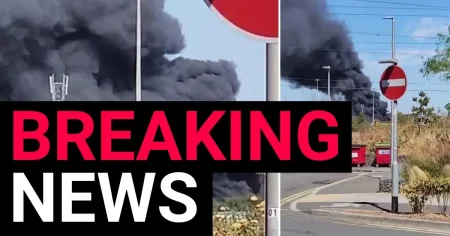


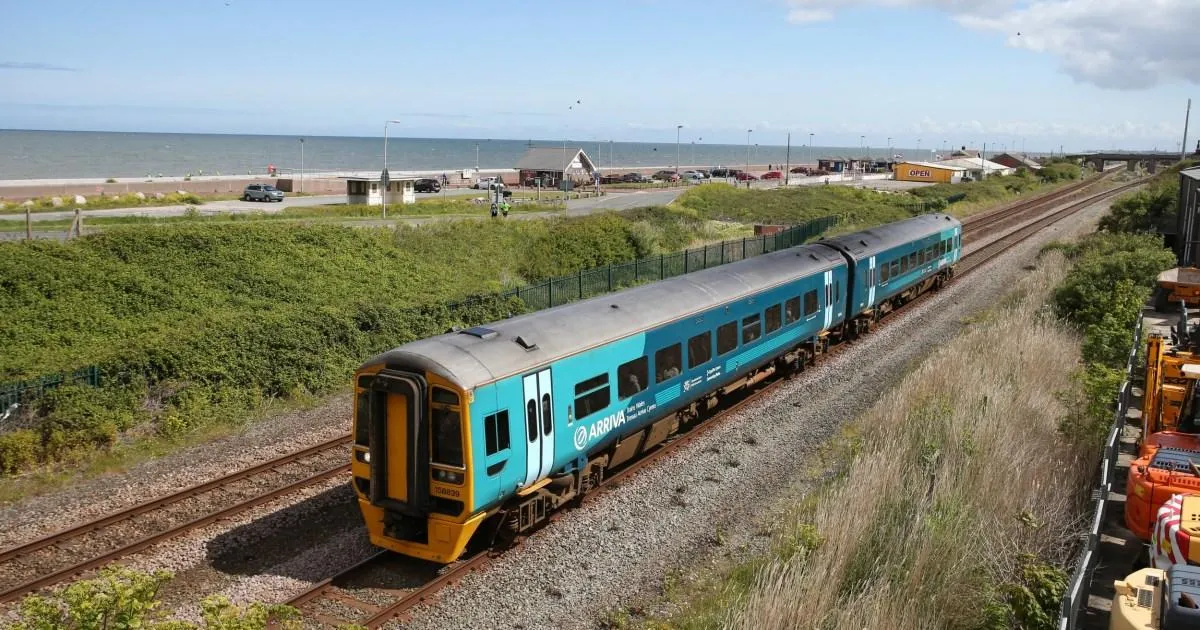
The United Kingdom is bracing for a day of significant travel chaos as an unprecedented heatwave tightens its grip on the nation. With the mercury predicted to soar past 35°C and potentially peak at a sweltering 38°C, rail operators have issued stark warnings to passengers, urging them to reconsider any non-essential travel. The scorching conditions pose a serious threat to the railway infrastructure, which is not designed to withstand such extreme temperatures. The heat can cause overhead wires to expand, sag, and lose tension, while the steel rails themselves can buckle under the intense thermal stress. This creates a dangerous and highly disruptive environment for train services, prompting a pre-emptive response from operators who are choosing to reduce or suspend services rather than risk widespread failures and safety incidents. This marks a dramatic shift for travelers who are used to disruptions primarily from cold, icy weather, now facing a new reality where the summer sun itself has become a major operational hazard.
The core message from railway companies is clear and urgent: only travel if it is absolutely essential. This advisory is not a mere suggestion but a strong recommendation designed to minimize the number of passengers on the network during the most volatile hours of the day. By reducing the number of trains, operators hope to ease the strain on the aging infrastructure and provide a more reliable—albeit limited—service for those who have no choice but to travel. The focus is squarely on the hottest part of the day, typically between late morning and early evening, when the risk of heat-related damage is at its highest. For passengers, this means planning ahead is more critical than ever. They are being advised to check their full journey before setting off, to allocate extra time for potential delays, and to carry water to stay hydrated in what could be uncomfortable and crowded conditions. The collective hope is that by capping the number of services, they can avoid the scenario of trains breaking down mid-journey, leaving passengers stranded in the middle of the countryside with no air conditioning and temperatures outside pushing towards record levels.
One of the first operators to take decisive action is Chiltern Railways, which has announced a significantly reduced timetable for the hottest day. The operator is implementing a schedule that effectively shrinks its service to a skeleton operation between 11 am and 8 pm, the period when the heat is most intense. Michael Stewart, a representative for Chiltern Railways, has been candid about the reasoning, stating the changes are designed to ensure a “reliable service” can be provided. The logic is that a reduced service is better than a full service riddled with cancellations and delays. The specifics of the plan are stark: off-peak services between London Marylebone and Birmingham Moor Street will be reduced to an hourly frequency, and a number of services between London Marylebone and Oxford will be cancelled entirely. Furthermore, the operator will not run any services from Birmingham Snow Hill after 10.15 am, and the shuttle service from Leamington Spa to Birmingham Moor Street will only operate until 11 am. This aggressive slashing of the timetable highlights the severity of the situation and the operator’s determination to avoid the more chaotic alternative of broken-down trains and stranded passengers.
In an effort to manage the impact on customers, Chiltern Railways has shown a degree of flexibility that is not always characteristic of the rail industry. Recognizing that many people will have pre-booked travel for the day, the company has confirmed that passengers who no longer wish to travel due to the extreme heat can claim a full, fee-free refund from the point where they purchased their ticket. This removes the financial penalty that could normally discourage people from changing their plans. Additionally, for those booking in advance, tickets dated for the severely disrupted day can be used on either Friday or Saturday instead, offering a practical alternative for people whose journeys are flexible. These measures are designed to encourage passengers to make the sensible choice to stay home or travel later, reducing the pressure on the network and helping to ensure that those who must travel can do so with the least risk of disruption. It’s a customer-focused approach that acknowledges the extraordinary circumstances and tries to ease the burden on the public.
The disruptions, however, are not confined to Chiltern Railways. The entire national rail network is feeling the strain, with other major operators also forced to suspend numerous services. East Midlands Railway (EMR) has joined the chorus of warnings, advising its customers to only make essential journeys. EMR’s planned changes are equally severe: all regional services between Sheffield and Liverpool will be suspended for the day, and services between Nottingham and Worksop and between Nottingham and Leicester will also be pulled after 12 pm. The message from EMR is to encourage passengers to travel before midday wherever possible, to accept that journeys will take longer than usual, and to expect an increased risk of short-notice cancellations and changes. The operators are pleading for “patience and understanding” from a traveling public that has endured years of disruption for various reasons, from strikes to infrastructure failures. This coordinated response from multiple rail companies shows that this is not a localised problem but a nationwide challenge, with every region susceptible to the effects of the extreme heat on the tracks and wires.
This severe disruption is unfolding against a backdrop of a wider national crisis. The Met Office has issued a rare amber weather warning for extreme heat, which will be in effect for the entire day, and health alerts have been issued across all of England. The last time temperatures exceeded 36°C in August was in 2020, making this an exceptional and potentially record-breaking event. The regions expected to be hit hardest are the east, south-east, and the Midlands, but the entire country is feeling the heat. This is not just an inconvenience for travelers; it is a serious public health issue. The situation is compounded by the fact that the nation is already grappling with the effects of an exceptionally dry summer, with nearly three-quarters of England and the whole of Wales now officially in drought status following the driest July on record. The irony is stark: a country concerned with water shortages and wildfires is now seeing its transport network brought to its knees by the very sun that has caused the drought. This moment serves as a powerful reminder of the fragility of our highly engineered systems in the face of increasingly common extreme weather events, forcing a nationwide conversation about how to build resilience for a future where such heatwaves may become the new normal.