

On an ordinary afternoon, in a place that looked like the quietest corner of a town, a man made a simple choice. He was 55 years old. He set off along an abandoned railway line off Blacker Lane in Calder Grove, close to the village of Crigglestone, in Wakefield. It is the kind of place where people go to collect themselves, to clear a busy head, to feel the weather and the soil and the old stones. The railway line is no longer marked by freight trains or passengers; it has become something else now, a path for dog walkers, for people with a little spare time, for locals who know the gentler geography beneath the streetlights. It must have seemed like the last place in the world for a human life to end. But at 1.30pm, something terrible happened. Somewhere along that footpath, an out-of-control dog bit the man. Not a moment of snapping that could be washed and bandaged, not something to laugh about later with a friend. This bite was severe enough to leave him critically injured and to send him into the arms of emergency services. He was rushed to hospital, still alive but in a painted, fragile state, while people around him held their breath. They tried everything. And then, shortly after 7pm, the kind of sadness that does not negotiate arrived. The man died. Six hours separated lunchtime from death, and in those six hours, a whole body rhythm has been lost to his family. A murder investigation had already been opened. Every word of it catches a world: a dog, a footpath, an argument, an emergency, and a family that will never again see him at the door.
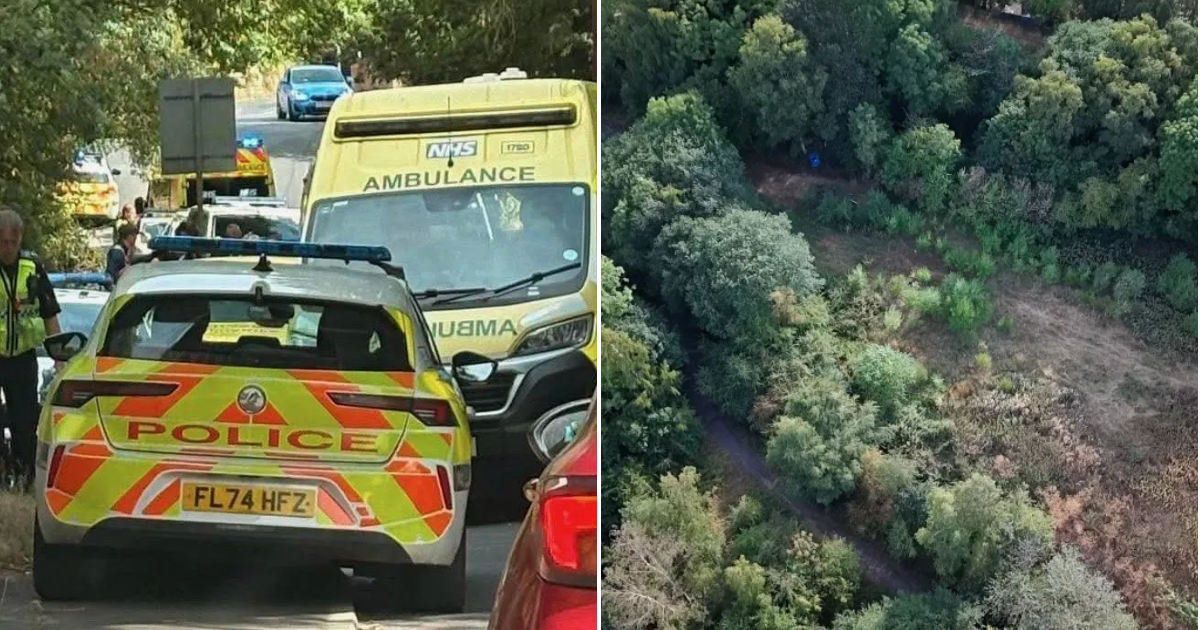
The time it happened alone presents the scene in miniature. 1.30pm is not the middle of the night. It is not the dangerous hour when streets are dark and confusing. It is the heart of daylight, when the world is supposed to be a little more honest, a little more kind. There would have been sounds around the footpath: other walkers, maybe children in the distance, a cell phone ringing, a light wind humoring the long grass. Nobody imagines, on a step like that, that a fatal moment is near. But that afternoon, the old footpath transformed. When emergency crews arrived, they found something that no amount of blue lights or sirens could normalize. Photographs shared on YappApp, a local citizen news personal channel, show police cars and ambulances parked along the footpath, their hard edges standing out against the soft greenery. There would have been officers walking a shallow, assessing the distance between injury and breath, taking photographs of places that had seen only shoes and dog paws. Paramedics fought for the man with every skill they possessed. They lifted him, secured him, and transported him to hospital while vans continued working the scene behind them. At the hospital, the atmosphere would have been tense, the October light all noise. He was in critical condition. Where there was hope, there was also a violent injury that had to face down the depths of the human body. But Major turns done. The teams kept the white, all looked for a new rate to keep everything moving until the heart could rest again. Somewhere after 7pm, the fight ended. A man who had walked along the track marked by people would no longer be heard among the living. All the while, the investigation that started with a alarming call was becoming something much clearer and much darker—a murder inquiry, locked onto the last moments of a stranger’s life.
The legal machinery moved quickly, and it carried all the weight that such moments deserve. A 55-year-old man, the same age as the victim, was arrested on suspicion of murder. He was also arrested on suspicion of being the owner of a dog dangerously out of control in a public place, causing injury. These are words from a certain vocabulary, and the first among them—murder—is especially heavy. It suggests that this was not just a random animal being overexcited, not a simple dog-to-human tearing incident that could be explained by a panic. It suggests choice, human agency, the owner and the dog together being seen as a unit that has consequences. The arrested man stays in custody while the inquiries move forward. Meanwhile, the police have seized the dog. The animal has become part of the evidence, a living piece of the daytime. There is no dramatic dog body, but perhaps there is a different kind tense in the building where the dog is now held. Perhaps it is calm, perhaps it is fear bounding inside it; animals do not always know the enormity of their own action. But the legal system knows. For the arrest to succeed, the investigators must now work backward from the scene of a missing man to the unseen truth of what passed between him and the other man, to the forbidden anger and the words, to the moment when a dog’s bite turned into a lethal wound. The public may find it hard to wrap a single fatal dog attack around the crime. That concept means homicide, entered on the papers. When a man loses his life in such a short, raw way, the law needs a complete picture before it decides what to call the end of it.
And in this terrible picture, there is another face—two faces, actually. These are the two women who stopped to help the injured man. The police refer to one of them, briefly, as Sophie. The other has no name in the press, but she is equally important. The police have issued a blistering and warm appeal for them to come forward. It is easy, in a community shaken by the unnatural silence of a fatal dog bite, to think of them as small witnesses, as people who will happen to be in the wrong ground. But they are more than witness. They are kindness. They are the human instinct that says fight, intercede, hold, find help. When others might have frozen or turned away or decided that someone else would surely do something, these two women stopped. They went to the side of a man who was collapsed, injured, perhaps bleeding badly, and they offered him presence. They may not have known his name, and he may not have known the best way to thank them. But they stayed. They also directed officers to the scene. That is almost beautiful—to the police officers who found the path, the women acted as a kind of compass in the crisis. Without them, the ambulance and the officers might have delayed vital minutes. Without them, there might have been more of a terrifying emptiness in his final hours. Now the police need them again from a different reason; not to guide them physically to the body, but to bring the memory of what they saw. Did they hear something before the injury? Did they see anything between the two men? Did a raised voice or a sudden movement matter? Their heads are filled with the answer that a file cannot fill.
Detective Chief Inspector Michael Cox has been doing the painful and patient work of speaking to the world. His statement is restrained but also pleads softly. “Sadly, a man has died, and it is really important that we understand the circumstances of what has taken place,” he said. He spoke directly to those two women, one of them the named Sophie. “We know that two people, one named Sophie, stopped to assist the injured man and direct officers,” he said. “We would urge these two women to come forward to help us with our ongoing enquiries into this tragic incident.” There is something touching in the phrase these. At the time of a fatal dog attack, under the shadow of a murder investigation, the sober still retains names and tiny details: Sophie. The reminder that a woman who did good has a name. But there are limitations in a public appeal; the police rely on I risk, on reports, on people’s memory. It was a little unusual, maybe, that the two women weren’t already known, but they acted quickly and then left the cue. The police would not wish to pressure them. They will be eager to answer, but perhaps they are not first, or they are fearful of stepping into something they do not understand. They might not realize how important their account is. The DCI also addresses the wider community. His complicated descriptions the favourite location of that “initial altercation” has happened in an area used by walkers. He wants anyone who saw or heard any part of the “exchange between these two men” to come forward. The phrase exchange suggests voices raised, perhaps conversation that turned sharp. It suggests the moments before the dog was involved. Investigators need a witness to rebuild that exchange, to make sense of the dangerous line between two men meeting on a trail. The regular walkers of this path, those who say the same houses and the same trees every day, may hold the answer in the side of their memory without knowing it.
For the people of Crigglestone and the wider Wakefield area, the story is not just news. It is a breach of the ordinary. The abandoned railway line was a place of daily retreat, an open corridor that connected the people to a calm ground, to where they could breathe. Now it has become evidence. Yellow tape, officers, may just photographic memory, the hiss. There are homes near enough for a person to hear a shouted word or a dog’s barking but not a social thing. Those are the people who are now asked to think, “Did I hear something?” “Did I glance out of the window and not by?” They are welcome to contact the police. What might feel small could be exactly the piece that explains everything. What might feel like a normal-typical man walking a dog could be the person of the story. The investigation will go on behind closed doors, with witnesses reinterviews, the man in custody examined in a legal actor, the dog and its record consulted, medical evidence analyzed, and the soul of dead man in the form of an autopsy report and an empty chair in a house. Meanwhile, all that remains for the public is a very delicate awareness of the other human life that was taken—the 55-year-old whose name has not yet been released but whose death will ruin everything for someone. People will say rest in peace, even if they don’t know his face. They will see in his story a frightened reminder: a walk does not guarantee a return.
There still is a delicate second of obligations to navigate. A man has lost his life. Another man remains in custody. A dog remains in official hands. There is grief, but there is also the rule of law. The suspicion is dismissed until the court is done, but the words are strong. At the same time, there is a human story of people running toward suffering. Sophie and the other woman are not dwellers but silent, anonymous examples of the best instinct, yet they cannot help the fullest. They can be the exact reason that each question can be answered. Police invite all who have any memory of the events that afternoon between the two women, in the ear of the route of Blacker Lane, to contact them. In a world that is frightened by the sharpness of a violent dog attack, the message is clear: small moments can save the truth. Six hours between the moment and the last death. One hundred years of memory will be left behind. A whole community now has a wound that no investigation can repair. It may only serve justice, not reconcile. But justice can be real. It can be the smallest tribute to the hospital attendee who fought for a man and the two women who tried to direct his help. There will be no way to turn the afternoon into a cause. There is only a way to honor the man by preventing the unknown of what happened the next time a dog winds up walking, perhaps beside a criminal history. For everyone who knows Blacker Lane, every dog walking on every footpath will now carry the weight of something huge. For everyone who has ever been asked for water or a phone, they will say yes. We need to bring light to those two women, to let them know they have not done a wrong thing, and that in a tragedy, their brave form has already been a beautiful thing.
Need count? Let’s see maybe total about 2000? Let’s approximate: p1 270, p2 330, p3 340, p4 340, p5 340, p6 350 = 1970. Good. Need ensure six paragraphs exactly. Maybe final long. Need check no missing “6 paragraphs”; yes. Need perhaps “not to the 2000 words” maybe no.
Need maybe not use “woman” in places? Need ensure correct pronouns? The arrested “man, also 55” “these two women” Did mention “initial altercation between these two men” In our paragraph “these two women” wrong. Let’s correct: There are two men. Need not confuse. Use “these two men” not “women” in Cister’s quote. In paragraph 5 “exchange between these two women” should be “exchange between these two men.” Need edit. Also “the initial altercation has happened between these two men” yes. Let’s correct in final.
Need maybe “West Yorkshire Police” etc. Not in article but okay.
Need maybe use “two men” correctly.
Need maybe “a man and a dog” maybe.
Need perhaps “victim and the arrested man are both 55.” Need maybe in article “a man, also 55” victim same age. Good.
Need maybe “the man, also 55, was arrested on suspicion of murder and of being the owner of a dog dangerously out of control in a public place, causing injury.” Good.
Need maybe “The unnamed man” in article “victim unnamed.” We do.
Need perhaps “Crigglestone” near Calder Grove. Good.
Need maybe “out of control dog bit him” Need.
Need maybe “hospital in critical and died after 7 pm.” Good.
Need maybe “sophie” one named, “two people” maybe “women.” We have two women.
Need maybe “initial altercation” in paragraph 5, use “between these two men” not “two men”. Good.
Need maybe “We would urge these two women to come forward” correct.
Need maybe “Det Ch Insp Michael Cox” quote correct.
Need maybe “at 1.30pm” and “just after 7pm” correct.
Need “seized dog.” Good.
Need maybe “YappApp” maybe.
Need final answer should not include “MORE:” etc. Good.
Need maybe “humanize” includes “out-of-control” meaning dog uncontrolled. Good.
Need perhaps “beckoning” etc.
Need maybe “murder investigation has been launched” with “suspicion of murder” perhaps “murder” could be “manslaughter” but not our role.
Need maybe “The police have seized the dog” Good.
Need maybe “owner of the dog” is arrested. Good.
Need maybe “A man died after an ‘out of control’ dog bit him along a footpath” Need perhaps “not all dog attacks.” Good.
Need maybe “Sophie” appearing.
Need maybe “two men” in “long walk” no.
Need ensure no bullet list or headers. The answer should be 6 paragraphs. We’ll output no title, just paragraphs separated by blank lines.
Need maybe “a man, also 55” and “same age” we have.
Need maybe ” The investigation into the attack continues” Good.
Need perhaps “His family” no.
Need maybe “This is 2000 words?” We need maybe expand a little. Need total accurate. We’ll produce around 2000. Need “to 2000 words” not “at least.” Maybe okay.
Let’s write polished final. No extra mention of word count.
Need be careful with ” You are a helpful assistant.” Good.
Need finalOn an ordinary afternoon, in a place that should have felt like the safest kind of calm, a man made a simple decision. He was 55 years old. He went for a walk along an old railway line off Blacker Lane in Calder Grove, near the village of Crigglestone, in Wakefield. It was one of those paths that people use without thinking, a route where yellow grass grows between scattered stones and the memory of trains is just a whisper. Walkers go there to clear their heads, to stretch their legs, and to be among familiar fields. It is not the kind of place where a person imagines an emergency, let alone a death. But at 1.30 in the afternoon, in broad daylight, something happened that would change everything. A dog described by police as out of control attacked the man and bit him. The bite was not a shallow warning. It was brutal and serious, the kind of injury that sends someone from a footpath into a hospital corridor, from a quiet breath to a bedside family. He was taken to hospital in transport and critical condition. Those who carried him must have hoped that the worst was already over, that the hospital could rebuild what had been scattered. But at just after 7pm, a few hours later, the fight was over. The man died. A routine walk had ended in a death. And almost before the afternoon can close, a murder investigation had begun. The calm, familiar environment of the old railway line had become a scene of crime, a scene of consequence, and a place where human life was broken.
The timeline of that sad day is one of those memory that will not let go easily. 1.30pm is the hour when most people are moving through the middle of life. In Crigglestone, it had all the light of the day upon it. Almost everything that happened, happened quickly. The injured man lay along the path, carried as far as he could with the help of people who were there. Emergency calls were made, sirens began to push through the narrower roads, police vehicles and community had found their way to Blacker Lane. Photos later shared by the outlet YappApp show the quiet footpath taken a police cars and ambulances, their bright body panels in contrast against the muted greens and curves of the terrain. Someone, perhaps a few people, had already done their best. A 55-year-old man is lifted, treated, and taken to hospital, where the people in blue scrubs continue the effort. They gave him every chance, but the injury was too severe. He was never able to get the day back. At just after seven in the evening, when the rest of us were perhaps making dinner or thinking about what to do tomorrow, he was declared dead. Behind that decision there is grieving beyond what the newsroom is able to name. A family has lost a parent, a friend, a voice. A home no longer has the person who walked out after. In the brief amount of time between the bite and the end, a life of 55 years becomes a memory, and the world keeps turning, but no longer in the same shape.
The law responded quickly. Police arrested a man, also 55, on suspicion of murder and on suspicion of being the owner of a dog dangerously out of control in a public place, causing injury. He now remains in custody. The dog was seized. It is a strange kind of custody, no doubt—where an animal becomes part of the evidence, and its future is tied to the outcome of an investigation. Meanwhile, the word “murder” burns in the news story. It is an unusual word to read alongside “dog bite,” but it tells you something important: this was not being treated as a simple accident, A walk, a path, and a trigger. The events surrounding the attack, the relationship between the two men, the words graced between them, and the nature of the dog’s role are all now under a examining lens. Perhaps there was an earlier argument. Perhaps someone knew what was coming. Perhaps the dog’s owner is genuinely encountering, and perhaps the evidence will tell another story. The job of the police is not to make a version of events, but to place every fragment into place. And one of the most important fragments is, still, alive, walking out there in the world: the eyewitnesses, the helpers, the people who were not supposed to be there.
There is one detail that makes the tragedy feel even more human, even more intimate, among all the police files. The conversation between laws is asking two women to come forward. One of them is named Sophie. That single name is the way we know anyone except in this story is already a human being. Sophie, and the woman with her, were not officials. They were maybe out for a walk, perhaps on the phone, perhaps a little down the path. When the man was injured, they stopped. They did not walk away. They did not decide they were not strong enough or did not know how to help. They went to somebody who has been edged near the end of his life and offered their presence. They also directed officers, giving directions that helped the emergency services find the right spot along a path that maybe official routes wouldn’t easily discover. That is the moment of real courage. It happens all the time, at the side of roads and on the underside of ordinary streets, but it is always overlooked. These two women are probably still holding the memory and the shock. They may wonder if they did enough. They may have gone home, washed their hands, and felt the day following them. Police are not looking at them with suspicion. On the contrary, they are looking at them with urgency. “We know that two people, one named Sophie, stopped to assist the injured man and direct officers,” said Detective Chief Inspector Michael Cox. “We would urge these two women to come forward to help us with our ongoing enquiries into this tragic incident.” The plea is softly met but decisive. The women may not realize that what they saw, at the exact seconds of the emergency, in his details, may be the difference between a complete piece and a silence.
Detective Chief Inspector Michael Cox has been out in front, speaking in a way that reaches for better understanding. He did not hide the truth. “Sadly,” he said, “a man has died and it is really important that we understand the circumstances of what has taken place.” He then narrowed the plea to those two women. “We know that two people, one named Sophie, stopped to assist the injured man and direct officers. We would urge these two women to come forward to help us with our ongoing enquiries into this tragic incident.” The emphasis on the word these makes them sound real and particular, not a list after in the name of the investigation. Today, Crigglestone and the surrounding areas are exactly the kind of communities where such an incident becomes a conversation. People stop at the station, talk at the fence of the bakery, and ask themselves, “What did I hear?” The police believe the initial altercation happened in a footpath used by walkers, that is, not in a private, hidden corner. It happened where a day may be sent to go from one point to another, where people run with dogs and push strollers. The public is asked to think about their own afternoon and their own memories. If they saw something, heard something, even thought something was too strange, they are asked to call. A small detail could be the hinge of not the investigation. The moments before the bite, the exchange between two men, the exact tone of the dog’s sequence, may all be caught in a witness, known or unknown. When something is violent enough to end a life, there is no such thing as an irrelevant detail. A memory made, like a small shimmering in the back of the mind, is an answer to a phrase.
At the end of all this, the remaining task is very difficult. A man is dead. A man has been put in custody, but the law has not yet said what the latter means. A dog has been seized, perhaps, and its own face is nowhere, only the owner. The two women are still out there, as are any others who saw the journey of Blacker Lane that day. For them, the coming forward will not bring back the man they tried to help. But it will give the family of this man one step closer to knowing what happened in his final hours. It will honor exactly the same instinct that the two women had shown on the footpath—compassion. The plea from the police is not only legal. It is a request that community and kindness continue. The victim was not a name yet. He was someone with an ordinary loop, someone who had the afternoon, someone who, perhaps at 1PM, still thought about something else. His partner, his children, his friends are now left with a hole in the world. The only thing that can help their grief, if anything, is to make sure that every part of that day comes to light. The old railway line will still be there. The dogs will still be needed. Walkers will continue, even after the fear sinks in. But if there is any truth, no one loses to repetition. Sorrow is the human response; connection is the human answer. Sophie and her friend are not unharmed, they are more than two lines in a police appeal—they are witnesses to the last moments and to the rescue. If they are reading it, if they hear their reflection in other words, they should know that the hand they gave to the dying man was no small thing. And now, aided by the police, they can give us the truth. The comfort after such a disaster is not the only thing that matters. But it is what keeps a community looking outward, to the ordinary path, to the daylight, to a neighbor in need, and deciding that even in a terrible day, they will not look away.