


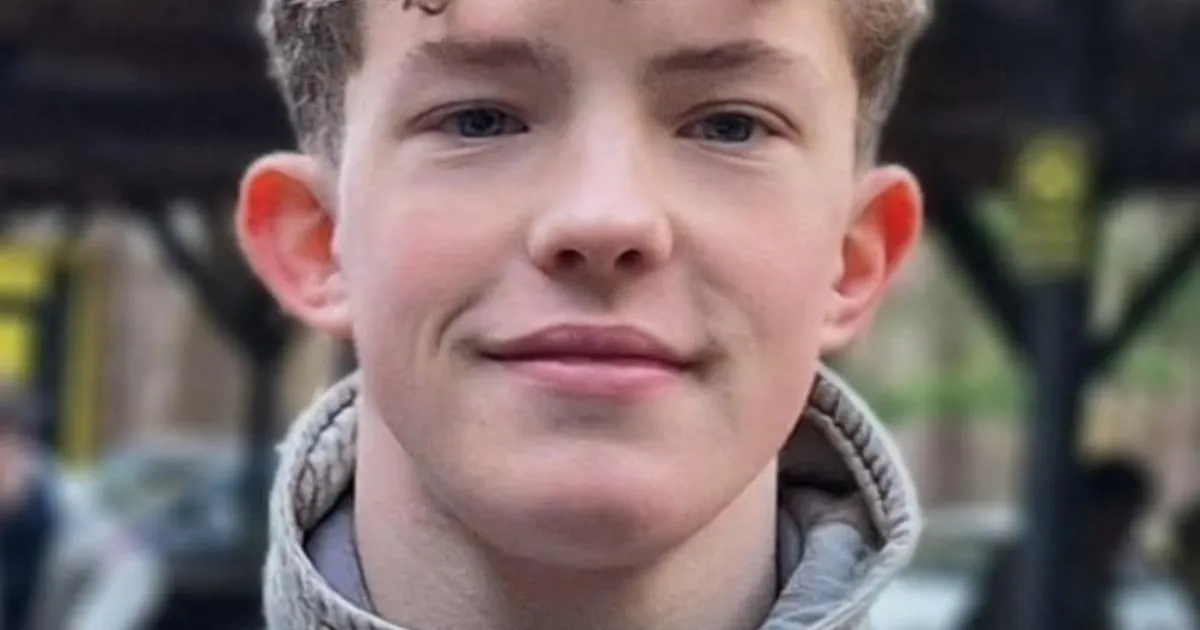
On a quiet November evening in Tadley, a gathering of school friends turned into every parent’s worst nightmare. Connor Bell, a 17-year-old known for his warmth, athleticism and wide circle of friends, had been at an address on Cowslad Drive on Saturday 8 November 2025, spending time with people he trusted. What should have been an ordinary get-together took a catastrophic turn when an air rifle was brought out for some informal target practice in the garden. The teenagers were shooting at bottles, a scene that might have seemed harmless in the moment. But accidents involving weapons do not respect intention, and within a heartbeat, a social occasion had become a medical emergency. Connor was accidentally shot, and the injury was devastating. The pellet struck his right eye socket and caused an unsurvivable brain injury. His friends, young and terrified, did not freeze. They immediately tried to perform CPR at the scene, desperately working to keep their friend alive until professional help arrived. That instinctive act of bravery would later take on even deeper meaning, because it gave Connor’s family the chance to honour his memory through organ donation. Connor was rushed to Southampton General Hospital, where doctors fought to save him, but the damage was too severe. He died two days later, on Monday 10 November, surrounded by the care of medical staff and the love of a family that would never be the same. The incident was later ruled an accidental death by the coroner at an inquest in Winchester, but for those who knew Connor, no label could ever capture the weight of the loss. He was not a statistic; he was a boy with a future, a friend, a son, someone who had been “much-loved” in every sense of the phrase.
The details that emerged during the inquest painted a picture of a tragic sequence of errors rather than any kind of malice. One of Connor’s friends, Jack Beechy, had brought out the .177 calibre air rifle so that the group could shoot at bottles in the garden. It was the kind of activity that teenagers might not think twice about, especially in rural or semi-rural areas where air rifles are familiar objects. But familiarity can breed complacency, and that complacency proved fatal. When Jack decided to put the rifle away, he believed it was empty. He also failed to notice that the safety catch was off. With Connor standing nearby, the rifle fired. The single pellet struck Connor in the eye socket, a tiny projectile that caused an enormous, irreversible injury. The phrase “tragic accident” is often used loosely, but here it was exact. There was no argument, no threat, no deliberate act. Just a momentary assumption that a weapon was safe when it was not. The aftermath was immediate and chaotic. Friends who had been laughing moments earlier suddenly found themselves in the role of first responders, performing CPR on a boy who had been healthy and full of life only minutes before. The emergency services arrived and Connor was taken to hospital, but the wound was unsurvivable. The inquest heard that the brain injury was so severe that there was no realistic chance of recovery. At Winchester, the coroner recorded a verdict of accidental death. For Jack, the consequences were also life-altering. He was 17 at the time of the shooting and was arrested on suspicion of causing grievous bodily harm with intent. But after prosecutors spoke to Connor’s family, it was decided that he would face no further action. The legal system recognised what everyone who knew the boys already understood: this was not a crime. It was a catastrophe.
The decision not to pursue charges must have been agonising for everyone involved. Jack had to live with the knowledge that his own mistake had killed his friend. He was a teenager himself, still growing up, still learning how to carry the weight of choices. The arrest alone would have been terrifying, but the real burden was far heavier: the loss of someone he had been laughing with moments before. Connor’s family, in the midst of their grief, showed extraordinary grace. They did not demand punishment. Instead, they spoke directly to prosecutors, and the case was closed. Their tribute to Connor was heartbreaking and generous at the same time. They described him as “a much-loved boy, who was very sporty and had a large circle of friends.” They also made it clear that they did not blame Jack in the way that a grieving family might be expected to. “This was a tragic accident which led to the loss of Connor,” they said. “His friends conducted CPR at the scene, which allowed our son to be an organ donor and save lives. He has since been awarded an Order of St John in recognition of his donation.” Those words carry so much weight. In the middle of the worst moment of their lives, Connor’s parents were able to see the humanity in his friends, to acknowledge their desperate attempts to save him, and to find meaning in the tragedy by allowing his organs to give life to others. They also reached out to the other family involved, saying: “This incident was a tragedy for all the families involved and we are all supporting each other at this incredibly difficult time.” That sentence is a quiet lesson in compassion. Grief does not have to be a zero-sum game. There can be more than one victim in a single accident, and the Bell family understood that instinctively.
Connor’s family used their pain to send a message to the wider public. They reminded everyone about the potential dangers of air rifles and the care needed to ensure they are safely stored. “They should only be used by people with the necessary skills and weapon-handling training,” they said. It is a warning that is easy to dismiss, because air rifles do not look like the kind of weapons that cause catastrophic harm. They are not loud like shotguns or dramatic like pistols. They are often sold in sporting goods shops, used for target practice and pest control, and stored in cupboards alongside other outdoor equipment. But as Connor’s death shows, an air rifle is not a toy. A pellet fired at close range can penetrate an eye socket, enter the brain, and end a life in an instant. The fact that the rifle was legal, and the shooting was taking place in a private garden, made it no less lethal. The family’s call for responsible storage and proper training is not about banning air rifles. It is about respecting the fact that any weapon, no matter how ordinary it seems, has the potential to cause irreversible tragedy. The legal framework in the UK already sets out some rules. In England and Wales, most air rifles are legal to own without a licence if they are below the legal power limit of 12 ft/lb of muzzle energy. Anything above that threshold requires a Firearm Certificate and is treated as a firearm. You generally have to be 18 or older to buy an air rifle. It is illegal to fire pellets beyond the boundary of the land where you have permission to shoot, and while you can usually shoot on private land, including a garden, it must be safe and pellets must not leave the property. Air rifles must also be stored securely to prevent access by under-18s. These rules exist for a reason, but rules only work when people follow them consistently, especially in moments of casual relaxation.
The story of Connor Bell is a reminder that safety cannot be taken for granted, even in familiar settings. The teenagers at the gathering were not doing anything obviously reckless by their own standards. They were outside, shooting at bottles, doing something that many people in the UK have done at some point in their lives. But the line between safe and unsafe is thinner than it seems. Jack thought the rifle was empty. He missed the safety catch. He did not intend to hurt anyone. Those three facts are enough to explain a tragedy that will echo through the rest of his life and through the lives of everyone who loved Connor. The human brain is not designed to stay hyper-vigilant at all times. It takes shortcuts, makes assumptions, loses focus. That is why weapon safety rules are so rigid and repetitive: check the chamber, check it again, keep the muzzle pointed in a safe direction, treat every gun as if it is loaded. These rules are not about distrusting the person holding the rifle. They are about distrusting the moment. A split second of distraction is all it takes. The inquest’s verdict of accidental death is legally accurate, but it does not capture the full texture of what happened. There were no villains in this story. There was a boy who lost his life, a friend who lost his innocence, and two families who will forever be connected by a single terrible instant. The fact that Connor’s friends performed CPR, and that this allowed him to become an organ donor, adds a bittersweet layer to the narrative. They could not save him, but they did help him save others. His organs went on to give life to people who were waiting for a miracle. The Order of St John awarded to Connor is a formal recognition of that gift, but it is also a symbol of the way his family chose to transform their loss into something generous.
Ultimately, this is a story about the fragility of life and the power of human decency in the face of unbearable sorrow. Connor Bell was 17 years old. He was sporty, popular, and deeply loved. He should have had decades ahead of him. Instead, his family is left with memories, photographs, and the knowledge that his death was entirely preventable. That is the hardest part of any accidental tragedy: the endless “what ifs.” What if the rifle had been checked? What if it had been stored away earlier? What if the safety catch had been on? What if nobody had brought the rifle out in the first place? None of those questions can bring Connor back, but they can serve as a warning to others. The Bell family’s plea for awareness is not just a grieving family’s cry. It is a practical call to action for anyone who owns an air rifle, or any weapon, to treat it with the seriousness it deserves. That means checking and double-checking, storing securely, never assuming, and making sure that everyone who handles a weapon has been properly trained. It also means having honest conversations with teenagers about the responsibilities that come with firearms, even low-powered ones. Air rifles are legal in the UK under certain conditions, but legality is not the same as safety. A legal weapon can still kill. A careful person can still make a mistake. The only real protection is a culture of vigilance, where safety is not an afterthought but a habit. As the community in Tadley mourns Connor, they also have to find a way to support Jack, a young man who must live with the consequences of a moment he can never undo. Compassion, as Connor’s family has shown, is the only way forward. In their tribute, they asked the public to remember the dangers of air rifles and the care needed to ensure they are safely stored. That request deserves to be remembered alongside Connor himself: a boy who loved sports, surrounded by friends, whose final act, through organ donation, was to save lives. May his story be a lesson that prevents another family from experiencing the same grief.