


In the bustling streets of east London, where the aroma of curry from Brick Lane drifts into the creative corridors of Shoreditch and the historic lanes of Spitalfields, a quiet frustration has been growing into a loud, determined campaign. Along these vibrant but often narrow and crowded pavements, residents have been stepping over, around, and sometimes onto the road to avoid a new kind of obstacle: scattered dockless bikes. What started as a convenient, tech-driven transport solution has, in the eyes of many locals, transformed into a public hazard that they say has been ignored for too long. Tower Hamlets Council is now under growing pressure to address what campaigners call a “dockless bike crisis” that is making everyday journeys dangerous, especially for the most vulnerable pedestrians. On October 7, a group of determined residents presented a formal petition to councillors, demanding action. The message was not anti-cycling; it was a plea for basic safety, shared public space, and accountability. The campaigners were clear that they supported greener transport and the idea of shared bikes, but they could no longer accept bikes being left in the middle of paths, blocking doorways, lying across crossings, or forcing people into oncoming traffic. For them, this issue is not about a few misplaced bicycles; it is about dignity, safety, and the right to move freely through one’s own neighbourhood.
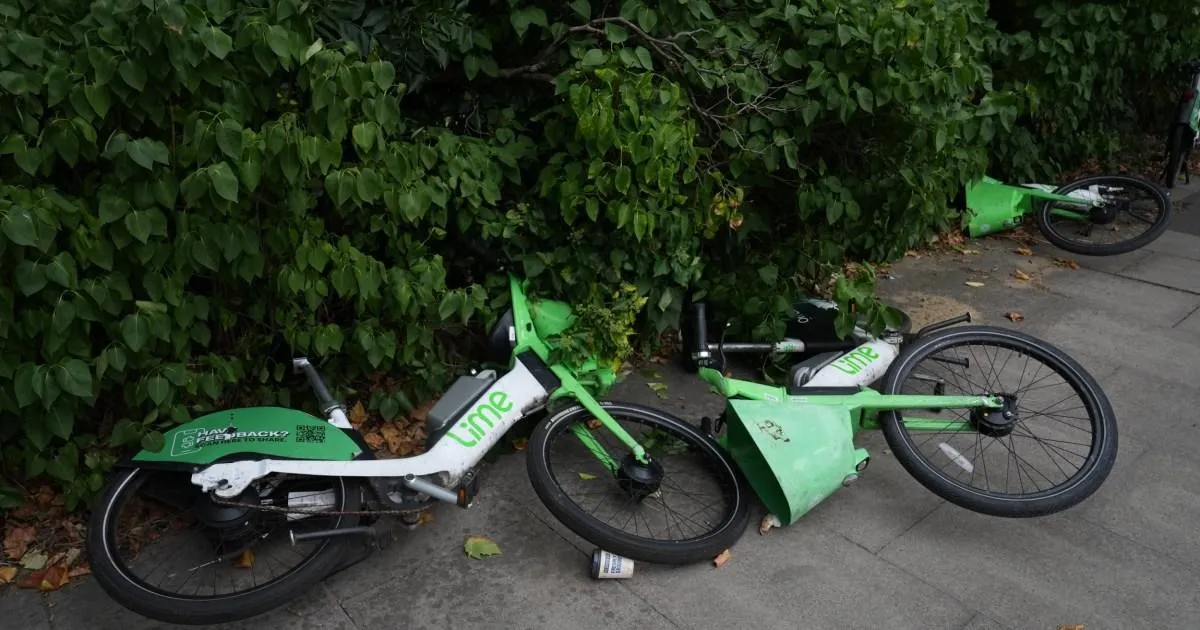
The problem, as campaigners describe it, is particularly acute around Brick Lane, Spitalfields and Shoreditch, where pavements are not only busy with locals but also with visitors drawn to the area’s famous markets, restaurants, and nightlife. These are streets where space is already contested, where a person in a wheelchair, a parent pushing a pram, or an older resident with a walking frame cannot simply step around an obstacle without putting themselves at risk. Abul Khair, one of the campaigners behind the petition, made this point powerfully when he addressed councillors. He said: “What may seem like a minor inconvenience can quickly become a serious obstruction for people trying to move around safely. For wheelchair users, parents with pushchairs, older residents and people with mobility needs, a badly parked bike can mean leaving the pavement and stepping on to the road.” That image—of a person forced onto the road because a dockless bike blocks their path—is not a rare or imagined scenario. It is a daily reality in many parts of Tower Hamlets. Residents have shared stories of bikes piled on top of each other, bikes tangled in railings, bikes abandoned outside shop entrances, and bikes left flat on the pavement, almost invisible in the dark. Each one of these incidents, on its own, may seem minor. But together, they create an environment of unpredictability and anxiety, especially for people who already face mobility challenges. The campaigners are not asking for the removal of all bikes. They are asking for the city to function properly, where innovation does not come at the expense of inclusion.
To truly humanize this issue, it is important to imagine a single morning in the life of someone affected. Picture a mother leaving her flat in Spitalfields with a baby in a pushchair and a toddler walking beside her. She needs to reach the local shop, but the pavement is cluttered with three or four dockless bikes lying in a tangle near a lamppost. The space she needs to pass is too narrow. She cannot lift the pushchair over the bikes without risking waking the baby. She cannot ask her toddler to wait in the street. So she has to turn around, take a longer route, or carefully guide the pushchair onto the road, checking desperately for traffic. Now consider an elderly man with a cane, heading to a doctor’s appointment near Brick Lane. He does not have the agility to step over a bike that has fallen across the path. His eyesight is not what it used to be, and he is afraid of tripping. For him, a bike left carelessly on the pavement is not just an annoyance; it is a physical barrier. Or think of a young wheelchair user trying to get to work in Shoreditch. For them, a single bike blocking the dropped kerb means they cannot access the crossing at all. They are forced to backtrack, sometimes for several blocks, just to find an accessible route. These are not hypothetical examples. They are the everyday experiences of residents who feel their voices have been unheard. The campaigners stressed that the public is not against cycling, and that the city absolutely needs sustainable transport. But sustainability cannot mean that the needs of one group are ignored so that another group can enjoy convenience. A truly accessible city is one where everyone, regardless of age, ability, or family status, can navigate public spaces without fear.
Behind the petition, there is a deep sense of frustration, and it is not hard to understand why. Abul Khair and his fellow campaigners—Guljar Khan and Yasmin Haque—have been raising the issue with senior council managers for more than a year, and yet, in their words, they have “seen no improvements.” For a year, they have watched the same problem recur. For a year, they have been passed from one department to another, or given promises that have not materialised. Eventually, they decided that the only way to be heard was to take the issue to the public arena, gathering signatures, presenting a formal petition, and speaking directly to councillors. In their meeting, Khair made a series of practical suggestions beyond simply asking for designated parking zones. He proposed that antisocial behaviour officers should be tasked with monitoring problem hotspots and removing bikes that were causing obstructions. He also called for the creation of areas where dockless bikes would be banned altogether, particularly in the most crowded streets where any additional object on the pavement becomes a hazard. These are not extreme demands; they are pragmatic solutions that have been adopted in other parts of the city. The campaigners are not trying to invent a new wheel. They are simply asking the council to catch up with the realities of a fast-changing urban transport system. The dockless bike companies, for their part, argue that they rely on users to park responsibly, and that they have systems in place to encourage good behaviour, such as geofencing and parking penalties. But residents say that in practice, enforcement is weak, and the companies are not doing enough to manage their own fleets. The result is that the public and the council are left to clean up the mess, while the companies profit from the footfall their bikes generate.
The council, at least, appears to be listening now. In response to the petition, Tower Hamlets chief executive Stephen Halsey confirmed that work on designated parking zones was already under way. He pointed to the examples of Hackney, Islington, and other inner London boroughs, which have introduced parking zones for dockless bikes, and said that Tower Hamlets was following the same path. “That piece of work is currently under way,” he said, offering a small but significant sign of progress. This is encouraging, but it also raises questions about why it took so long. If neighbouring boroughs have already found a workable solution, why has Tower Hamlets been struggling for a year with no visible improvement? The answer may lie in the complexity of implementing such zones, the need to negotiate with multiple bike operators, and the difficulty of balancing the competing demands of residents, cyclists, businesses, and transport authorities. Still, the confirmation is a step in the right direction. Designated parking zones could take many forms. They could be on-street bays, clearly marked areas where cyclists are expected to park their bikes. They could be physical installations, such as barriers or racks, that make it easier to park bikes in an orderly way. They could also include digital enforcement, using GPS data to alert users when they are parking outside a designated area, or even automatically fining them. But residents are not just waiting for zones to appear. They are also calling for interim measures, particularly in the worst-affected spots, where bikes should be immediately removed if they are causing an obstruction. And they want to see an ongoing commitment from the council to monitor the situation, rather than a one-off intervention that is soon forgotten.
Ultimately, this is not a story about hating bikes, or about resisting change, or about the glamorous and gritty borough of Tower Hamlets refusing to embrace modernity. It is a story about the fundamental principles of shared space, mutual respect, and community accountability. The residents who signed the petition and stood before the council are not radicals. They are people who simply want to walk down their own streets without playing a game of physical dodgeball. They want to know that when they leave their homes, they will be able to get where they need to go, whether they are on foot, in a wheelchair, or pushing a pushchair. They want their children to be able to walk to school without stepping over abandoned bikes. They want their elderly neighbours to feel confident leaving their homes, rather than feeling trapped inside because the outdoors have become too unpredictable. And they want the businesses and bike operators that benefit from the area’s footfall to take responsibility for their role in creating a safe and welcoming environment. The challenge now is to ensure that the council’s commitment translates into concrete action. Designated parking zones are a good start, but they must be accompanied by enforcement, education, and a genuine willingness to listen to residents when they report problems. The campaigners have done their part. They have raised their voices, shared their stories, and made their demands clear. Now it is up to the council, the bike operators, and the cyclists themselves to respond. The streets of Tower Hamlets should be a place where everyone belongs—not just the young, the able-bodied, and the digitally connected, but also the old, the vulnerable, and the people who simply want to walk in peace. In the end, a city is measured by how it treats its most vulnerable residents. And in this case, the measure is clear: a bike should never be an obstacle between a person and their freedom to move.