


There are few places in Britain where the meeting of land and sea feels more raw than at Port of Ness, on the Isle of Lewis, where the Atlantic pounds the northern cliffs and the horizon stretches into an eternity of grey water. It was off this exposed stretch of coast that a small fishing community’s deepest fear began to take shape early on Wednesday. A fishing vessel that should have returned from its work had not appeared, and by 11.35pm on Tuesday the alarm was already out. Police Scotland were told that a boat was missing with three men on board, and as the wind whipped across the island under a yellow Met Office warning, the circumstances were as serious as they could be. By daylight, there was no escaping the gravity of what had happened: one body had been recovered from the water, and the search was continuing for the missing vessel and the two other men. Formal identification had not yet taken place, but the families of all three men had been contacted, and officers were with them. In a place like Lewis, such news moves like a shockwave through the community, from harbourside to hill croft, and no family carries that weight alone. The sea, which gives the island its livelihood, had suddenly reminded everyone that it collects its debts without warning and without mercy. For the people of the Port of Ness area, the search was not an abstract exercise. Every member of the crew was known; every face familiar. The boat itself was a working vessel of the kind that has glided through these waters for generations, crewed by men who had grown up reading the weather in the colour of the sky and the movement of the swell. It had left the harbour on Tuesday and had not come back. When rescue teams gathered on the shoreline, they were not looking for strangers. They were looking for neighbours, for relatives, for boys they had watched grow into fishermen. That is why the morning felt so heavy, and why the sound of helicopter rotors overhead became the soundtrack to a day in which the rest of the world seemed almost obscene in its ordinariness.
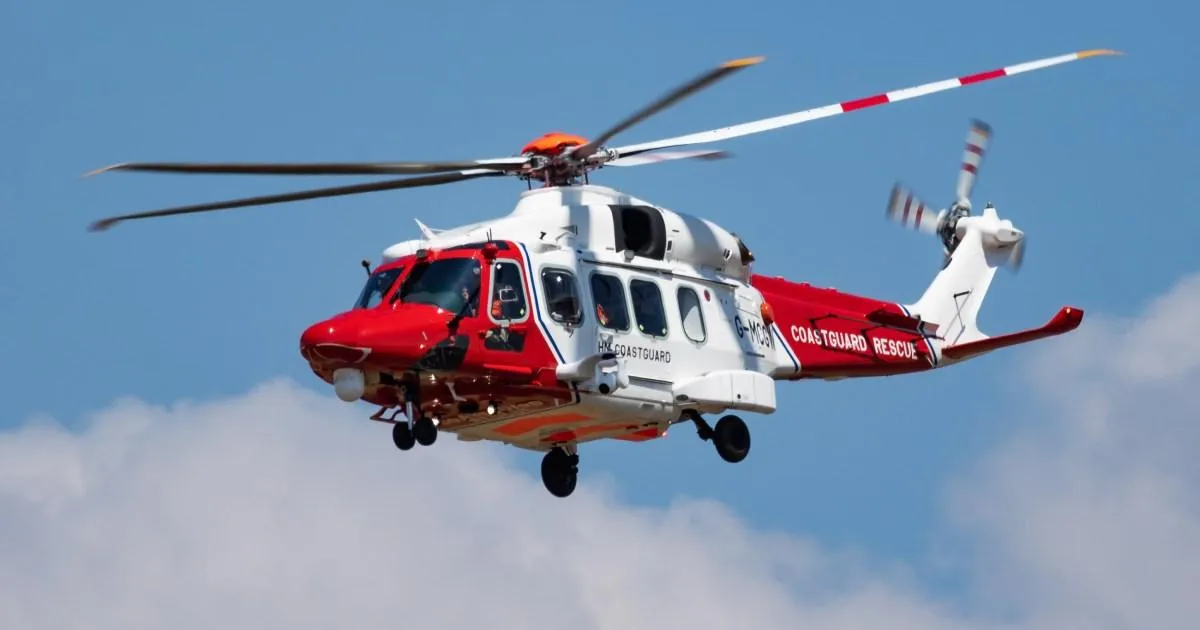
The scale of the response was immense, equal to the seriousness of the emergency. HM Coastguard mobilised an aircraft, two helicopters and six rescue teams, while two Royal National Lifeboat Institution lifeboats were launched from the nearest stations. A local vessel also joined the search, bringing with it men whose local knowledge could not be matched by any electronic navigation system. They knew the tide races around the headlands, the hidden rocks, the way the sea behaves when the wind turns against it. All through the night and into the morning, these crews searched a vast and unforgiving arena of water, flying and sailing above and through a sea that was still churned up by gusts of up to 60mph. The conditions were so difficult that, as the Western Isles Council convenor would later put it, the efforts of the rescue services were “extraordinary.” He was not exaggerating. To launch a helicopter into that weather, to put a lifeboat on that swell, to walk the shoreline with a line and a torch in the wind and rain, requires a particular kind of courage that is difficult to measure in words. Those involved did not hesitate. They had a job to do, and behind the job was a promise that no one in these islands is left to the mercy of the sea without a fight being made on their behalf. For the families waiting onshore, the sight of the search operation was both a comfort and a torment. Every aircraft that flew low over the water brought with it a moment of impossible hope; every radio transmission could have been the message they were praying for. The rescue teams themselves worked in shifts, their faces reddened by the wind, their movements grounded in all the discipline of men and women who have trained for this kind of crisis but who are never entirely ready for it. They checked the tide, recalculated drift, scanned the waves for any sign of wreckage or oil or something more terrible. And they did all of it without losing sight of the human beings at the centre of the emergency. In the port villages nearby, windows were left lit through the night, not because anyone expected to sleep, but because the light was a small way of saying that the community had not turned away.
The first public statement from an elected leader came with a rawness that reflected the mood of the island. Kenneth Macleod, the convenor of the Western Isles Council, did not hide behind administrative language. “It is a terrible tragedy and difficult to put into words,” he said. “My condolences are with the families and friends.” He went on to say that the men at the centre of the disaster were all from Lewis, and that the emergency services had worked in conditions that were “quite brutal” and “really challenging.” There was no need to translate those words for anyone who had ever stood at the edge of the Atlantic during an autumn gale. The wind that had blown through the night was not simply an inconvenience; it was a force to be respected and feared. Macleod’s tribute to the coastguard teams, lifeboat crews and other members of the rescue services was an acknowledgment of the extraordinary lengths that ordinary people will go to in order to protect one another. Those teams, after all, are made up of volunteers and professionals who share the same attachment to the sea and the same understanding of its dangers. They do not go out because they are paid to do so, or because they have no choice. They go out because the alternative is unbearable. And in going out, they take on a burden of trauma and memory that will stay with them long after the headlines move on. His words also carried a quiet call for the rest of the country to understand something essential about the Hebrides. This is a place where life has always been lived on the edge of the weather, where the rhythms of work and rest, of birth and death, are tied to the sea’s changing moods. A fishing boat is not just a machine; it is the family’s history, a repository of stories, a space filled with the smells of diesel and salt and rubber boots. To lose a boat and its crew is to lose a piece of that inheritance, and the grief is not only for the individuals but for a way of life that is at once stubbornly resilient and terribly fragile.
The weather on the night the vessel disappeared had been anything but benign. The Met Office had issued a yellow wind warning for the area, with gusts of up to 60mph expected, and while such warnings are common in the Hebrides, they are never ignored by those who make their living from the sea. For a small fishing vessel, an autumn gale can turn a familiar stretch of water into a maze of moving walls and unpredictable troughs. The seas around Lewis are not forgiving; they have shipwrecked far larger boats than the one that was now missing, and the island’s history is littered with the names of crews who never made it home. It is impossible to know exactly what happened in the hours before the alarm was raised, and the investigation will no doubt seek to piece together the final moments of the boat’s voyage. But in the absence of answers, the minds of those who know the sea will keep returning to the same haunting images: a wheelhouse window suddenly full of white water, a deck tilted beyond the point of no return, a radio call that never came or came too late. The certainty of the storm warning would have been in every fisherman’s mind. They would have weighed the bait, checked the gear, perhaps looked at the sky and decided whether the risk was worth it. That decision, made in the ordinary course of a hard life, now carries a weight that no one can lift. Yet the sea is not simply an enemy in the Hebrides; it is also a provider, a highway, a source of identity and pride. The same water that can turn violent and deadly supplies food, work, beauty and a kind of quiet majesty that draws people to the islands and holds them there. To understand the tragedy of a lost fishing boat, you have to understand that paradox. The crews who sail out of Port of Ness and the other small harbours are not naive; they know the risks better than anyone. They go anyway, because that is what their fathers and grandfathers did, because the boats need to be worked, because the life is in their blood. The wind warning was a warning, but it was also just another Tuesday night in an island lived at the mercy of the elements.
Late on Wednesday, Police Scotland released a statement that was careful, restrained and all the more devastating for it. “Emergency services are in attendance following a report of a missing fishing vessel and three men on board off the coast of Port of Ness, Isle of Lewis, which was reported to police around 11.35pm on Tuesday,” it said. “The body of one of the men has been recovered; however, formal identification is yet to take place.” The statement made clear that the families of the men were being supported by officers, and that the search was ongoing. Behind those formal words was an immense and complicated human mechanism: family liaison officers sitting through the night, police divers and rescue teams being rotated, coastguard coordinators working the radios, clergy and community volunteers quietly making themselves available to anyone who needed them. In the small villages around the coast, the news was processed in the way that island news is always processed—with a terrible fluency born of experience. Names were spoken quietly, memories shared, and the sea was watched with a new, painful attention. The operation was still being described as a search, but the people who live by the tide understood that a search can also be a vigil, a slow and disciplined way of accompanying the dead and the missing towards whatever resolution is possible. Until the body of the man is formally identified, and until more is known about the fate of the boat and the two men still unaccounted for, the community must live in the unbearable space between hope and grief. It is a space they have inhabited before, as every fishing community has. The memory of other losses, other boats, other names etched into memorial stones, sharpens the edges of the wait. The helicopters that thundered overhead were not just machines; they were expressions of a collective refusal to accept the sea’s verdict quietly. The lifeboats that pitched and rolled through the heavy swell were crewed by people who could easily have been on the missing boat themselves. And the local vessel that joined the search was not an auxiliary afterthought but an essential part of the response—a declaration that the community would not stand aside and wait.
Tragedy at sea has a particular shape in the Hebrides. It is not noisy or televised in the way that urban disaster can be; instead, it settles on the land like sea mist, muffling sounds, making colours dull, and forcing everyone to slow down and confront the same question: why do people continue to live and work in the face of such peril? The answer is rooted in the same qualities that the rescue services displayed on the day the boat went missing: courage, stubbornness, love of place, and an unshakeable belief that the community matters more than the individual. That is why Kenneth Macleod’s tribute to the coastguard teams, lifeboat crews and other rescue services was so important. He was not just thanking them for their technical competence; he was recognising the spirit that compels human beings to go out into the worst conditions imaginable in order to save someone else’s father, son, brother, friend. It is a spirit that cannot be manufactured or trained into existence, although training helps. It has to come from somewhere deep, from a sense that all lives are connected, that a loss on one part of the island diminishes the whole. And it is that same spirit that will carry the families through the coming days, as the search continues, as formal identification takes place, as funerals are prepared and the empty seats remain empty. The sea may be quick to take, but it cannot erase the bonds of an island people. The grief will remain, as it should. So will the gratitude for the extraordinary efforts made in brutal conditions, and the quiet, steady determination to keep going. Eventually, the helicopters will stop flying. The lifeboats will return to their berths. The headlines will move on to something else, as headlines always do. But the people of Lewis will not move on so quickly. They will carry the names of the missing with them, as they carry the names of all those who have gone before. They will look out at the Atlantic from the cliffs at Port of Ness and remember, not only with sorrow but with a fierce, unspoken pride that their community does not give up on its own. Nothing will bring back the men who were lost, or ease the pain of their families overnight. But the same human decency that sent helicopters into the storm and lifeboats onto the swell will remain, because that is what holds a people together. As Kenneth Macleod said, it is a terrible tragedy and difficult to put into words. But the words offered—and the actions behind them—were exactly what the moment required. They will not be forgotten.