


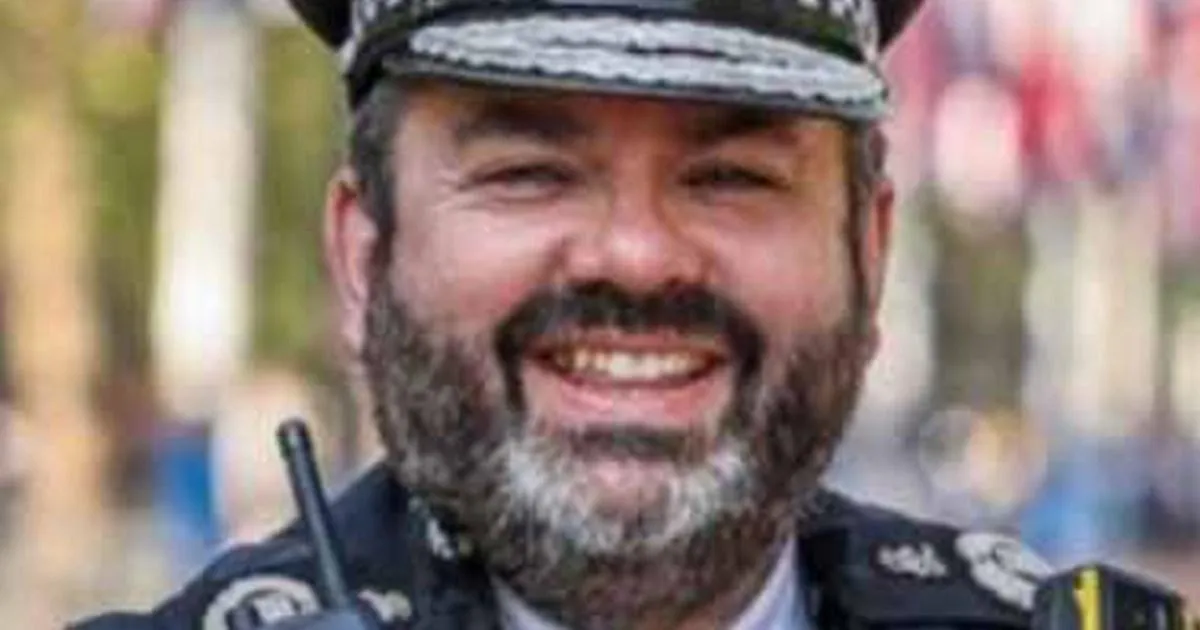
On an ordinary Friday, James Deller learned that the career he had built in public service was over. He had risen to become the head of the Metropolitan Police’s Special Constabulary, the leader of a force of volunteer officers who give up their spare time to keep London safe. These are people who wear the uniform not for a paycheck, but out of a sense of duty. Deller was their commander. He was supposed to be the example, the person who embodied the highest standards of integrity and discipline. Instead, he was fired after an accelerated misconduct hearing found that he had used his police-issued work phone to photograph intimate images of a woman. The images had been sent to his personal phone using WhatsApp’s “view once” feature, which is designed to let someone share a photo without leaving a permanent trace. It is a feature built on trust — trust that the person on the other end will look and let it go. Deller did not let it go. He used his work phone, a device paid for by the public and entrusted to him for policing duties, to copy those private images. Then he sent the copies to his personal phone and deleted them from his work device, as if that would erase what he had done. But in the digital age, nothing really disappears. And for a senior police officer, the act itself was already a profound betrayal.
The details of Deller’s misconduct are uncomfortable to read. According to investigators, in July and August 2025, he used his police-issued device to photograph intimate images of a woman that had been sent to his personal phone. The original images were sent using WhatsApp’s “view once” feature, which makes them disappear after they have been opened. That feature is meant to offer a sense of privacy and control — a way to share something sensitive without it lingering in chat history. But Deller circumvented that intention. Instead of respecting the woman’s trust, he photographed the images with his work phone, creating permanent copies. He then sent those copies from his work phone to his personal device, and finally deleted them from his work phone, apparently hoping to cover his tracks. The attempt to hide the evidence was clumsy, but the betrayal was not. This was not a momentary lapse in judgment or a misunderstanding. It was a deliberate series of actions taken over the course of two months. He had time to think about what he was doing. He had time to stop. Instead, he continued, using the very tools of his public office to violate someone’s privacy. The woman whose images were copied may never know exactly how much was taken from her — her sense of safety, her control over her own body, her trust in the people who are supposed to protect her. And Deller, the man who was supposed to set the standard for volunteer police officers, was the one taking it away.
The investigation that brought Deller down was not a routine internal affairs inquiry. It was part of a week-long operation using advanced technology to target professional misconduct and corruption within the Met. Investigators used lawful business monitoring and Palantir’s Foundry system, an artificial intelligence platform that can sift through massive amounts of data to identify patterns of wrongdoing. It was this technology that uncovered the incriminating activity. Deller was initially suspended while the investigation continued, and then, on Friday, an accelerated misconduct hearing delivered its verdict: dismissal. The decision was swift, but the consequences will follow him for a long time. He will now be added to the College of Policing’s barred list, which means he will never be allowed to work in policing again. For a man who had dedicated a significant part of his life to law enforcement, that is a devastating fall. But it is also a necessary one. Commander Pete Stevens, who spoke after the hearing, made the point clear: the vast majority of Met officers and staff serve London with dedication and integrity, and they expect robust action against the small minority who abuse their position and undermine public trust. He said that volunteers in the Special Constabulary selflessly give up their time to keep London safe. They deserve to be led by people who demonstrate the highest standards in every part of their lives. Deller failed to meet that bar. He let himself down, but more importantly, he let the Special Constabulary down. His actions were an abuse of the trust placed in him, and it is right that he is no longer able to serve in policing.
But the story is not just about one man’s fall from grace. It is also about the technology that caught him, and the uncomfortable questions that technology raises. Palantir, the software company behind the AI system used in the investigation, was founded by tech magnate Peter Thiel. The company holds contracts with a number of UK public sector bodies, including the Met, the NHS, and the Ministry of Defence. Its involvement in UK public services has long been controversial. Critics point to concerns over data use and privacy, as well as the company’s links to U.S. Immigration and Customs Enforcement (ICE) and the use of its technology in global conflicts. Palantir is currently suing London Mayor Sadiq Khan after he blocked a £50,000,000 deal with the Metropolitan Police. The lawsuit is a reminder that the relationship between public institutions and private tech companies is complicated, and often contentious. In May, Metropolitan Police Deputy Commissioner Matt Jukes told the London Assembly Police and Crime Committee that officers were not under any “additional surveillance in the workplace” after the force used AI in a bid to root out bad behavior. He acknowledged that the force had weighed the reputational risk of using the “divisive” technology, but he argued that it identified “unacceptable, dishonest, corrosive behaviours” from officers. In this case, the technology did exactly what it was supposed to do: it exposed a senior officer who was abusing his position. But it also forces us to think about how much monitoring we are comfortable with, and whether the same tools could be used in ways that are less fair, less transparent, or more intrusive.
There is something deeply unsettling about the idea that every action we take on a work device might be watched by an artificial intelligence. For most police officers, that is simply the price of holding a position of public trust. They carry devices that belong to the public, and they are expected to use them responsibly. But the same technology that caught Deller could theoretically be used to monitor other kinds of behavior — to track where officers go, who they communicate with, what they read, how they spend their time. The line between legitimate oversight and invasive surveillance is not always clear. In this case, the monitoring was lawful and the outcome was just. Deller was not dismissed because he held unpopular opinions or because an algorithm made a mistake. He was dismissed because he violated a woman’s privacy in a way that no police officer should ever consider acceptable. That is the kind of behavior that erodes public confidence in the entire justice system. When people call the police, they need to believe that the person in uniform is there to help, not to exploit them. When a woman sends a private image to someone she trusts, she has the right to believe that it will remain private. Deller broke that trust in the most intimate way possible. And while the technology that caught him may be controversial, it is hard to argue with the result in this case. The system worked. But it worked because the people running it chose to use it carefully, lawfully, and in the service of accountability.
In the end, this is a story about trust — trust in institutions, trust in technology, and trust between people. James Deller’s dismissal sends a clear message that the Met will not tolerate officers who abuse their power, even those in the highest positions. It also reminds us that no one is above the rules, and that the digital footprints we leave behind can tell the truth even when we try to hide it. But it should also make us think about the kind of world we are building. We live in an age where “view once” messages can be captured, where work phones can be monitored by AI, and where private moments can become evidence in a disciplinary hearing. That power can be used for good, as it was here. It can protect people from predators and hold the powerful accountable. But it can also be used to invade privacy, to silence dissent, or to punish people for mistakes that have nothing to do with their jobs. The challenge for institutions like the Met is to use these tools wisely, with transparency and oversight, so that the public can trust them. The challenge for all of us is to remember that behind every headline about a disgraced officer, there are real people — a woman whose private images were stolen, a volunteer force that lost its leader, and a man who threw away his career for something that could never be undone. Deller’s story is a warning, but it is also a reminder that trust is fragile, and that once broken, it is very hard to rebuild.