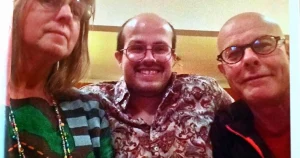

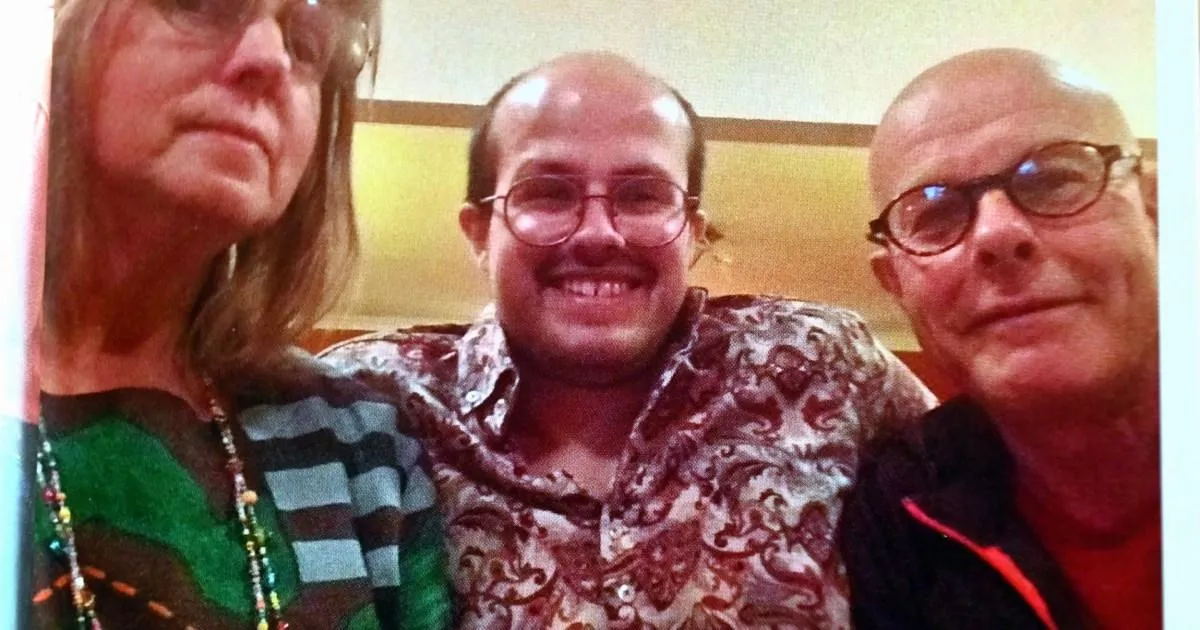
For Patricia and Mike Webb, the memory of that September afternoon is still painfully vivid. It was a boiling hot day, the kind that makes a four-hour drive seem endless, but they had made the journey from their home in Crickhowell, Wales, to London with the kind of joy that only parents of an only child can fully understand. Their 27-year-old son, Harry Webb, was starting a new chapter, moving into a flat in Hackney with a friend from university, and they had driven down to help him settle. They carried boxes, arranged his belongings, sweated through the heat, and finally took him out for lunch before saying goodbye. They thought they would see him again in just a few days, when he planned to come home for a visit. Instead, the next time they heard his voice would be through his hands-free device, as Harry cycled from his new place, wearing his helmet, calling simply to say thank you for everything they had done that day. It was a small, loving gesture, the kind of call a grateful son makes after his parents have spent the day moving him in. Patricia and Mike had just sat down on their patio, tired but content, when the phone rang. They heard Harry’s voice, happy and full of life. Then, without warning, the line went silent. Patricia later remembered the moment with unbearable clarity: “But then it all went silent.” For a few seconds, they must have thought the call had dropped, that there was a signal problem, that Harry would come back on the line and say, “Are you still there?” But he never did.
At first, the silence was confusing. Then instinct took over, and they began screaming into the phone, desperate for Harry to answer, desperate to hear his voice again. But the voice that eventually spoke was not their son’s. It was a stranger who told them there had been a crash, and for a while all they could hear were sirens. Police later pieced together what had happened: Harry had been struck by an Audi driven by Tifffany Treanor-Johnson, 27, who had inhaled nitrous oxide before getting behind the wheel and was driving at 53mph on a road with a 20mph limit. Harry was a safety-conscious cyclist, always reminding others to wear helmets, and he had been wearing his own. But the force of the impact was catastrophic. He suffered a serious head injury, and doctors would later remove part of his skull in a desperate attempt to ease the swelling on his brain. The Webbs, already exhausted from the long drive to London and back, did not hesitate. They jumped straight back into their car and began the same journey again, their hearts racing, not knowing what they would find when they arrived. It was during that drive that the phone rang. It was Harry’s surgeon, and he asked them to pull over. The news was devastating: Harry did not have much time left. They made it to his bedside before midnight and stayed there for two days, holding onto hope, until their beloved son slipped away. Patricia later said, “It’s so unfortunate his life was taken away from him. It’s the stupidity of it all, which really upsets us.” That word, “stupidity,” carried the weight of everything: the decision to use laughing gas, the choice to speed, the reckless treatment of a 20mph street as if it were a racetrack.
Harry was, by every account, a remarkable young man. His parents described him as “incredibly bright, incredibly unique and incredibly loved.” He had studied maths and philosophy at Bristol University, not because he needed to prove anything, but because he genuinely loved to learn. His mother remembered him as “a star pupil without trying,” someone who earned five A-Levels simply “because he wanted to do” them. After Bristol, he followed his passion for music to the London College of Contemporary Music, where he had just started the second year of his master’s degree in music production. He was the kind of person who drew people in, fearless in the way he approached life but completely without arrogance. “People warmed to him, because he was fearless but without any arrogance,” Patricia said. “So many people have come forward to say how much they loved him. He brought a dollop of generosity and sunshine to everything he did.” In London, he insisted he did not need a car. He was a passionate cyclist, fiercely safety-conscious, the sort of rider who would always remind friends to put on their helmets before setting off. His life was full of plans. He had just moved into a new flat with a friend, was excelling in his studies, and had his future mapped out. The idea that his life could end in a matter of seconds, because of someone else’s reckless choice, was something his parents struggled to comprehend. He was not a statistic or a headline; he was a son, a friend, a student, a budding musician, a bright and generous presence in the lives of everyone who knew him.
In the aftermath of the crash, Tifffany Treanor-Johnson did not stop. She left the scene and turned into a side street, where she hit another car. It was only because other drivers stepped in, performing what police described as a “police style stop,” that she was prevented from continuing to drive. For the Webbs, seeing the footage of what happened added another layer of pain. They had to absorb not only the loss of their only child but also the shocking circumstances that had caused it. Treanor-Johnson initially denied causing death by dangerous driving, only admitting her guilt in April this year. On Friday, she was jailed for ten years. For Patricia and Mike, no sentence could bring Harry back, but there was a grim sense of justice in knowing that the driver had been held accountable for what she had done. Their grief was compounded by the fact that this was entirely avoidable. Harry was cycling within a 20mph zone, obeying the rules, wearing his helmet, doing nothing wrong. The crash was not an accident; it was a road crime. In a statement outside court, Mike made his anguish and anger clear: “Nobody should be killed cycling within a 20mph area in London, it is totally unacceptable.” He called for road crimes to be taken more seriously and for enforcement to be stepped up, so that no other family would have to experience the same preventable tragedy. The legal outcome was a form of accountability, but it could never undo the damage done.
The ripples of Harry’s death have spread far beyond his parents. “The ripples caused by his death have been immense for so many people unable to come to terms with this senseless road crime,” Mike said. Friends, classmates, former teachers, and family members have all come forward to share memories of Harry, describing him as someone who made ordinary moments feel special. Patricia spoke of his generosity, his warmth, his unique way of seeing the world. She recalled how happy he had been on the day he died, moving into a new flat with his friend, starting a new chapter, making plans for the future. The contrast between the joy of that day and the horror of the phone call is almost unbearable to contemplate. Parents should never have to hear that their child’s life is ending because of a reckless decision. They should never have to sit beside a hospital bed, watching machines breathe for their son, waiting for a miracle that will never come. They should never have to make the agonising journey back to a city that was supposed to represent their son’s bright future, only to say goodbye. Patricia kept returning to the senselessness of it all. The “stupidity” she speaks of is not a lack of intelligence; it is a failure of responsibility, a failure to understand that a few seconds of selfish behaviour can erase an entire life. Grief is not just for the death itself, but for everything that should have been: the phone calls, the visits, the music, the milestones, the future that Harry had carefully planned and was so excited to live.
Amid the pain, one small consolation exists: Harry has been awarded his master’s degree posthumously. It is a bittersweet tribute, a recognition of the brilliance and dedication he poured into his studies, but it can never replace the man who should have been there to accept it himself. His parents now face a future without their only child, a future that was supposed to include watching him build the life he had dreamed of, hearing his music, meeting his friends, and sharing in his joy. Instead, they are left with memories, photographs, and the knowledge that their son touched so many lives in his 27 years. “He had his life planned out. He was so happy,” Patricia said. “People warmed to him, because he was fearless but without any arrogance.” In their darkest moments, they cling to who Harry was: the boy who earned five A-Levels because he wanted to, the student who studied maths and philosophy and music, the cyclist who urged everyone to wear helmets, the young man who called his parents just to say thank you. His voice on that phone call, before the silence, remains their final gift. The world is poorer without Harry Webb, but his memory will live on in the ripples he created—in the love of his parents, in the hearts of his friends, and in the urgent call for change that his father raised outside court. Nobody should be killed cycling within a 20mph area in London. Harry Webb should still be here, making music, making people laugh, and making the world a little brighter with that “dollop of generosity and sunshine” his mother remembered so tenderly. Since he cannot, his parents are determined that his story will not be forgotten.