
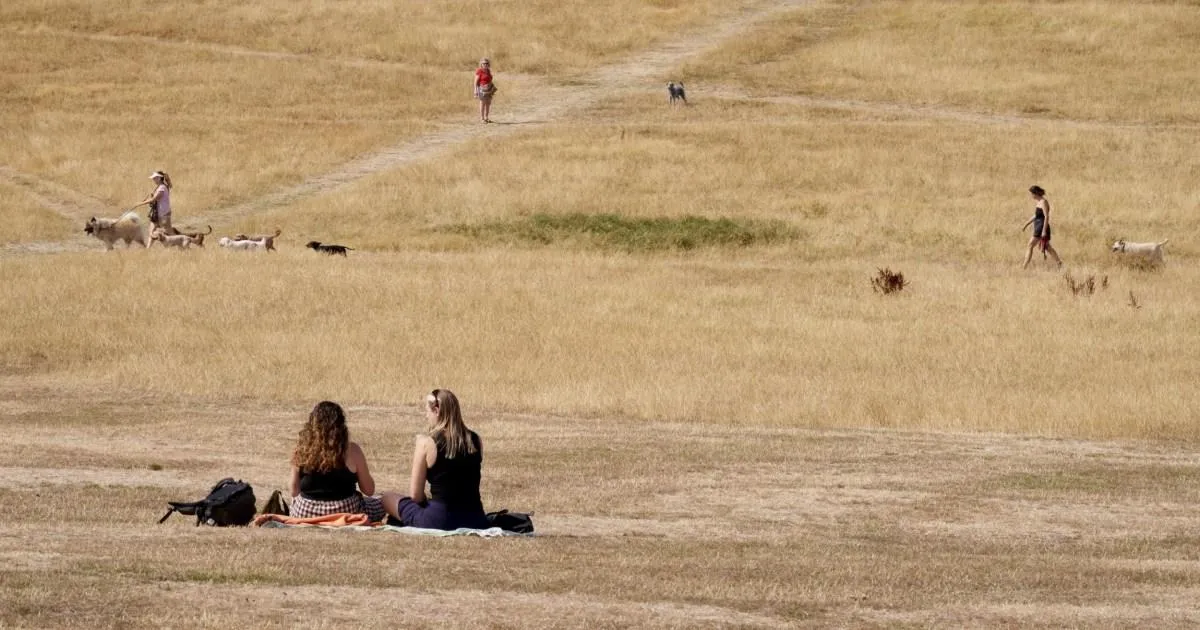
Just when you thought you could finally pack away the sun cream and dig out a jumper, the UK has other ideas. The summer of 2026 has been an absolute scorcher, one for the record books, and it seems it isn’t done with us just yet. The Met Office, the nation’s official weather watchers, have dropped something of a bombshell in their latest long-range forecast: a sixth heatwave could be on the way, and it might arrive as we’re shuffling into September, a month that is technically autumn. For anyone who has spent the last few months fanning themselves, wrestling with hosepipe bans, or watching the garden turn from green to crisp, the news feels almost surreal. We’ve already been battered by five separate heatwaves this year, each one seeming to top the last, and now forecasters are saying there’s a real chance that late-season hot spells could develop, especially in the south of England. The heat, it seems, is not going gently into that good night. It’s clinging on with both hands, refusing to accept that the calendar says summer should be winding down.
The Met Office’s forecast, covering the period from August 30 to September 13, paints a picture of a country still in the grip of a weather system that simply won’t loosen its hold. While the first few days of that window are expected to be rather changeable, with showers and perhaps some longer spells of rain sweeping across many parts of the UK, the overall trend is worrying for those who crave cooler climes. Drier, more settled weather is slightly more likely towards the south and east, and while temperatures might mellow to around average for the time of year, the phrase “late-season hot spells” is enough to make anyone with a sun-sensitive disposition wince. The forecasters are careful with their language, noting that the possibility of widespread or exceptional heat is perhaps a little lower than in recent weeks, but that’s cold comfort when you’ve just lived through a summer where the mercury has seemed determined to break every record it could find. High pressure, that great big atmospheric shield that pushes clouds away and lets the sun bake down, is expected to build in the north and west, while rain-causing low pressure systems sweep in from the Atlantic, bringing wind and rain to some areas. Yet even with those systems, temperatures are predicted to stay above average. The weather is essentially a tug of war between the forces of cool and the forces of hot, and right now, hot seems to have the stronger grip.
For the immediate week ahead, there is some respite, and you can almost hear the collective sigh of relief from a nation that has been wilting under the glare of an unforgiving sun. The Met Office says that temperatures are expected to lower in the coming days, offering a chance for people to step outside without feeling like they’re walking into a hair dryer. But even this relief is patchy. Often cloudy in northern areas with occasional showers, though mostly light and brightening up for some, especially in the east. Largely dry in the south and feeling very warm in the sunshine, albeit not as hot as yesterday. It’s a classic British forecast: a bit of everything, a lot of nothing, and no one entirely sure what to wear. But the underlying story remains. This has been a brutal summer, one that has hammered the country with record-breaking temperatures, sparked widespread drought, and tragically contributed to a rise in deaths. The fifth heatwave brought the hottest day of the year so far, at a sweltering 38.1 degrees Celsius, a temperature that would make even the most sun-loving among us retreat into the shade. And with that heat came a new and terrifying word into the national vocabulary: firewave.
The threat of wildfires has become so severe that experts have warned the UK is suffering from a “firewave,” a term that feels like it belongs to a dystopian novel, not a weather forecast. But the reality is all too real. The government issued an emergency warning on Friday against using disposable barbeques, those little foil trays that are a staple of British summer gatherings, in case they spark a blaze. It’s a measure that feels almost absurd, a sign of how desperate things have become. The West Midlands declared a major incident on Thursday due to roaring wildfires that have consumed 500 acres and destroyed 19 homes. Imagine that: 500 acres of land, once green and alive, reduced to ash and ember. Nineteen families, watching everything they own go up in smoke. And it’s not just the Midlands. Some 14 wildfires are burning in South Wales, with officials warning that the threat of flames will continue well into next week. The images have been heartbreaking and terrifying in equal measure: fire engines racing down country lanes, helicopters dumping water over hillsides, people being evacuated from their homes with nothing but the clothes on their backs. The majority of these wildfires are caused by humans, whether through carelessness, recklessness, or sheer bad luck. A discarded cigarette, a spark from a barbecue, a piece of glass focusing the sun’s rays like a magnifying glass. It doesn’t take much when the ground is as dry as a bone and the air is as hot as an oven.
So why is this happening? Why is the UK, a country known for its grey skies and drizzle, turning into a Mediterranean hotspot? The answer lies in a combination of factors, some of them natural, some of them very much man-made. A “heat dome” is partly to blame for this year’s blistering summer. A heat dome is a stubborn, almost arrogant type of high-pressure system that stops air from rising and forming clouds. It sits there, like a lid on a pot, trapping the heat underneath and letting it build and build until the air itself feels heavy and thick. This dome intensified the extreme heat across Europe, turning the continent into a furnace. But there’s more. Experts have also pointed to a “super El Niño” – a turbocharged weather system that blows hot ocean air across the globe. El Niño is a naturally occurring climate pattern, but when it’s supercharged, it can have dramatic effects on weather around the world. The combination of the heat dome and a super El Niño is like having two bullies teaming up to make your life miserable. They push the temperatures higher, they dry out the ground, and they create the perfect conditions for wildfires to ignite and spread.
And then there’s the bigger, more uncomfortable elephant in the room: climate change. It can be tricky to say exactly how the climate catastrophe, caused by humans pumping planet-warming gases into the air when burning fossil fuels, has influenced the UK’s temperature this year. Weather is a chaotic, complex system, and attributing any single heatwave to climate change requires careful scientific analysis. But the scientists know for sure, with a level of certainty that is both reassuring and terrifying, that heatwaves are becoming more intense, more frequent, and longer. This isn’t a blip. This isn’t a one-off. This is a trend, and it’s a trend that is going to continue. The summer of 2026 will not be the last brutal summer. There will be others. The question is not whether the heat will come again, but how we will be prepared for it, how we will adapt, and how we will protect the most vulnerable among us. The wildfires are a warning shot. The drought is a warning shot. The rising death toll is a warning shot. And yet, as a nation, we seem to be stumbling from one crisis to the next, reacting rather than preparing, hoping that the weather will be kind rather than planning for when it isn’t.
As the seasons shift and the lines between them blur, as summer stretches its tentacles into autumn, it’s easy to feel a sense of helplessness. The weather is something we can’t control, and the climate is something that feels too big for any one person to tackle. But humanizing this moment means remembering that we are all in it together. The family who lost their home in the West Midlands fire. The farmer watching his fields turn to dust. The elderly neighbour who struggles to cope with the heat. The child who has never known a summer that wasn’t extreme. We can’t stop the heatwave from coming, but we can look out for each other. We can check on our neighbours, make sure they’re drinking enough water and staying cool. We can be careful with our barbecues and our cigarettes, mindful that a moment of carelessness can cause a catastrophe. We can push for action on climate change, not just as a distant political issue, but as a personal one, because this is our home, our future, our lives. The forecast says there’s a chance of another heatwave. But the forecast also says there’s a chance of cooler days, of rain, of respite. We just have to hold on, look after each other, and hope that common sense and compassion can be as powerful as the heat. The summer of 2026 will be remembered for a long time. Let’s make sure it is remembered for how we came together, not just for how hot it got.