
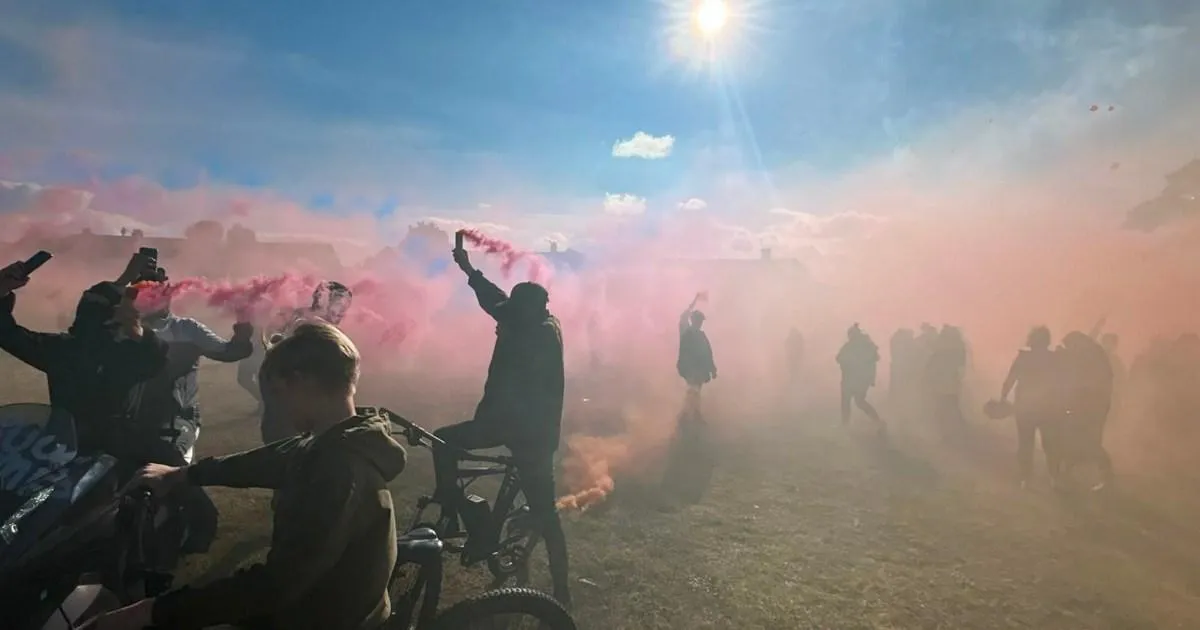
On a somber Saturday afternoon in the South Bank neighborhood of Middlesbrough, a deeply divisive memorial unfolded, casting a stark light on a community fractured by grief, anger, and a tragic loss of life. Hundreds of people converged on a field near the site of a catastrophic crash that claimed the lives of five young men and two police officers. The gathering was held to remember Jakub Matusiak, a 23-year-old whose life was cut short in the devastating collision. The atmosphere was a palpable mix of sorrow and defiance, as loved ones released dozens of orange balloons—a tribute to Matusiak’s favorite color—into the gray sky. However, the ceremony was punctuated by a more provocative display: around twenty masked young men on scooters and quad bikes circled the field, igniting flares that sent plumes of vivid, colored smoke drifting over the crowd. The scene was a chaotic tableau of mourning and rebellion, witnessed by a heavy police presence that observed from a distance, creating an uneasy tension that mirrored the conflicting emotions swirling within the gathering.
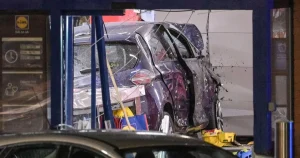
The memorial was not merely a private act of grief; it was a public statement in the wake of a tragedy that has gripped the nation. The crash that killed Matusiak, Theo Rae (17), Cole Worthy (17), Makai Saddington (18), and Michael Robert Cahill (23) occurred on Saturday morning when their Volkswagen Passat, which was later discovered to have cloned number plates, drove the wrong way down the dual carriageway. The vehicle collided head-on with a police car, killing the two officers inside, PC Matthew Blades (37) and PC Tom Clough (38), instantly. Reports indicated that the police chase had been called off just seconds before the fatal impact. The young men in the Passat had a history of criminal convictions and charges, including various motoring offenses, a detail that has heavily influenced public perception and fueled a contentious debate about who is worthy of sympathy and remembrance. For the friends and family of the five men, they were more than just a list of offenses; they were beloved sons, brothers, and friends whose lives mattered deeply.
At the heart of the memorial was a fierce, defensive love from those who knew Matusiak best. Amidst the haze of the flares and the roar of engines, one woman from the crowd spoke passionately, her voice carrying the pain of a community that feels its losses are being dismissed. She insisted that Jakub was a “lovely, caring lad” and explicitly rejected the narrative that he was a “scumbag” who should be “written off and forgotten.” Her words were aimed directly at the media coverage and public commentary that had focused on the criminal backgrounds of the deceased men. She argued that the deaths of the two police officers were a tragic accident, that the young men “weren’t trying to kill anyone,” and that they too were victims of a devastating event. “The number of people who have come out for Jakub today should show you that they do matter, they were loved and they will be missed,” she asserted, challenging the notion that their past mistakes negate their value as human beings. Her plea highlighted a fundamental, painful chasm between public judgment and private affection.
This outpouring of support, however, was met with stark opposition from other community members, who viewed the display as a grotesque mockery of the two fallen officers. A 58-year-old grandmother who lives near the field watched the proceedings with visible dismay, her voice trembling with a mixture of anger and disbelief. “What must they be thinking right now? This is nothing but a mockery of the lives of those two policemen,” she said. She described watching the attendees “drinking and smoking weed and razzing about on their motorbikes,” interpreting their behavior not as mourning but as a brazen celebration. For her and many others, the memorial was an insult to the memory of PC Blades and PC Clough, dedicated public servants who lost their lives in the line of duty. The stark contrast in perceptions—one side seeing a respectful farewell, the other seeing a raucous celebration of reckless behavior—encapsulates the deep social rift exposed by this tragedy. The presence of Cleveland Police officers from the same team as the deceased PCs, silently observing the event, only served to heighten the emotional intensity of the scene.
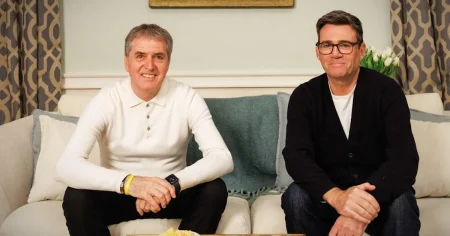
The tragedy in Middlesbrough is part of a broader, troubling pattern that has sparked a national conversation about road safety, social media, and the glorification of dangerous driving. The A66 crash, along with a separate deadly incident on the M9 in County Kildare, Ireland, that also involved young joyriders, has brought renewed scrutiny to online videos that showcase reckless behavior behind the wheel. Several of those involved in both crashes are believed to have previously posted clips of themselves driving at extreme speeds and performing dangerous maneuvers. In response, Prime Minister Andy Burnham condemned this culture, labeling the glorification of dangerous driving as “unacceptable” and stating that those who share such footage are “doing something that’s truly reprehensible.” These comments reflect a growing frustration with a subculture that treats public roads as a stage for thrill-seeking, often with devastating and irreversible consequences. The A66 crash serves as a grim and poignant example of how the lines between virtual bravado and real-world tragedy can blur with fatal results.
In the aftermath of the crash, law enforcement has been swift and decisive in its response. Cleveland Police announced that twelve people have been arrested in connection with the incident, on charges ranging from possession of a firearm to participating in an organized crime group. This indicates an ongoing, serious investigation into the circumstances surrounding the crash and the network of individuals connected to the events leading up to it. The police force has also been grappling with the immense loss of two of its own, while simultaneously navigating the complex and volatile public reaction. As the community remains polarized, a separate balloon release was organized for Cole Worthy in a nearby park, suggesting that the grieving process will continue in various forms. Meanwhile, a fundraiser established for the families of PC Blades and PC Clough has seen an overwhelming display of support from the public, raising over £685,000 within just a day of its launch, a testament to the high regard in which the fallen officers are held by the wider public.
Ultimately, the scene on the South Bank field leaves behind more questions than answers, serving as a profound and sobering reflection on the value of life, the complexity of grief, and the divisive power of context. The community is left to grapple with the impossible task of honoring the memories of seven people whose lives ended in a single, violent moment, each death reverberating differently across the social spectrum. For the families and friends of the five young men, the memorial was a necessary act of love, a defiant stand against a world that seemed quick to judge and forget. For the families of the officers and their colleagues, the same event felt like a desecration of their sacrifice. This tragedy is not just a story of a high-speed chase and a fatal crash; it is a human story of love, loss, and the deeply painful, often contradictory, ways in which we mourn. It forces a difficult examination of who we deem worthy of remembrance and reveals the fragile, frayed threads that hold a community together in the face of unspeakable sorrow.