


The following summary humanizes the events surrounding the recent sentencing of John Davies, focusing on the gravity of the assault and the resilience of those involved.
The tranquility of a Birmingham afternoon was shattered when a 58-year-old man, John Davies, engaged in a terrifying confrontation in his own garden. What began as a routine police call to assist a man cornered against a fence quickly spiraled into a scene of visceral violence. Davies, choosing aggression over cooperation, became erratic the moment officers arrived to de-escalate the situation. Despite the victim’s desperate plea for help—alerting the police that Davies was armed with a knife—the suspect maintained a facade of innocence, taunting the officers by inviting them to “search me” while concealing his true, violent intentions.
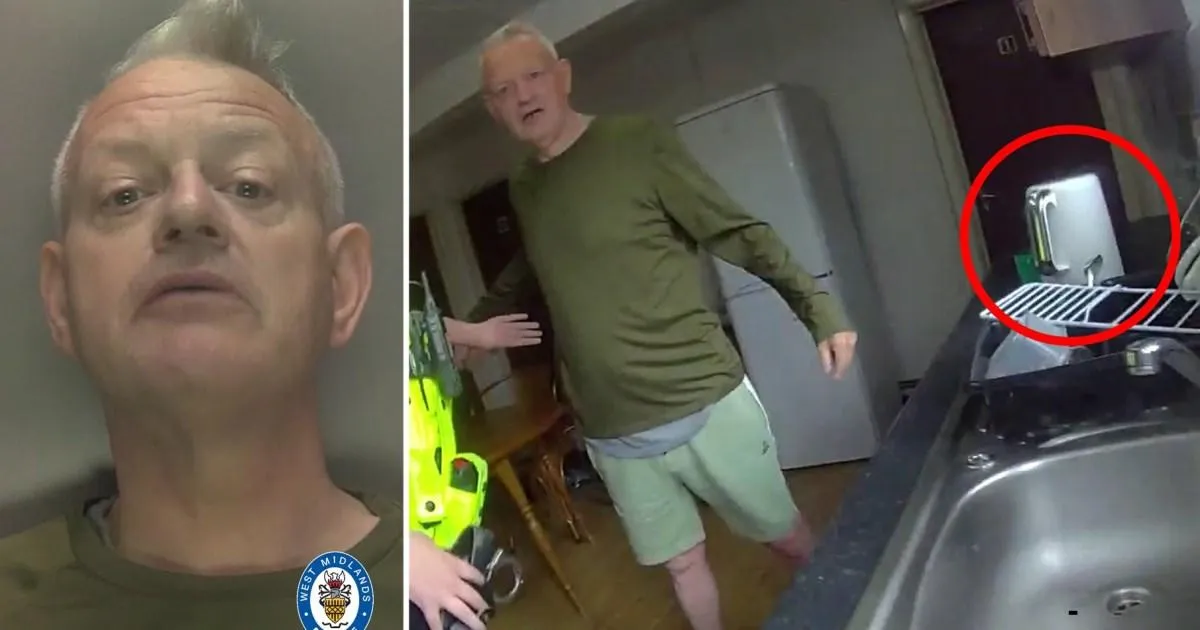
In a split-second transition from verbal defiance to physical brutality, Davies unleashed a horrifying attack. As a female officer approached to conduct a search, he grabbed a kettle of boiling water and poured it directly over her. The sound of the woman’s piercing screams for medical assistance, captured in the harrowing body-cam footage of the incident, serves as a grim reminder of the dangers emergency responders face daily. The officer sustained severe blistering across her neck, shoulders, and back, leaving her needing both physical and emotional recovery time long after the initial assault.
The chaos did not end with the scalding of the female officer. In a desperate, violent bid to evade arrest, Davies turned his rage toward her male colleague, punching him directly in the face. It took the coordinated, physically exhausting efforts of multiple additional officers to finally pin Davies to the ground and bring the dangerous situation under control. The aftermath of the struggle left the scene in total disarray, with the officers visibly shaken by the extreme brutality they had been forced to endure while simply attempting to uphold the law and protect a vulnerable citizen.
When the case reached Birmingham Crown Court, the severity of Davies’ actions was met with an appropriately heavy hand by the justice system. Facing charges of maliciously wounding a police officer and assaulting the man he had cornered, Davies was sentenced to 14 years and six months behind bars. Furthermore, the judge imposed an additional four-year extended licence period, reflecting the danger he poses to the public. It was a clear judicial statement that those who target public servants with such unprovoked, life-altering violence will be removed from society for a significant duration.
In the wake of the trial, DC Manpreet Sidhu spoke for the force, highlighting the deep, lasting impact such an assault has on those who wear the uniform. While the physical wounds have eventually healed—allowing both affected officers to courageously return to their duties—the psychological scars of such an encounter are far more difficult to mend. DC Sidhu emphasized that no individual, regardless of their profession, should be subjected to such brutality. For the officers involved, the fact that Davies is finally behind bars provides a small sense of closure, though the memory of that day remains a somber marker of their commitment to public safety.
Ultimately, this case serves as a sober reflection on the risks inherent in policing. While we often view officers merely as figures of authority, they are human beings who face unpredictable and often life-threatening situations during every shift. Davies’ 14-year sentence serves as both a punishment for his violent outburst and a grim illustration of the fragility of safety. As the officers return to the thin blue line, their resilience in the face of such trauma highlights the extraordinary character required to serve, reminding us all that their work is not just a job, but a profound commitment to the safety of others.