



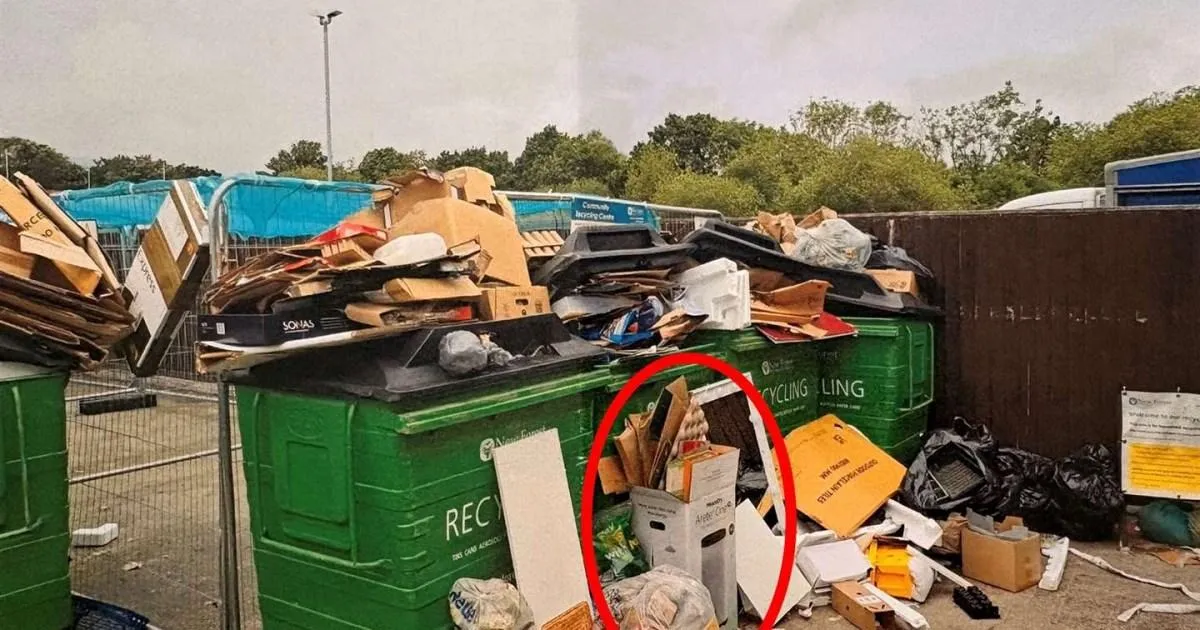
For most people, recycling is a simple act of civic responsibility—a small, habitual contribution toward a cleaner environment. However, for Lee Reynolds, a resident of New Milton, Hampshire, this routine task turned into a bureaucratic nightmare that left him feeling physically sick. After discovering that the four recycling bins at his local Tesco were completely overflowing, Reynolds did what many would consider reasonable: he placed a small box of cardboard neatly on the ground beside the collection point rather than shoving it into an already packed container. To his shock, he was soon slapped with a £1,000 fine for “illegally depositing waste,” a punishment typically reserved for those who dump mountains of debris or hazardous materials, not for a resident trying to responsibly dispose of a single cardboard box.
The absurdity of the situation is compounded by the reality of the site’s condition on May 31. While the New Forest District Council (NFDC) maintains that the site is serviced three times a week, photographic evidence captured at the time tells a much grimmer story. The area was a chaotic, unmanaged eyesore, with the bins so stuffed that they were practically unusable. Crucially, any signs intended to warn residents against leaving items on the ground were entirely obscured by the sheer volume of cascading rubbish. For Reynolds, the fine felt less like a penalty for a crime and more like a punitive measure against a law-abiding citizen trying to navigate a space that the council had clearly failed to manage effectively.
Reynolds refused to take the charge lying down, launching a series of appeals to challenge the council’s aggressive stance. His persistence did yield a minor victory: the council downgraded the severe “fly-tipping” charge to a “failure to control household waste” offence, which lowered the fine to £300, and subsequently to £150 if paid promptly. Despite the reduction, the ordeal remained a source of deep personal distress. Reynolds described the experience as a heavy burden, explaining that for a person who prides himself on following the law, being accused of an environmental crime was deeply upsetting. He felt cornered, pressured by the looming threat of prosecution to pay the fine, all while the council effectively shut down any meaningful dialogue.
Even after paying the £150, Reynolds remains steadfast in his refusal to accept the council’s logic. He views the situation as a matter of principle and has escalated the issue through the council’s formal complaints process, with plans to take the matter to the Local Government and Social Care Ombudsman if necessary. For him, the issue is not just about the money; it is about the hypocrisy of the authorities. He points to the irony of being fined for a tiny, orderly contribution to an area that the council has allowed to become a genuine eyesore and a potential fire hazard. He argues that if the council is going to enforce such strict rules, they must first ensure the infrastructure they provide is actually functional and accessible.
The council, for their part, maintains a rigid posture. While they stopped short of commenting on the specifics of Reynolds’ case, their broader statement highlights the tension between public expectation and environmental enforcement. They insist that placing waste on the ground—regardless of container capacity—is technically fly-tipping and that such actions cause environmental hazards and unnecessary waste contamination. They claim to have improved signage and increased awareness efforts, yet residents like Reynolds feel these efforts are merely window dressing that doesn’t fix the reality of the overflow problems that plague these sites on a regular basis.
In the end, this case serves as a poignant reminder of the disconnect that often exists between local government policies and the day-to-day realities of its citizens. While the need for waste control is indisputable, the application of thousand-pound fines for minor disposal errors in unkempt areas feels deeply disconnected from justice. Lee Reynolds’ fight is not just about a cardboard box; it is a stand against a system that seems more interested in collecting fines from residents than in maintaining the public facilities it is tasked to manage. His ongoing crusade serves as a lesson in accountability, highlighting that citizens deserve a fair system that works with them rather than one that looks for excuses to penalize them.