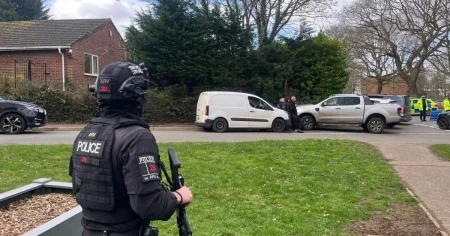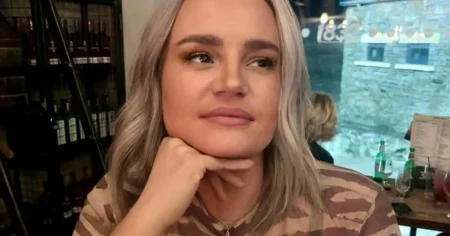



Behind the stark language of a police statement lies a heartbreaking human story. Alisha Samuels, a young woman aged just 26, was found lying in the street with serious stab wounds in the early hours of a Wednesday morning. It was around 2am when officers were called to Dorking Avenue in Newton Heath, a residential street just minutes away from the Etihad Stadium, home of Manchester City. By the time they reached her, she was already beyond help, and she was pronounced dead at the scene. No words can soften the shock of that. A life that should have had decades of mornings, laughter, plans and love was extinguished on an ordinary street in the middle of the night. Alisha was somebody’s daughter, somebody’s friend, somebody’s trusted person. She may have had hopes for a new job, a holiday, a phone call with a loved one, a wedding, children. We do not know those details because the story being told right now is not a full life story. It is a sudden and violent ending. The community in Newton Heath, a place not unfamiliar with the noise and excitement of matchday crowds, is now waking to a different kind of attention: police tape, forensic tents, quiet grief, and questions with no easy answers. Another person, a man, was also injured in the same attack, and his condition has not been confirmed in the public updates, meaning there is another family waiting by a hospital bed, uncertain and afraid. In the middle of all that human pain, the legal process has begun. Lawrence Johnson, 26, a man from the same street where Alisha died, has been charged with her murder and with the attempted murder of the male victim. He has been remanded in custody and is due to appear before Manchester magistrates. But his arrest and charge are only the beginning of a longer journey toward truth and justice.
The attack happened on Thursday, October 15, in a place that many people associate with football, with unity, with weekend rituals and collective excitement. The Etihad Stadium sits only a short distance from Dorking Avenue, and in normal times the streets around it are filled with families and supporters, scarves and songs. But this was not a matchday. It was the dead of night, a time when streets are quiet and people expect to be safe. Around 2am, something went terribly wrong. Alisha Samuels was found with serious stab wounds, and despite the best efforts of those who arrived at the scene, her life could not be saved. The male victim was also hurt in what police have described as the same incident. He was taken to hospital, and no update has been provided on his condition, leaving an open wound of anxiety for his family and friends. They do not deserve to spend their days staring at hospital doors and waiting for news. No one does. At the same time, the investigation has moved quickly. Detectives arrested Lawrence Johnson, a resident of Dorking Avenue itself, and he now faces charges that will be tested in court. He appeared in the rear-view mirror of justice, if you will, as a man accused of the most serious crimes known to law. The legal system will now do its slow, careful work. But for Alisha’s family, the wait for answers is not a matter of legal process. It is a matter of survival. They need to know what happened, why it happened, and how their loved one could have been taken from them in such a violent and public way. The investigation is far from over, even with a charge in place, and the authorities have made it clear that they need the public’s help to piece together the final moments of Alisha’s life.
Detective Chief Inspector Justin Bryant, who is leading the investigation, has spoken with the kind of care and dignity that a tragedy of this sort demands. He said: “We are continuing to work into establishing the full circumstances of Alisha’s tragic death and to provide Alisha’s family with some answers.” Those words carry a weight that maybe we do not always notice. They are a promise to a grieving family that their daughter will not be treated as just another statistic, that her case will not be closed until it is understood. He added: “We have now charged a man, but our investigation is not over.” That is an important reminder that an arrest, while significant, does not immediately mean that all questions have been answered. Behind every piece of evidence, there is a human being who wants to know why. Bryant also thanked those who had already come forward, saying that their reports are “always taken seriously and prove vital to our work.” That simple gratitude is part of the relationship between police and community: ordinary people making the choice to help, to share what they saw, to do something rather than look away. He then made an urgent plea: “I urge others who may have information, no matter how small, to please come forward.” It is often the smallest detail that unlocks the bigger picture. Maybe someone heard shouting. Maybe someone saw someone walking quickly. Maybe a car door slammed at an odd hour. Maybe a doorbell camera captured something that seemed unimportant at the time. To the investigating team, those fragments can become crucial lines of enquiry. The detective also asked the public not to speculate about the circumstances. That is easier said than done, because social media loves to fill silence with guesswork. But speculation can hurt real people. It can wound Alisha’s family again. It can smear reputations before a court has spoken. Justice works best when it is patient, careful, and grounded in evidence, not in rumour.
The police have made it very clear how members of the public can help. Anyone who may have witnessed the incident, or who has mobile phone footage, CCTV, or doorbell camera material, is asked to contact officers on 0161 856 5464. There is also a Major Incident Public Portal, where people can submit information digitally. For those who may feel anxious about speaking directly to the police, another door is open: the independent charity Crimestoppers can be reached anonymously on 0800 555 111. That line allows people to share what they know without giving their name, which makes it possible for someone who might otherwise hesitate to come forward to contribute the missing piece of the puzzle. Every one of these channels exists because violent crimes are never isolated in the way they might seem. They happen on streets where other people live, where other people have windows, cameras, dogs, routines. Someone may have been awake at 2am, unable to sleep, looking out at the night. Someone may have heard raised voices and dismissed them as nothing. Someone may have footage on a ring doorbell that they have not even thought to check. The police are not asking people to do the investigation themselves. They are just asking people to remember, to check, to make a call, to pass on what they hold. It is not a difficult act, but it can be a profound one. At a time when feelings of helplessness and sorrow are overwhelming, providing information is one way the community can respond with purpose. It says, quite simply, that Alisha matters. It says that her family will not have to walk through this alone. And it says that the truth, even if it is painful, is better than silence.
Beyond the legal case, there is the human tragedy that will remain long after the arrests and court appearances. Alisha Samuels was 26 years old. Twenty-six is not a final age. It is an age of beginnings, of becoming oneself more fully, of making mistakes and celebrating victories. People at twenty-six are still learning what it means to be an adult. They are still planning futures, making friendships, building memories. That Alisha has been taken from the world in such a brutal way is a wound not only for her family but for everyone who will never get the chance to meet her. Her friends will remember her laugh. Her parents will remember her childhood. There may be a partner who is now facing a lifetime of missing her presence. There may be siblings who have lost a piece of their own identity. We do not know all the details of her personal life, and we should not pretend to. But we know that she was loved. We know that she left behind people who will never recover from this moment. The male victim in the same attack is also a person with his own story, his own family, his own survival to face. His life has been interrupted, possibly changed forever. He may carry both physical and emotional scars. He may struggle with the memory of that night. This is not just a case about one death; it is also a case about the ripple effects of violence, the way it moves outward and touches everyone standing nearby. In the middle of all this, there is also the accused. Lawrence Johnson is now charged with murder and attempted murder. He is presumed innocent until proven guilty, and his fate will be decided by a court. That is how the law works, and it is a protection that must apply even in cases that provoke anger and grief. But regardless of the outcome of his trial, the loss remains. A conviction cannot undo what was done. Justice can provide accountability, but it cannot provide resurrection.
This tragedy, so close to a stadium where crowds gather to celebrate sport, is a reminder that violence does not confine itself to dark alleyways or places we think of as dangerous. It can erupt on a residential street, outside the homes of ordinary people, in the middle of a night that should have passed quietly. It is a sobering thought, and it is not meant to frighten us into paranoia, but rather to remind us of the importance of community and looking out for one another. We do not know what led to this attack, and the police have explicitly told us not to speculate. There will be a time and a place for all of the facts to be laid bare. In the meantime, the best thing the public can do is to hold space for grief, to support the family in whatever small ways are appropriate, and to cooperate with the investigation if they have any knowledge at all. It is also a moment to reflect on how quickly a life can change, how fragile our daily routines can be. A woman can walk outside at 2am and never come home. A man can be caught in an event he had no time to understand. The world can shift on its axis in a few seconds. For Alisha’s family, the coming days will be filled with funeral arrangements, with legal updates, with waves of grief that arrive without warning. They will need patience, kindness, and privacy. They will also need the reassurance that the public cares. Information can be passed to the police, but compassion can be passed simply by refusing to turn away from the story, by saying her name, by remembering that she was not an item in a news bulletin but a human being. If you have any information, please contact Greater Manchester Police on 0161 856 5464 or call Crimestoppers anonymously on 0800 555 111. And if you have nothing to report, perhaps do the quietest thing of all: hold your loved ones a little closer, and carry Alisha in your thoughts. Rest in peace, Alisha Samuels. You deserved a different story.