


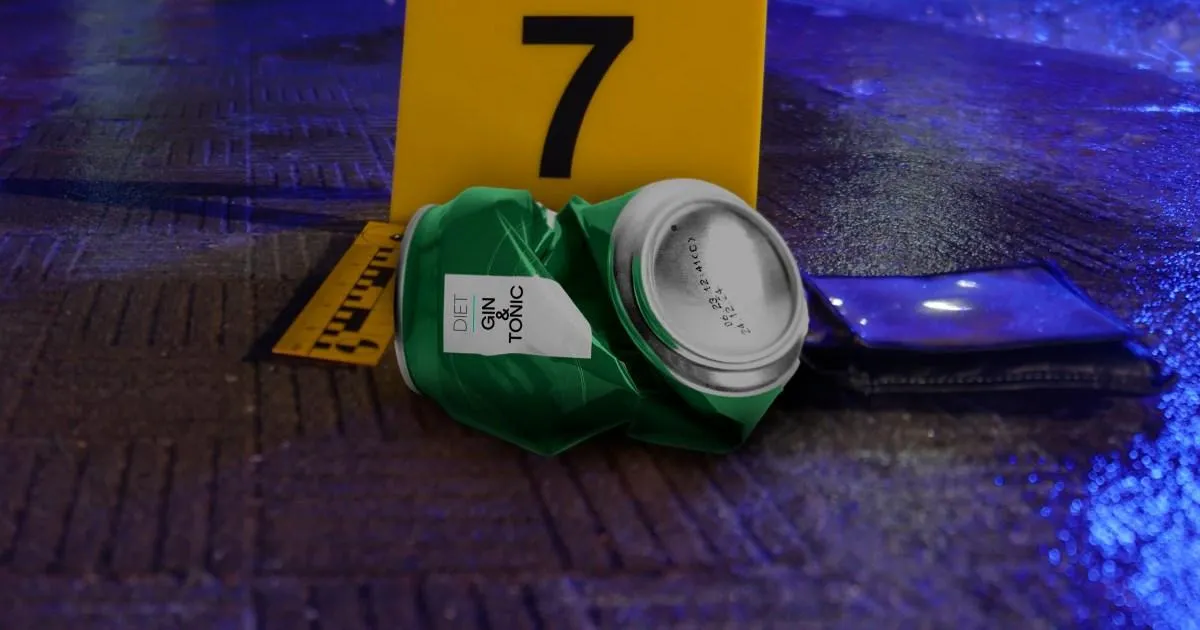
It was meant to be a moment of simple, sunny respite. After a long day, a man had popped into his local Tesco, picked up what he believed to be a refreshing premixed gin and tonic, and headed to a nearby park to enjoy the warm weather in the shade. He had paid £6 for the pleasure, a small treat for himself. However, as he sat there, anticipating the crisp, botanical kick of the gin, he glanced at the miniature bottle and was met with a shocking revelation: it was zero alcohol. The drink he had just purchased, and was about to enjoy, was a non-alcoholic version of the classic cocktail. The disappointment was profound, and the rage that followed was, to him, entirely justified. For this disgruntled shopper, this wasn’t just a simple mistake; it was a fundamental injustice that required the highest level of emergency response. He didn’t just feel cheated; he felt that a crime had been committed against him, and he knew exactly who to call to rectify this grave situation: 999, the United Kingdom’s emergency number reserved for life-threatening situations and crimes in progress.
The subsequent phone call, which was later released by Hertfordshire Police, is a masterclass in misguided priorities and escalating frustration. In the recording, the man’s voice is thick with indignation as he explains the situation to a remarkably patient call handler. He recounts the entire saga: the visit to Tesco, the purchase from the alcohol section, the walk to the park, and the discovery that his drink contained zero percent alcohol. He makes sure to emphasize the perceived deception, pointing out that the drink was shelved in the “alcohol section,” with miniature bottles that all look identical. To him, this was nothing short of a bait-and-switch. He wasn’t asking for a simple complaint to be logged; he was demanding that the police send a car to the scene to “mediate” the problem. The call handler, likely having dealt with a fair share of bizarre calls but perhaps not one quite like this, calmly and politely explained that a dispute over a £6 beverage was not a police matter. This logical response was, of course, not what the caller wanted to hear, and it only served to fan the flames of his fury.
Ignoring the dispatcher’s sound advice, the man’s frustration morphed into a threat, not against the supermarket, but against himself. He declared that he was “really angry” and that he was going to “get arrested.” Puzzled, the dispatcher asked him why on earth he would be arrested. His reasoning was circular and, frankly, baffling: “Because I’m not having it. I’ve just paid them six quid for non-alcoholic gin and tonic.” In his mind, the scale of his outrage was directly proportional to the £6 he had lost, and this injustice was significant enough to warrant a self-inflicted arrest. The conversation continued its descent into absurdity as he grew more agitated. He had returned to the supermarket to demand a refund, but staff had refused because he had already consumed one of the drinks. He’d offered a compromise—to pay for the one he drank and exchange the rest—but the staff member was unable to process the refund, citing the lack of his Clubcard discount. The call handler did her best to de-escalate the situation, advising him to speak “calmly” to the store staff and explicitly warning him not to do anything rash, like attempting to shoplift the alcohol he felt he was owed. The man, however, had a different plan in mind and suggested he might just do that. In the end, the dispatcher, having exhausted all her options for reason, cleared the line, cutting him off mid-protest, leaving the man to fume in the grocery store aisle, his £6 still missing.
Hertfordshire Police later released the audio of this exchange, not to mock the individual, but to use it as a prime example of what the 999 number should never be used for. The force acknowledged that the call “may seem amusing” from the outside, but they issued a serious and stern warning to the public: do not waste the time of our call handlers. A force spokesperson highlighted the severe consequences of such actions, stating that this individual took up valuable time that could have been used to help someone in genuine, potentially life-or-death, need. They emphasized that their call handlers, despite their incredible hard work and patience, are not there to arbitrate disputes over non-alcoholic beverages. The spokesperson detailed the kinds of calls they have recently received, which served to further illustrate the point. These have included people enquiring about taxi services, asking what the time was, and, perhaps most absurdly, a complaint that the timer on a household microwave was not functioning. During the prolonged period of hot weather, when the force was “busier than ever before,” these frivolous calls were an even greater drain on resources. The message was clear: these dedicated professionals are there to save lives and fight crime, not to be a catch-all helpline for everyday inconveniences and consumer disputes.
While the story is undeniably funny, it also shines a light on a worrying trend of misusing emergency services. It is a stark reminder of the difference between an emergency and an inconvenience. The 999 line is a lifeline, and every second spent listening to a diatribe about a non-alcoholic drink is a second stolen from a potential heart attack victim, a burglary in progress, or a missing child. The police force’s frustration is completely understandable. Their call handlers are trained to deal with high-pressure, emotionally charged, and often traumatic situations. To have that skill and patience tested by a man demanding that they “mediate” a dispute over a £6 refund is not just a nuisance; it is a systemic problem that puts the public at risk. The man’s disproportionate reaction—from quiet disappointment to threatening self-arrest via shoplifting—is a classic example of an individual failing to regulate their emotions, letting a minor setback spiral into a full-blown, public-facing crisis. It reflects a mindset where one’s own personal problems, no matter how small, are seen as the most urgent thing in the world, deserving of immediate attention from any authority figure available.
One can almost feel a pang of empathy for the man, even while shaking one’s head at his actions. The feeling of being ripped off, even for a small amount, is a primal and infuriating one. And the frustration of being unable to get a straightforward resolution from a large corporate entity is a thoroughly modern misery. He likely felt powerless, a small fish in a big pond, and in his anger, he turned to the only institution he felt had the authority to make things right. Yet, this is where the logic breaks down. The police do not enforce Clubcard prices or mediate refund disputes. This is a private consumer matter, and his recourse should have been to speak to a manager, contact Tesco’s customer service, or, if he was truly aggrieved, take the matter to a small claims court. Instead, he chose to escalate it to a level where it became a public spectacle and, more importantly, a drain on public resources. His story serves as a cautionary tale: when the heat of the moment makes every minor inconvenience feel like a monumental injustice, it’s best to pause, take a breath, and ask yourself one crucial question: is this truly a life-or-death emergency? If the answer is no, the right move is to put down the phone and, perhaps, simply enjoy a good, cold, non-alcoholic drink in the shade.