


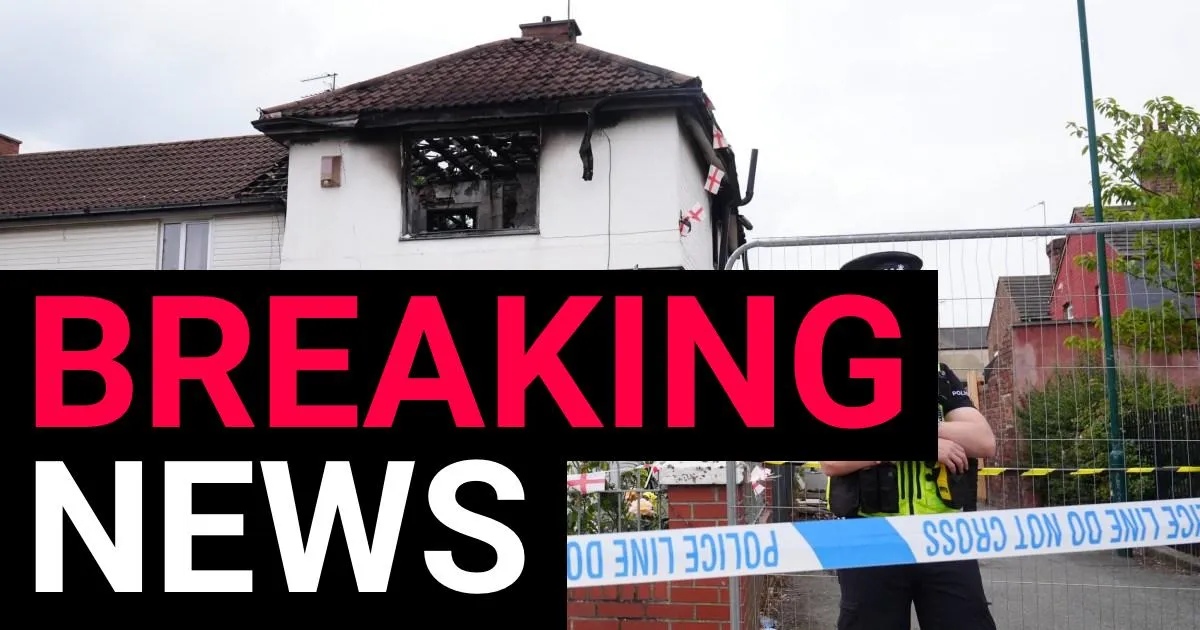
In the quiet hours of August 26, an ordinary street in Grangetown, near Middlesbrough, became the scene of a catastrophe that no family or community is ever prepared to face. A fire tore through a home on Birchington Avenue, filling the night sky with smoke and the sound of panicked voices, and by the time emergency services had brought the blaze under control, the worst possible truth had begun to emerge. Two lives had been lost. Natalie McDonald, 34, and her young niece, seven-year-old Valentina Foster, were gone. The relationship between an aunt and a niece is often one of the most tender bonds in a family, a mix of maternal care, playfulness, and unconditional love, and to lose both of them in a single brutal moment leaves a wound that will never fully close. Four other people were injured in the same incident, carried away in ambulances with their own futures suddenly in doubt. Neighbours stood in stunned silence as police tape transformed their familiar street into a forensic landscape, and the first signs of grief began to appear in small clusters of flowers, soft toys, and handwritten messages left near the scene. There was no comfort to be found in that early morning, only the cold reality that something deeply wrong had happened in a place where children should have been safe. The investigation that followed was swift and serious, with detectives treating the fire not as an accident but as a crime that demanded answers. For the family of Natalie and Valentina, the days that followed must have felt like a blur of unbearable news, police conversations, and the impossible task of starting to understand a future without them. For the wider community, the shock would only grow as the true nature of the tragedy became clear.
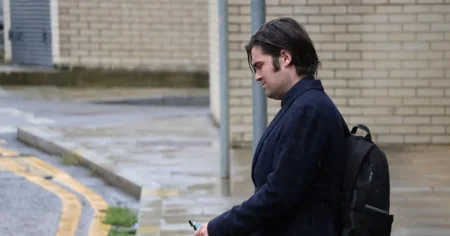
Now the first steps toward justice have been taken. Jaden Wright, 23, has been charged with two counts of murder, as well as two counts of grievous bodily harm with intent and two counts of attempted grievous bodily harm with intent. These are grave and deliberate allegations, charging that the fire was not merely a tragic accident but a violent act that caused death and devastating injury. The decision to lay such charges is never made quickly; it is the result of careful police work, forensic examination, and legal scrutiny, all directed toward finding enough evidence to put before a court. Wright is expected to appear at Teesside Magistrates’ Court on Tuesday, where the formal machinery of justice will begin to move. For the loved ones of Natalie and Valentina, that appearance is another painful marker in an already unbearable process. They are forced to sit in rooms where their private grief is translated into legal language, where the names of those they loved are spoken in connection with charges, evidence, and legal procedure. It is a cold and alien environment for anyone touched by such loss. The additional charges of grievous bodily harm with intent and attempted grievous bodily harm with intent tell their own terrible story: those who survived the fire are also victims, carrying both physical scars and the memory of a terror that should never have been inflicted on them. The coming weeks and months will bring more hearings, more legal arguments, and more chances for the facts to be tested in a manner that is fair to all sides. The families may feel that the process is slow, even agonizing, but it is the way that society attempts to establish truth and to hold anyone responsible to account.
Behind every case of this magnitude, there are painstaking hours of investigation, and the work here has been described by police as deeply complex. Senior investigating officer Katie Smith has spoken of the tragedy, saying that her thoughts remain with the families of all those involved, and she has thanked local residents for their support and patience during such a difficult investigation. Her words are a reminder that justice is not simply a matter of an arrest and a charge; it is a long, careful effort to understand exactly what happened on that terrible night. Fire scenes are notoriously difficult to investigate because the flames themselves destroy so much evidence while also leaving behind clues in their pattern of movement, in the way smoke stained walls, and in the residual remains of whatever fuel helped the blaze grow. Investigators have likely been working alongside specialist fire teams, forensic scientists, and medical experts to reconstruct the sequence of events. They have also been appealing for members of the public to share any information they might hold, even something that seems small or insignificant. In the weeks since the fire, residents of Grangetown have shown a remarkable capacity for solidarity, leaving flowers, offering condolences, and doing their best to cushion a grieving family from the weight of their own isolation. That community support does not erase the pain, but it does provide a reminder that the family is not alone. The detective’s public appeal, and the continued existence of a major incident public portal, suggests that the investigation is still active, still listening for those last vital pieces of testimony that might complete the picture. There is no way to rush this process without risking its integrity, and so everyone waits, with grief in their hearts and questions on their lips, hoping that the truth will come out in time.
The legal system itself has now stepped forward to remind everyone that justice must be allowed to take its course without interference or prejudice. Katie Nicolson, chief crown prosecutor for CPS North East, has explained that prosecutors worked closely with Cleveland Police to establish that there is sufficient evidence to bring the case to court. But she also issued a warning that is easy to ignore in an age of instant online opinion: the proceedings against the defendant are active, and he has the right to a fair trial. No reporting, commentary, or sharing of information should occur in a way that could in any way prejudice those proceedings. This is not a technicality; it is the foundation on which justice stands. An angry public may already have decided what should happen, but the law requires proof, careful argument, and a judgment based on evidence rather than emotion. For the family of Natalie McDonald and Valentina Foster, this reminder can feel frustrating, even cruel. They might wonder why the process must be so slow when the loss is so immediate. But the fairness of the trial is what gives any eventual verdict its power, and it is what protects everyone, including future defendants, from the dangers of a justice system that acts out of rage rather than reason. The court will hear the case, the defence will have an opportunity to challenge the prosecution’s case, and a jury or judge will decide where the truth lies. In the meantime, the victim’s loved ones are asked to trust in a process that feels far removed from the emotional reality of their grief. The prosecutor’s statement is a quiet but firm defence of the rule of law, and it carries with it the weight of centuries of legal tradition.
While the murder charges understandably dominate the headlines, the human cost of the fire stretches far beyond the two names in the official case title. Four other people were injured in the blaze, each of them now beginning a painful journey through physical treatment and emotional recovery. Police have said that a 48-year-old woman was being treated at the Royal Victoria Infirmary in a condition described as critical but stable, while a 27-year-old man remained at James Cook University Hospital receiving care. Two teenage girls, both described as having suffered non-life-threatening injuries, had been discharged from hospital. Behind these clinical phrases are real people whose ordinary lives were violently interrupted by the same fire that killed Natalie and Valentina. To survive a house fire is to live with sensory memories that cannot be erased: the suffocating smoke, the heat crawling toward the skin, the confusion of trying to find a way out in the dark. It is also to face the psychological weight of knowing that others were not so lucky. The teenage girls may now have to navigate a world in which the people they once turned to for guidance and comfort are gone. The 48-year-old woman’s condition, critical but stable, leaves her family in a state of suspended fear, hoping for signs of recovery while dreading the possibility of further bad news. The 27-year-old man, too, must find strength he may never have needed before. There is also the difficult case of a 31-year-old man who was arrested in connection with the incident but released without charge on Sunday. His name has been caught up in a tragedy through no fault of his own, and he too must now find a way forward, carrying the stress of suspicion even though he was cleared. The ripple effects of that night continue to spread, touching everyone connected to the home on Birchington Avenue.
Ultimately, this is not just a story about charges, court dates, and legal strategy. It is a story about the people who are no longer here, and the hearts they have left behind. Natalie McDonald was 34 years old, a woman who had surely built a life full of relationships, responsibilities, love, and plans for the future. Valentina Foster was only seven, a child who should have had decades ahead of her—birthdays, school plays, friendships, ambitions, and all the small miracles of growing up. That her life was ended so early, in the company of her aunt, is not something that any logic can explain or any verdict can repair. The flowers left near the scene on Birchington Avenue are a fragile but powerful symbol of the love that still surrounds the memory of these two people. They are colour against the burnt wood, beauty against the wreckage, a human response to an inhuman event. Neighbours have held one another, strangers have offered kind words, and the community has tried in its humble way to say: we see this loss, we grieve with you, and we will not let them be forgotten. The months ahead will be difficult for everyone involved. There will be court hearings, waiting, press reports, and the slow grinding of a judicial system that cannot be hurried. For the family, there will also be very quiet, very personal struggles that no one outside can fully understand. But they will not have to face it alone. The name of Jaden Wright will be repeated as the case moves forward, but the names that truly deserve to be remembered are Natalie and Valentina, and the life they should have had together. In a tragedy too large for words, we can only offer compassion, patience, and a commitment to let the truth be known and justice served, so that their memory remains alive.