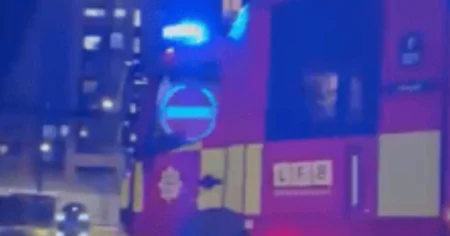


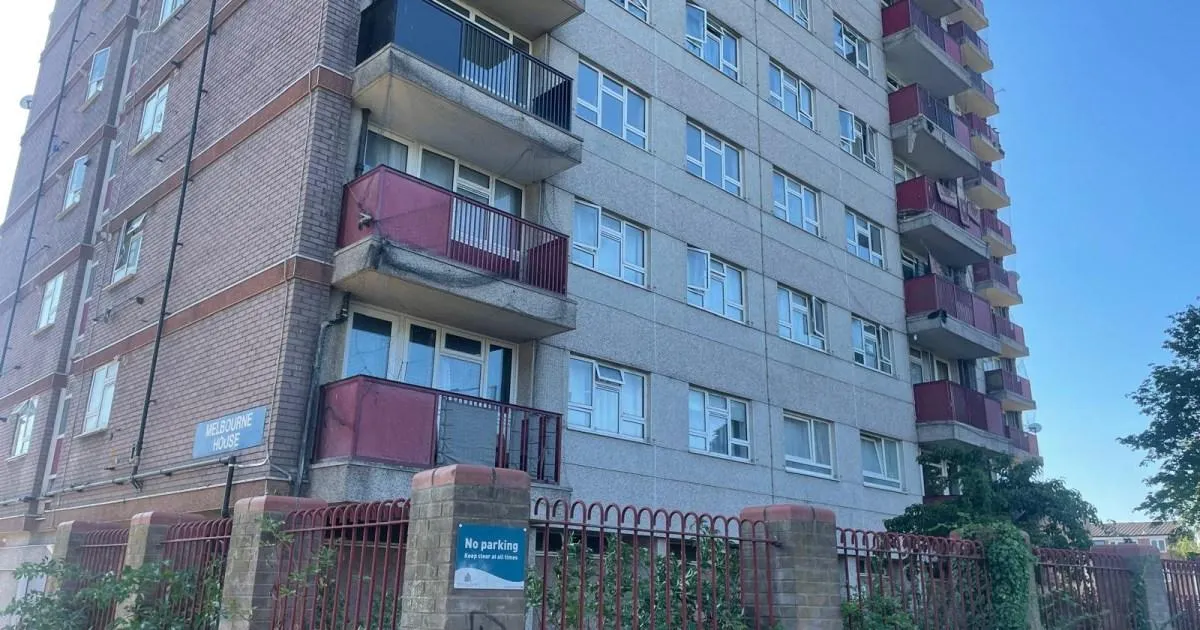
By the time the blue lights began to arrive, the Yeading Lane estate in Northolt had already started to feel like a different place. It was just before half past seven on a late-August Monday evening, the kind of hour when families are settling down, when children are being called inside, and when the streets of this west London neighbourhood usually begin to quieten. Then the emergency calls came. Police were summoned to reports of a stabbing, and with them came the full weight of the city’s emergency machinery. London’s Air Ambulance was dispatched, its helicopter thundering overhead and throwing its searchlight across gardens and rooftops. For residents, that sound—the low, urgent beating of rotors in the evening sky—was enough to bring a cold sense of fear. A 21-year-old man was now fighting for his life, his condition described as critical, and the ordinary routine of the estate had been torn apart in minutes. What had been a quiet residential street became a crime scene, and the people who lived there suddenly found themselves locked inside their own homes, staring out at a world that no longer felt safe.
The immediate scale of the emergency became clear as the first details emerged. Four men had been injured in the attack, and the situation was serious enough to draw a major response from the London Ambulance Service. Paramedics, incident response officers, tactical response unit crews, and an advanced paramedic in a fast response car were all sent to the scene. So too was a trauma team, which arrived both by car and by helicopter from London’s Air Ambulance. In the chaos of the moments that followed, medical teams treated four patients where they lay. Two of them were taken to a major trauma centre, their injuries severe enough to demand the very highest level of hospital care. Two others, who had suffered only minor injuries, were treated and discharged at the scene. Among the most seriously hurt was the 21-year-old, who remains on the critical list. A second man, aged 26, had also been stabbed, but his injuries were later assessed as neither life-threatening nor life-changing. For the 21-year-old, however, there was no such reassurance. His life was hanging in the balance, and the hospital teams working on him faced a long and anxious night. Even among the police officers involved in the response, there was an injury—a minor one sustained during the course of making arrests, enough for the officer to be taken to hospital as a precaution, a reminder that those who rush towards danger are never entirely untouched by it.
For the people who live on the Yeading Lane estate, the violence was not just a news story; it was something that happened outside their front doors. As the helicopter hovered overhead and police officers combed the area, a deep unease settled over the neighbourhood. One resident spoke openly about the fear that gripped the estate in those moments. “There was a helicopter above our homes,” they said. “It looked like an urgent search was going on. We locked our doors, who knows who could have been on the loose.” That single question—who could have been out there—captured the anxiety felt by everyone who watched from behind closed curtains. The estate, which on any normal evening would have held the sound of televisions and the murmur of conversations, now held only tension. Parents hugged their children a little tighter. Neighbours checked on one another. Even after the immediate emergency had passed, the sense of vulnerability remained, because an attack like this does not only injure the people directly caught up in it. It wounds the whole community, leaving an invisible mark of fear on the streets, the pavements, and the homes where people used to feel safe. The helicopters might have left, and the police tape might still be fluttering, but for many residents the memory of that evening will take far longer to fade.
As the night wore on, the police investigation began in earnest. Officers from the local borough worked alongside detectives, trying to piece together what had happened before the first call came in. In an official statement, police confirmed that they had been called to Yeading Lane, Northolt, at 19:24 on Monday, 24 August, following reports of a stabbing. They described their early work as still in its initial stages, but said it was believed that a number of people had been injured during an altercation. That word—“altercation”—only hinted at the violence that must have preceded it, but it was enough to suggest that this was not a random attack. At some point during the response, officers made arrests. A 51-year-old man and a 16-year-old teenage boy were both taken into custody on suspicion of assault causing grievous bodily harm. They were being held for questioning as the investigation continued. It was a significant development, but also a reminder of how young and how old those swept up in such incidents can be. That a man in his fifties and a teenager were both being questioned over an attack that left a young man fighting for his life spoke to the messy, tragic complexity of the situation. The police statement offered few further details, but the arrests brought with them a cautious sense that progress was being made. Still, the work was far from over. Detectives would spend the coming hours and days speaking to witnesses, reviewing evidence, and trying to understand the chain of events that had led to so many injuries and so much fear.
Behind the statements and the investigation, there lies the quieter human reality of what happened. Somewhere in a hospital, a family is holding vigil by the bedside of a 21-year-old whose future is suddenly uncertain. They are waiting for news, for doctors, for any sign that he might pull through. The 26-year-old, though no longer in danger, will have to live with the physical and emotional scars. The two men treated and released from the scene will carry their own memories of that evening. The police officer who was injured will go home, perhaps with only a minor wound, but with the knowledge that a routine-response shift turned into something far more serious. And in the homes around Yeading Lane, there will be children who ask questions their parents struggle to answer, and adults who find themselves double-checking their locks before bed. Violence of this kind sends shockwaves through every life it touches. It turns ordinary places into scenes of trauma, and ordinary people into witnesses, victims, and survivors. It also raises the uncomfortable question of how such a thing could happen in a residential neighbourhood on a summer evening. No news report can fully capture the grief, the anger, and the fear that remains in the air after the sirens have gone. But it is important to remember that behind every statistic, every police statement, and every arrest, there are real people whose lives are being reshaped in an instant.
Now, the appeal has gone out for anyone with information to come forward. Police have asked witnesses or anyone who heard or saw something unusual to call them on 101, or to remain anonymous by contacting Crimestoppers on 0800 555 111. That request is not just a procedural detail; it is a call for help from a community that has been shaken and a family that is desperate for answers. The person who holds the missing piece of information might be a neighbour who saw something from a window, a passer-by who noticed a group arguing, or someone who heard a disturbance but did not think much of it at the time. Every detail, no matter how small, could prove vital. The coming days will be difficult for Northolt, as the shock of the incident slowly gives way to the longer process of healing. The 21-year-old remains in a life-threatening condition, and his recovery—if it comes—will be a long and uncertain road. But the fact that the community is being asked to help, that arrests have been made, and that the police are continuing their investigation at least offers some hope that justice may be done. In the end, an incident like this leaves a mark on everyone it touches. The helicopters have moved on, the news cameras will eventually leave, and the street will return to something resembling normal. But it will never quite be the same for those who were there, and the need for answers, for accountability, and for peace will remain.