

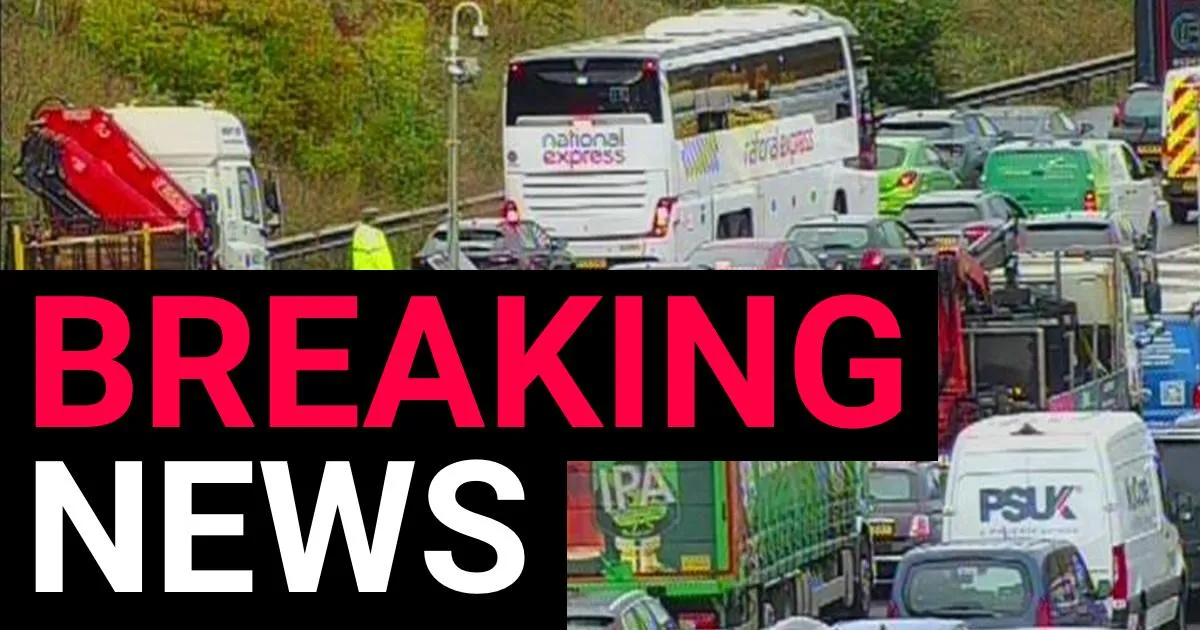
Morning on the M27 outside Portsmouth was supposed to be like any other—a blur of headlights, the impatient drum of fingers on steering wheels, and the shared, unspoken desire to reach desks, schools, and appointments on time. But at around 6:45 a.m., that familiar rhythm shattered. A serious collision involving a motorcycle ripped through the eastbound carriageway, forcing an immediate, sweeping closure between junction 9 at Whiteley and junction 12 near Portsmouth. Within minutes, the morning commute transformed into a strange, suspended world of stationary cars. Drivers who had left home with the day’s to-do list in their heads suddenly found themselves parked on tarmac, engines idling, watching the orange glow of Highways England signs ahead. The rain had been persistent overnight, leaving the roads slick and treacherous, and now the M27 was a ribbon of amber lights as far as the eye could see. For many, the first sign that something was deeply wrong came when the traffic ahead simply stopped moving—no gradual slowdown, just a hard, abrupt halt that left a collective sense of unease in its wake.
The initial alert from authorities was stark and immediate. Hampshire Constabulary advised National Highways just before 7 a.m. that the eastbound carriageway had to be closed entirely due to the severity of the crash. A motorcycle had been involved, and the implications were serious enough that every lane between J9 and J12 was sealed off. By just after eight o’clock, the police had amended the closure, but the damage to the morning rush was already done. National Highways dispatched response units to the scene, working alongside officers to assess the situation, manage the incident, and begin the painstaking process of clearing the carriageway. Meanwhile, the official statements carried a tone of measured urgency: “The M27 eastbound in Hampshire is closed between J9 (Whiteley) and J12 (Portsmouth) due to a serious collision.” For the thousands of motorists who had no way to bypass the cordon, that message meant one thing: they were not going anywhere soon. The westbound side had also been stopped earlier, though it was later released, offering a flicker of relief to those traveling in the opposite direction. But for the eastbound queue, time seemed to stretch, and the uncertainty became its own form of anxiety.
The human toll of such an incident goes far beyond the immediate victims and their families. For the drivers trapped in the closure, it was a morning of missed meetings, hurried phone calls, and growing frustration. Delays on approach exceeded twenty minutes, and congestion built steadily in the surrounding roads, as police urged everyone to seek alternative routes—though finding one in that tangled network of dual carriageways and local roads was no simple task. Social media began to hum with reports and speculation. Several drivers noted that the area had been suffering from surface flooding earlier that morning, and they wondered aloud whether the conditions had contributed to the crash. That mixture of conjecture and concern filled the void left by official silence. For some, the wait became a strange kind of community—a motorist stepping out to stretch legs, another leaning on a bonnet, exchanging sympathetic glances. For others, the isolation of being stuck in a car, with only the radio for comfort, amplified every anxious thought. A morning that had begun in the ordinary humdrum of deadlines now felt fragile, a reminder that any day can be interrupted by the sudden, unplanned crises of others.
The M27 is more than just a road; it is a lifeline for Portsmouth and the surrounding region. It carries commuters into the city, freight to the docks, and families to the coast. When such a vital artery is severed, even briefly, the ripple effects are felt across the entire local economy and daily life. The closure at that hour meant nurses unable to reach hospitals, office workers stranded, and tradespeople losing their first jobs of the day. It also put a spotlight on how dependent we are on the smooth, unremarkable functioning of our roads—until they fail. And with the details of the crash still unconfirmed—the cause unknown, the condition of those involved undisclosed—there was a lingering sense of unease. In the age of instant information, the absence of clarity is almost worse than bad news. People refresh their news feeds, refresh the traffic apps, hoping for something concrete, yet having to content themselves with the same official statement repeated over and over. The incident was a stark reminder of the delicate balance between planning and chaos, and how quickly the day can be redrawn.
While the drivers waited, a quiet but determined operation was unfolding behind the closure signs. National Highways teams worked alongside police officers, coordinating the response, while plans were made to eventually release the traffic trapped within the closure—a delicate operation in itself, requiring careful instruction and safe passage. Ambulance services had been contacted, though their response was not yet public. For the first responders, this was another callout in a long list of emergencies, but each one carries its own weight. They navigate the scene patiently, aware that beyond the broken metal and road markings lie human stories—someone’s family member, someone’s friend. The slow process of investigation began, measuring skid marks, taking statements, and piecing together the sequence of events. Meanwhile, traffic management units diverted cars and trucks, and the message to the wider public was clear: expect delays, plan ahead, and be patient. The weather, too, was a passive player in the drama, with surface flooding reported on the roads in the area—a reminder that even after the sun rises, the night’s rain can leave dangerous currents on the asphalt. As the morning wore on, the hope was that the injured would be cared for, the road reopened, and the usual rhythm of the day gradually restored.
In the end, the M27 reopens, the traffic slowly unwinds, and the closure becomes a memory, a story told that evening over dinner. But the effects linger. Those who were caught in the jam remember the helplessness, the minutes that ticked by with nothing to do but wait. They remember the solemn faces of motorcycle riders on other days, and they think about the fragility of a journey. For the survivors and the families of those involved, the aftermath is profoundly different—a day that will never be ordinary again. National Highways eventually releases the trapped traffic, and the cones are finally pulled away, but the question of cause and consequence remains. In the meantime, we are left with a simple truth: that our mornings are not guaranteed, that the road can turn on us in an instant, and that the ordinary work of getting from here to there is an extraordinary privilege. The police, the paramedics, the highways crews, and everyone caught in the snarl—they all share this moment of disruption. And when the news cycle moves on, the memory of the morning on the M27 lingers on the asphalt, a quiet reminder to drive carefully, to be patient, and to recognize that every journey is a thread in the larger weave of community. As the sun climbs higher and the traffic thins, Portsmouth carries on—changed, but resilient.