
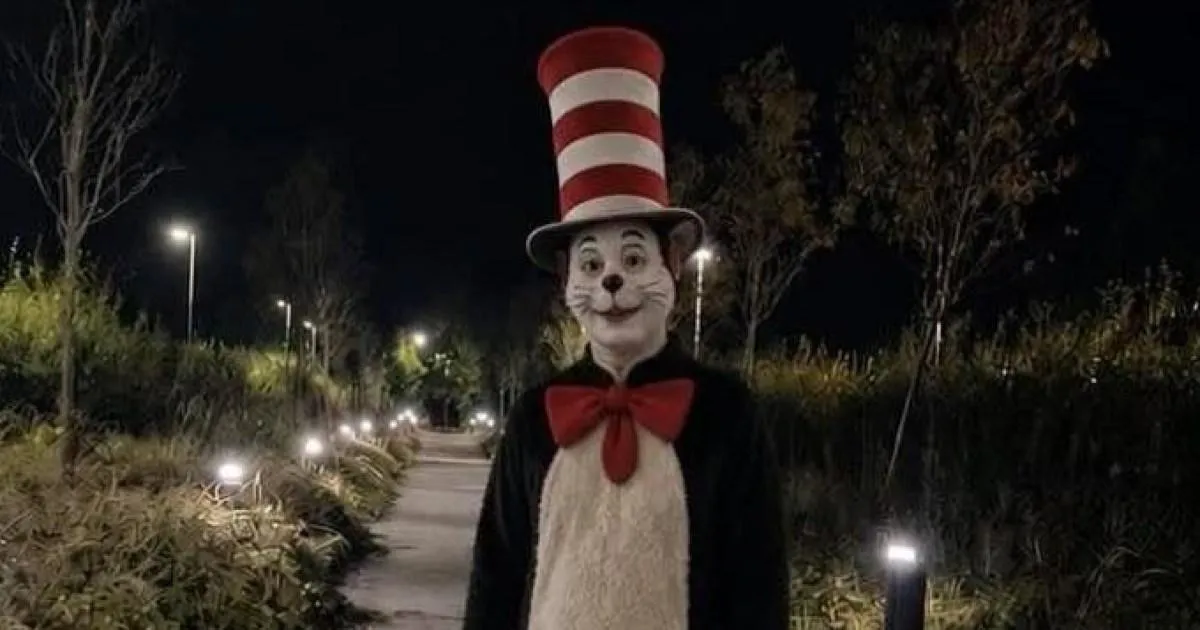
It began with a single, unsettling piece of footage that seemed ripped from a suburban nightmare. A grainy, night-vision video showed a large, shadowy figure—unmistakably resembling the iconic, floppy-hatted Cat in the Hat—approaching a family’s front door. The figure paused, stared directly into the doorbell camera, and then held up a piece of paper bearing the homeowner’s daughter’s name. The mother, genuinely terrified, uploaded the clip to TikTok with a frantic plea: “What does it want with my daughter???” The video went viral, igniting a firestorm of fear and speculation across the internet. But as quickly as the panic spread, a collective sigh of relief—or perhaps confusion—followed. The police, tech experts, and a growing chorus of online detectives confirmed what many had begun to suspect: the entire scenario was a fabrication. The terrifying figure was not a real person in a costume, but a sophisticated piece of AI-generated content, designed to mimic the grainy, authentic look of real home security footage and exploit our deepest anxieties about the unknown lurking just outside our doors.
What began as a single, localized post in Limerick, Ireland, quickly metastasized into a global, user-generated phenomenon. The initial Facebook posts, claiming the character was prowling the streets of the western city, were a catalyst. From there, the “sightings” spread like wildfire across the Emerald Isle, popping up in Glanmire, Cork; Cahir, Tipperary; Curracloe, Wexford, and even the streets of Dublin. The trend then hopped the Irish Sea, and soon, TikTok and other social media platforms were flooded with countless clips and photos of the Cat in the Hat stalking driveways, peering through windows, and loitering in dark alleys across the UK. Dedicated accounts sprang up in his name, with one cheeky post warning residents of Conwy, Wales, to “make sure your doors are unlocked,” while others shared mock lists of names the cat was “coming for tonight.” The narrative was no longer a singular scare; it had become a decentralized, collaborative creepypasta, fueled by the platform’s algorithm and the public’s insatiable appetite for a good, shared thrill.
The phenomenon was further amplified by a bizarre confluence of pop culture and internet sleuthing. As the videos proliferated, a seemingly unrelated piece of news began to circulate: a viral post from the entertainment news account DiscussingFilm stated that the original costume worn by actor Mike Myers in the 2003 live-action adaptation of The Cat in the Hat was being auctioned off. This seemingly innocuous announcement provided the missing piece for the internet’s conspiracy theorists. The conclusion was drawn, and quickly spread, that the person inside the costume in the AI videos was none other than Myers himself, resurrecting his iconic role for some unfathomable, real-world haunting. This theory gave the trend a tangible, celebrity-driven hook, making it even more shareable and compelling. The fact that the auction was upcoming only added to the sense of immediacy and mystery. A few dedicated accounts even went so far as to create “official” AI clips of the Cat being arrested or walking into police stations, often with a comedic bent that highlighted the absurdity of the situation.
While many participants were in on the joke, sharing clips of the cat dancing to Beyoncé and leaning into the comedic absurdity, the trend had a darker, more profound impact on a younger, more impressionable audience. The most visceral example came from a 16-year-old girl named Skye, who told the BBC about a sleepover that took a terrifying turn. In the dead of night at 3am, the group began watching the Cat in the Hat videos, and the line between digital fiction and real-world fear quickly blurred. When Skye left the sleepover, she was so overwhelmed with paranoia that she was convinced the Cat in the Hat was going to jump out from the bushes at the end of her friend’s driveway. The fear was so potent that she had to call her mother to come and pick her up. Skye’s experience is a powerful testament to the psychological power of these AI-generated nightmares, showing that the trend had crossed a line from simple internet fun into a genuine source of anxiety and panic for some of its most vulnerable viewers.
The runaway success of the trend eventually forced real-world institutions to respond. The hysteria reached such a fever pitch that South Yorkshire Police were compelled to issue a public statement after users began circulating a fabricated alert attributed to them, claiming the cat had been spotted at the Meadowhall shopping center. Officers were even approached by concerned members of the public on the street, asking if the reports were true. In a now-viral statement that perfectly captured the surreal nature of the situation, the force confirmed they had received “no reports of a cat in a hat in Meadowhall, or anywhere else in South Yorkshire,” and wryly added, “We can also confirm no recent sightings of his associates Thing One and Thing Two.” Meanwhile, cybersecurity firm NordVPN ran a sample of the images through its AI detection tool, NordBot, which conclusively determined that they were all AI-generated. Naomi Owusu, co-founder of the digital publishing platform Tickaroo, explained that this phenomenon was a predictable outcome of a world where AI-generated content is “becoming harder to distinguish from reality.” The tells that once gave these images away—unusual hands or unnatural movements—are becoming increasingly less reliable as the technology improves, allowing AI to deliberately reproduce the imperfections that make something feel authentically human.
In the end, the “AI Cat in the Hat” scare serves as a profound cultural snapshot, a cautionary tale for our digitally saturated age. It illustrates the potent, often frightening combination of advanced AI tools, viral social media algorithms, and our own primal fears. The trend highlights the speed at which a fabricated narrative can spiral out of control, becoming a global talking point and even prompting a response from law enforcement, all within a matter of weeks. It demonstrates how quickly the public can be led to believe in the existence of something they know to be logically impossible. The initial shock value of the footage undermines our critical thinking, leading us to believe the threat is real. This unsettling digital haunting is a perfect metaphor for the modern information ecosystem, where a chillingly realistic illusion can be generated in seconds, spread across the globe in hours, and cause real-world fear and confusion before the truth can even catch its breath. As this digital species continues to evolve, the story of the Cat in the Hat reminds us that sometimes the most frightening monsters are not those that go bump in the night, but the ones we create ourselves, fueled by our own collective imagination and the endless possibilities of artificial intelligence. This foreshadows a future where the question will not be whether something is real or fake, but whether we have the collective wisdom to care about the difference before the fear takes hold.