

It was just after half past ten on a Monday morning, and London was doing what London does best: hurrying. People were tapping through Tube barriers, carrying takeaway coffees, unlocking office doors, and settling into the rhythm of the working week. Then, in the space of a heartbeat, the city blinked. Lights flickered and died in office buildings and flats across central and east London. Computer monitors went dark, kettles stopped boiling, and the familiar hum of electricity suddenly vanished. In the Shoreditch area and beyond, thousands of homes and businesses were plunged into an unexpected, eerie midday darkness. For many, the first sign of trouble was not the silence of their devices but the sudden loss of power itself. Offices that moments earlier had been alive with ringing phones and tapping keyboards became quiet, uncertain spaces. People peered out of windows, checked their phones, and wondered whether they should go home or stay put. The cause, according to UK Power Networks, was a fault on an underground electricity cable. It was, in many ways, a reminder of how much we rely on the invisible systems beneath our feet. The city had not been struck by a storm or a major incident; it simply had a bad morning. But for those caught up in it, the experience was deeply disorienting. In an instant, ordinary routines were interrupted, and the grand, glowing metropolis felt unexpectedly fragile.
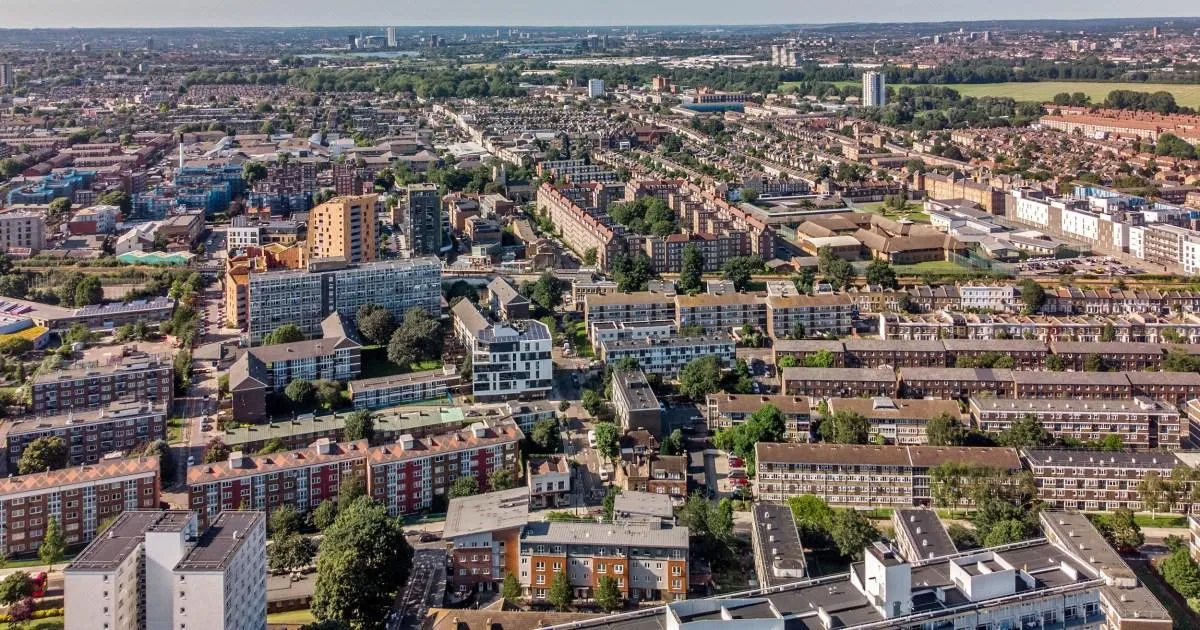
The affected area was not just a single street or a single block. It stretched across dozens of neighbourhoods, from the creative streets of Shoreditch and the financial towers around Liverpool Street to residential pockets of east London and beyond. UK Power Networks released a map showing the impacted zones, and once the postcodes were listed, the scale of the disruption became clearer. Thirty-two postcodes were touched, including E1, E2, E5, E8, E9, EC2, EC3, IG3, N1, N5, NW8, and W2. That mix of letters and numbers tells a story of diversity. These are areas where historic council estates sit next to gleaming new apartment blocks, where family-run shops share pavements with trendy cafés and tech start-ups. For residents, the power cut meant more than just inconvenience. It meant no heating in the middle of winter, no light in hallway stairwells, no way to charge a phone, and no way to cook a proper meal. For businesses, it meant lost revenue, interrupted services, and a sudden scramble to keep things running. A restaurant might have had prep for lunch half-finished; a hairdresser might have been in the middle of a colour treatment; a freelancer might have lost hours of unsaved work. The silence in affected buildings was punctuated by the sound of people relocating, of laptops being packed up, of anxious phone calls to landlords and office managers. Some people naturally took it in stride, joking about an enforced coffee break, while others felt a rising sense of frustration. There is nothing quite like a power cut to remind you how little control you have over the systems that keep your life comfortable.
Meanwhile, the disruption was not limited to buildings. It spilled out onto the transport network, turning a regular commute into an unexpected puzzle. Great Northern services were affected, and at Essex Road station, the platform lighting failed. That small but crucial detail meant the station could not safely serve passengers, and trains were instructed not to stop there. Commuters who had planned to alight at Essex Road found themselves being carried forward to Old Street or Highbury and Islington, where they had to double back and re-route their journeys. It was the kind of annoyance that makes you late for a meeting, miss a connection, or simply stare at your phone trying to find another way. Not far away, at Liverpool Street station, one of the busiest transport hubs in the country, the power cut knocked out the departure screens. Passengers stood beneath blank displays, looking for platform numbers that never appeared. There was a certain anxious energy as people compared apps and asked staff for advice, unsure whether their train would leave on time or from the same platform. The good news was that journeys themselves were not stopped, but the absence of information made everything feel more stressful. In an age when we are used to live updates and instant answers, a blank screen is a small shock. It forces people to talk to one another, to ask questions out loud, and to trust in old-fashioned methods like listening for announcements. In that way, the morning became a tiny experiment in patience and improvisation, with thousands of people quietly adapting to the curveballs thrown by a failed cable.
Transport for London confirmed that the power cut had also interfered with some traffic signals and CCTV cameras in the affected area. That raised concerns about traffic flow and safety, especially near busy junctions. Yet remarkably, TfL said that rail and bus services were running as normal and that traffic was not affected. It was a small mercy in a morning full of inconvenience. The city’s red buses continued to pull up at stops, and the Tube kept moving beneath the streets, carrying people who had no idea, in many cases, that the world above them had gone dark. The resilience of the transport network was quietly reassuring. Even as shops closed their doors and offices emptied, the city kept turning. Engineers from UK Power Networks were dispatched to the scene, and they worked quickly to reroute electricity around the damaged cable. The initial outage had occurred at around 10.30am, but the response was swift. Power was progressively restored to affected customers, with many coming back online by 11.08am, according to the company. The official restoration time was logged at 12.09pm, meaning that within less than two hours, the disruption was largely over. For those who had been sitting in cold offices or dark homes, the return of the lights felt like a small victory. The familiar glow of a fridge, the whir of a computer fan, the sudden brightness of a room that had felt cavernous only moments before: these small things were suddenly noticed and appreciated.
UK Power Networks was quick to apologise, and there was a genuine sense of contrition in their statement. They acknowledged that a fault had developed on their underground network in the Shoreditch area and thanked customers for their patience while engineers worked. “We apologise for the inconvenience after a fault developed on our underground network in the Shoreditch area at 10.30am today,” a spokesperson said. “Power supplies were interrupted to several thousand properties and our engineers worked as quickly as is safely possible to reroute electricity to those affected, in stages, until 11.08am when all were back on supply.” That phrase, “as quickly as is safely possible,” matters. It is a reminder that fixing an underground cable is not simply a matter of flicking a switch. It requires careful work, often in confined spaces, with live systems and complex equipment. Engineers have to protect themselves and the public while solving a problem they cannot see. It would have been easy for them to rush, but safety had to come first. For the thousands of people affected, the apology was probably welcome, even if it did not make the morning’s lost hours any less frustrating. There is always something slightly humbling about a power cut. It strips away the polish of modern life and reminds us that beneath the convenience of electricity lies a delicate network of wires and transformers, ageing in places and vulnerable to faults. We rarely think about that network until it fails, and then we suddenly understand how much we depend on it.
In the end, the power cut became one of those strange, shared London experiences that everyone remembers but nobody asked for. It was a Monday morning interruption that forced people to slow down, talk to strangers, and find alternative plans. Some people probably used the time to actually have a conversation with a colleague instead of emailing them. Others discovered a new route to work or a café they had never noticed before. The stories were shared on social media, with commuters posting photos of dark offices and blank departure boards, and the city collectively shrugged its shoulders and carried on. There were no dramatic scenes, no emergency services racing through the streets, and no lasting damage. By lunchtime, power had been restored across the affected areas, and the city resumed its normal rhythm. Offices buzzed back to life, kettles boiled again, and the departure screens at Liverpool Street flickered back into action. The incident was over, but it left behind a quiet reminder of the importance of the infrastructure that we too often take for granted. It also highlighted the vulnerability of our cities and the need for continued investment in the systems that keep them running. For the people of Shoreditch, east London, and the central neighbourhoods caught up in the outage, the memory of that dark morning will fade with time. But perhaps, for a moment, they will appreciate the simple act of turning on a light, the hum of a laptop, and the quiet certainty that power will be there when they need it. In a city that never sleeps, even a brief power cut is a reminder that the night can always come a little earlier than expected.